THE ADVENTURE COLLECTIVE® · Independent discovery and booking for outdoor travel

A guided boat-and-hike into Mamanguá’s fjord leads to the Sugar Bread peak—an exposed, panoramic viewpoint over islands, rainforest and a narrow tropical inlet. This small-group, physically demanding trek combines coastal swims, cultural stops and a steep climb to dramatic views.
A guided boat-and-hike into Mamanguá’s fjord leads to the Sugar Bread peak—an exposed, panoramic viewpoint over islands, rainforest and a narrow tropical inlet. This small-group, physically demanding trek combines coastal swims, cultural stops and a steep climb to dramatic views.
The day opens with the boat cutting a silver path down Mamanguá’s narrow fjord, palms and steep granite ribs rising like walls on either side as you step ashore for the trail. Soon the forest tightens: humid Atlantic Forest undergrowth, the scent of earth and salt mixing as you climb.
Verified experiences and guided adventures in the surrounding area.
Operated by Paraty Sirena Tours · Paraty, Rio de Janeiro
The day opens with the boat cutting a silver path down Mamanguá’s narrow fjord, palms and steep granite ribs rising like walls on either side as you step ashore for the trail. Soon the forest tightens: humid Atlantic Forest undergrowth, the scent of earth and salt mixing as you climb.
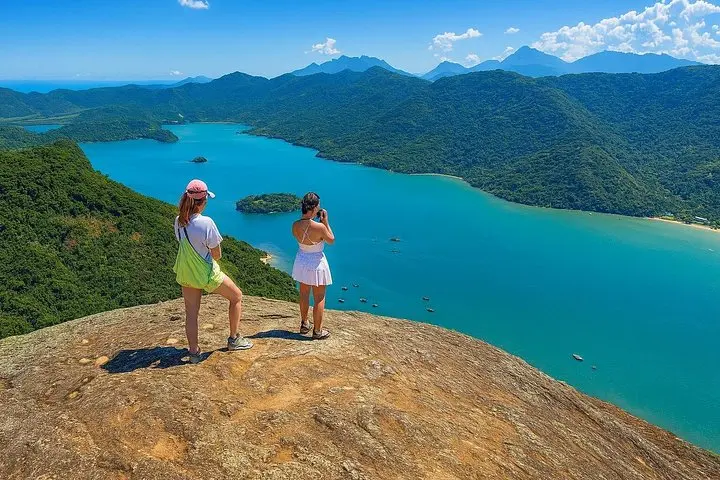
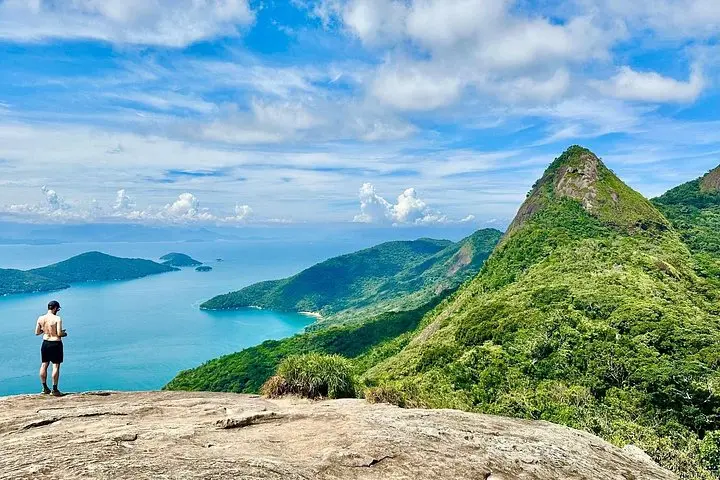
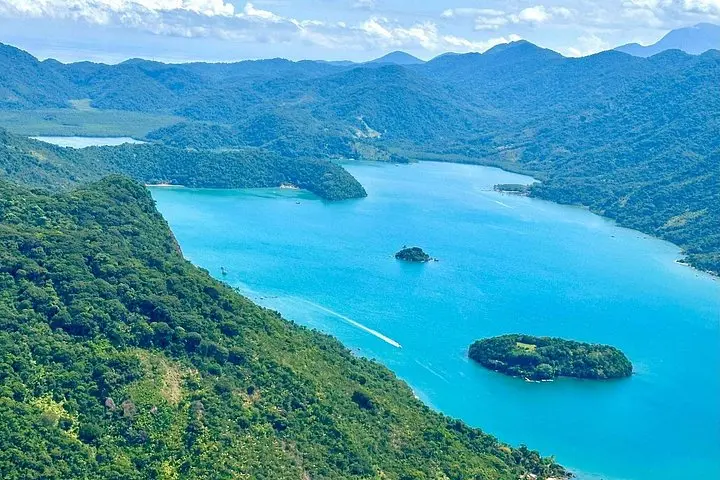
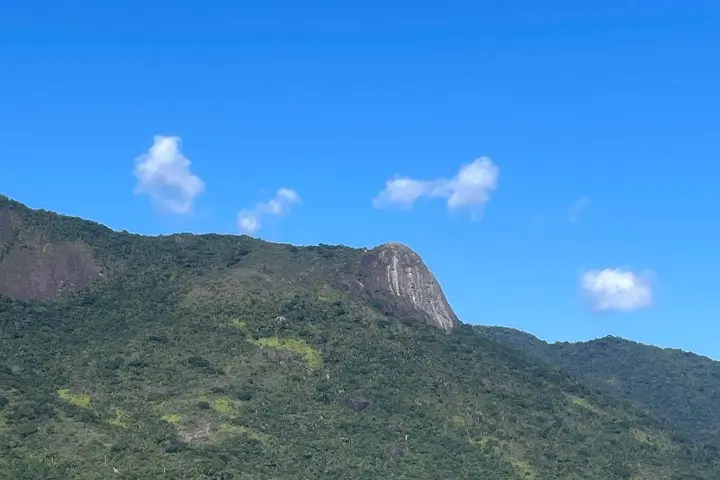
Geologically Mamanguá is an eroded ria — a drowned river valley carved into ancient crystalline rock — and the Sugar Bread peak (Pão de Açúcar) is a steep outcrop that delivers a 360° panorama of islands, green slopes and the fjord’s winding throat. Culturally this bay is occupied by caiçara communities whose fishing and small-scale agriculture shaped the shoreline villages you pass; guides often pause to share local stories and environmental context.
Expect a compact guided hike of roughly 3½–4½ hours for the trail portion, with steep sections, exposed rock steps and short scramble-like pitches that demand steady footing and good cardio. Stops include photo platforms, an interpretive break about the Atlantic Forest, and a chance to cool off at a nearby waterfall or beach depending on the itinerary.
Practical notes: start early to avoid midday heat, wear grippy shoes for wet rock, and bring at least 1.5–2L water plus reef-safe sunscreen. The route is done in small groups and is physically demanding rather than technical; navigation is led by a guide but fitness matters. Weather can change quickly—carry a lightweight rain layer—and leave no trace: trails and caiçara villages rely on visitors who respect local rhythms.
The route is physically demanding with steep pitches and short scrambles; it’s not technical climbing but requires good fitness and surefootedness.
The tour is guided and navigation is handled by the guide, so no navigation skills are required for participants.
Yes—itineraries commonly include a swim stop at a beach or bay; bring a swimsuit and quick-dry towel.
This tour is not recommended for pregnant travelers or those with serious back or heart conditions; check with the operator about age limits for children.
Paraty Sirena Tours operates guided outdoor trips and adventures with an emphasis on safety, stewardship, and memorable experiences.
The day opens with the boat cutting a silver path down Mamanguá’s narrow fjord, palms and steep granite ribs rising like walls on either side as you step ashore for the trail. Soon the forest tightens: humid Atlantic Forest undergrowth, the scent of earth and salt mixing as you climb.
The day opens with the boat cutting a silver path down Mamanguá’s narrow fjord, palms and steep granite ribs rising like walls on either side as you step ashore for the trail. Soon the forest tightens: humid Atlantic Forest undergrowth, the scent of earth and salt mixing as you climb.
Geologically Mamanguá is an eroded ria — a drowned river valley carved into ancient crystalline rock — and the Sugar Bread peak (Pão de Açúcar) is a steep outcrop that delivers a 360° panorama of islands, green slopes and the fjord’s winding throat. Culturally this bay is occupied by caiçara communities whose fishing and small-scale agriculture shaped the shoreline villages you pass; guides often pause to share local stories and environmental context.
Expect a compact guided hike of roughly 3½–4½ hours for the trail portion, with steep sections, exposed rock steps and short scramble-like pitches that demand steady footing and good cardio. Stops include photo platforms, an interpretive break about the Atlantic Forest, and a chance to cool off at a nearby waterfall or beach depending on the itinerary.
Practical notes: start early to avoid midday heat, wear grippy shoes for wet rock, and bring at least 1.5–2L water plus reef-safe sunscreen. The route is done in small groups and is physically demanding rather than technical; navigation is led by a guide but fitness matters. Weather can change quickly—carry a lightweight rain layer—and leave no trace: trails and caiçara villages rely on visitors who respect local rhythms.