THE ADVENTURE COLLECTIVE® · Independent discovery and booking for outdoor travel

Follow the Art Loeb Trail on a guided 9-mile trek from Shining Creek to Shining Rock Gap, crossing hardwood hollows and exposed balds to reach dazzling white quartz outcrops. Ideal for experienced day-hikers who want expert interpretation paired with wild, crowd-free Blue Ridge scenery.
Follow the Art Loeb Trail on a guided 9-mile trek from Shining Creek to Shining Rock Gap, crossing hardwood hollows and exposed balds to reach dazzling white quartz outcrops. Ideal for experienced day-hikers who want expert interpretation paired with wild, crowd-free Blue Ridge scenery.
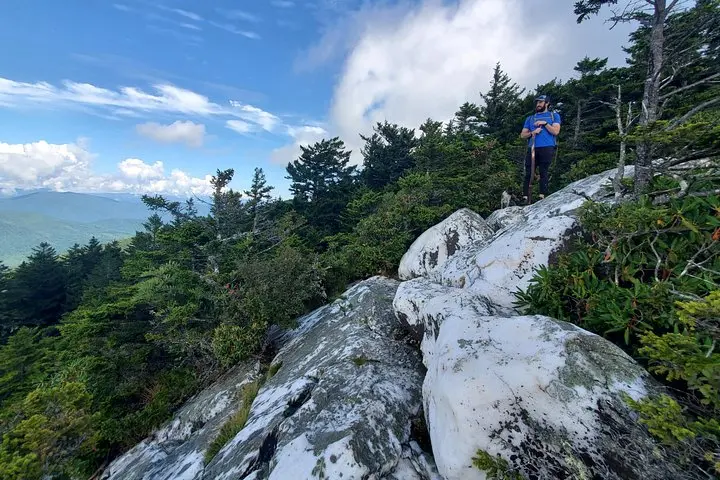
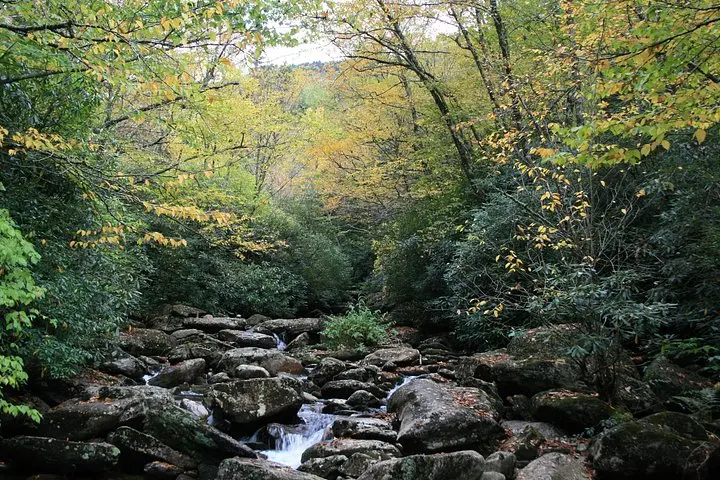
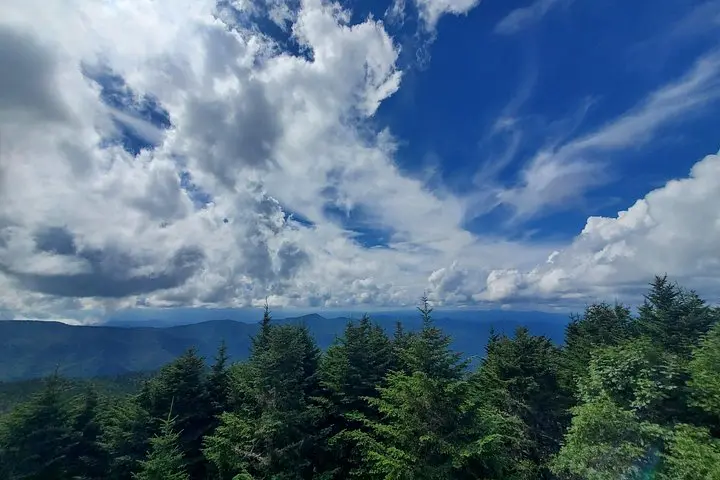
The first steps on the Shining Creek Trail feel like leaving a different world: mossy roots hold the damp air, a creek clicks over stone, and the forest narrows into a green corridor that funnels toward higher wind-swept ridgelines. For six hours you’ll move between two moods of the southern Appalachians—ancient hardwoods that hush conversation and exposed balds that throw the horizon wide—ending at Shining Rock Gap where white quartz slabs glint in the sun like a raw, geological lighthouse.
Verified experiences and guided adventures in the surrounding area.
Operated by Mitch · Asheville, North Carolina
The first steps on the Shining Creek Trail feel like leaving a different world: mossy roots hold the damp air, a creek clicks over stone, and the forest narrows into a green corridor that funnels toward higher wind-swept ridgelines. For six hours you’ll move between two moods of the southern Appalachians—ancient hardwoods that hush conversation and exposed balds that throw the horizon wide—ending at Shining Rock Gap where white quartz slabs glint in the sun like a raw, geological lighthouse.
This guided outing follows the Art Loeb Trail and begins at the Shining Creek Path Trailhead, moving roughly 9 miles with about 1,500 feet of cumulative elevation gain. The route threads creek-side switchbacks, fern-carpeted hollows, and steep rock steps, then climbs onto high, grassy balds where views open in slow, cinematic increments. Geologically, Shining Rock is a pocket of nearly pure quartz—the result of ancient hydrothermal processes that concentrated silica into hard white rock. The quartz fields were noted by early Appalachian settlers and later protected as part of Pisgah National Forest and the Shining Rock Wilderness to preserve fragile high-elevation vegetation.
Guides on this trip offer more than navigation; they read the land. Expect natural history—how spruce-fir fragments survived the last ice age, where peregrine falcons hunt thermals, and why acidic soils shape plant communities here. Culturally, the ridges shaped mountain livelihoods: grazing on the balds, seasonal logging lower down, and a tradition of Appalachian place names still used by local foragers and birders.
Practicality keeps this hike honest. Terrain shifts from packed soil to jagged quartz where footing is uneven; trail markers are clear but pack a map and follow the guide. Water sources are plentiful early on but treat or filter before drinking. Weather can swing fast on the exposed ridge—sun, wind, or fog within an hour—so layer. Cell service is intermittent; leave an itinerary with someone in Asheville before you leave.
This tour is best for hikers with steady conditioning and some experience with longer day hikes. Expect steady uphill sections, exposed summits, and a return that tests calf endurance. Leave no trace: stay on trail, avoid walking on sensitive alpine grasses, and pack out everything.
At Shining Rock Gap, take a long pause. The quartz bleaches any color—your camera, meanwhile, will love high-contrast scenes at sunrise or late afternoon. Whether you came for solitude, a naturalist’s narration, or the thrill of walking on a geologic oddity, this guided Art Loeb trek delivers a compact, deeply Appalachian wilderness day that rewards preparation as much as curiosity.
The guided route is about 9 miles round trip with roughly 1,500 feet of elevation gain over varied terrain.
Not ideal for true beginners—participants should have prior day-hike experience and comfortable endurance for a 6-hour, rocky route.
Cell coverage is intermittent on the trail; plan as if you won’t have service once you leave the valley.
No special permits are required to hike, but the area is managed by the US Forest Service and group size guidelines help protect wilderness values—your guide handles logistics.
Yes—black bears, peregrine falcons, and typical Appalachian mammals and songbirds inhabit the area; keep distance and follow your guide’s safety protocols.
Full refunds are available if you cancel at least 24 hours before the scheduled start time; trips may be canceled by the operator in bad weather.
Mitch operates guided outdoor trips and adventures with an emphasis on safety, stewardship, and memorable experiences.

The first steps on the Shining Creek Trail feel like leaving a different world: mossy roots hold the damp air, a creek clicks over stone, and the forest narrows into a green corridor that funnels toward higher wind-swept ridgelines. For six hours you’ll move between two moods of the southern Appalachians—ancient hardwoods that hush conversation and exposed balds that throw the horizon wide—ending at Shining Rock Gap where white quartz slabs glint in the sun like a raw, geological lighthouse.
The first steps on the Shining Creek Trail feel like leaving a different world: mossy roots hold the damp air, a creek clicks over stone, and the forest narrows into a green corridor that funnels toward higher wind-swept ridgelines. For six hours you’ll move between two moods of the southern Appalachians—ancient hardwoods that hush conversation and exposed balds that throw the horizon wide—ending at Shining Rock Gap where white quartz slabs glint in the sun like a raw, geological lighthouse.
This guided outing follows the Art Loeb Trail and begins at the Shining Creek Path Trailhead, moving roughly 9 miles with about 1,500 feet of cumulative elevation gain. The route threads creek-side switchbacks, fern-carpeted hollows, and steep rock steps, then climbs onto high, grassy balds where views open in slow, cinematic increments. Geologically, Shining Rock is a pocket of nearly pure quartz—the result of ancient hydrothermal processes that concentrated silica into hard white rock. The quartz fields were noted by early Appalachian settlers and later protected as part of Pisgah National Forest and the Shining Rock Wilderness to preserve fragile high-elevation vegetation.
Guides on this trip offer more than navigation; they read the land. Expect natural history—how spruce-fir fragments survived the last ice age, where peregrine falcons hunt thermals, and why acidic soils shape plant communities here. Culturally, the ridges shaped mountain livelihoods: grazing on the balds, seasonal logging lower down, and a tradition of Appalachian place names still used by local foragers and birders.
Practicality keeps this hike honest. Terrain shifts from packed soil to jagged quartz where footing is uneven; trail markers are clear but pack a map and follow the guide. Water sources are plentiful early on but treat or filter before drinking. Weather can swing fast on the exposed ridge—sun, wind, or fog within an hour—so layer. Cell service is intermittent; leave an itinerary with someone in Asheville before you leave.
This tour is best for hikers with steady conditioning and some experience with longer day hikes. Expect steady uphill sections, exposed summits, and a return that tests calf endurance. Leave no trace: stay on trail, avoid walking on sensitive alpine grasses, and pack out everything.
At Shining Rock Gap, take a long pause. The quartz bleaches any color—your camera, meanwhile, will love high-contrast scenes at sunrise or late afternoon. Whether you came for solitude, a naturalist’s narration, or the thrill of walking on a geologic oddity, this guided Art Loeb trek delivers a compact, deeply Appalachian wilderness day that rewards preparation as much as curiosity.