THE ADVENTURE COLLECTIVE® · Independent discovery and booking for outdoor travel

Follow a river-carved trail outside Paro to a river-perched statue of Dorji Phagmo. This 5–8 hour pilgrimage-hike mixes rocky paths, short scrambles, and sacred caves—best attempted with good footwear and an early start.
Follow a river-carved trail outside Paro to a river-perched statue of Dorji Phagmo. This 5–8 hour pilgrimage-hike mixes rocky paths, short scrambles, and sacred caves—best attempted with good footwear and an early start.
You step off the lane where Paro’s stone houses give way to thinner air and the river takes over the soundtrack—clear, insistent, challenging you to move with it. The trail follows a sapphire stream, threading between boulders and short caves, until a graceful, almost otherworldly statue of Dorji Phagmo (Vajravarahi) appears, balanced above the water as if watching over the valley.
Verified experiences and guided adventures in the surrounding area.
Operated by Bhutan Swallowtail Tours & Travels · Paro, Paro District
You step off the lane where Paro’s stone houses give way to thinner air and the river takes over the soundtrack—clear, insistent, challenging you to move with it. The trail follows a sapphire stream, threading between boulders and short caves, until a graceful, almost otherworldly statue of Dorji Phagmo (Vajravarahi) appears, balanced above the water as if watching over the valley.
The route traces long-used pilgrimage routes of western Bhutan; the statue and nearby caves hold tantric and healing significance for local practitioners. Geologically, the Paro valley is carved by glacial and fluvial action—banded schist and tributary streams cut steep banks that create narrow, rocky footpaths and dramatic small waterfalls.
Culturally, this is both a hike and a devotional walk: you’ll pass prayer flags, small shrines, and stones rubbed smooth by generations of hands. Local guides often share stories of holy waters believed to aid healing and longevity.
Practical guidance: the approach is roughly 5–8 hours round trip depending on pace and stops, with uneven rock, occasional short scrambles, and wet sections near river crossings. Wear sturdy, grippy footwear and carry layered rain protection—the valley’s weather can shift quickly. Bring water, snacks, and a respectful mindset: this is a living sacred place. Start early to avoid afternoon cloud buildup and to take advantage of softer light on the river.
Expect a physically engaging, spiritually rich day—river, rock, and ritual combined into a hike that rewards both steadiness and curiosity.
Plan for 5–8 hours round trip depending on stops; the trail involves uneven rock, wet sections, and short scrambles—moderately to highly strenuous for those unaccustomed to mountain terrain.
A guide is not strictly required but recommended for navigation, cultural context, and safety—local guides also help interpret sacred sites respectfully.
Yes—expect wet rock and small river crossings, especially after rain; wear grippy shoes and consider poles for stability.
This route is not recommended for pregnant travelers or those with serious back or heart conditions; children may do it if they are steady on uneven terrain and can manage a full day outside.
Bhutan Swallowtail Tours & Travels operates guided outdoor trips and adventures with an emphasis on safety, stewardship, and memorable experiences.
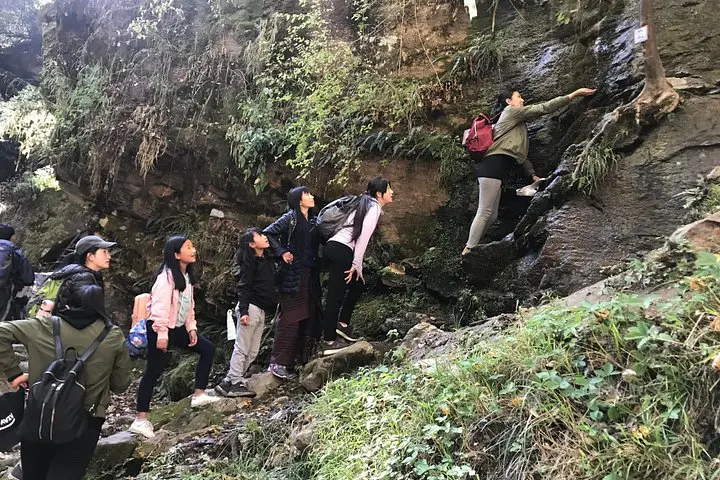
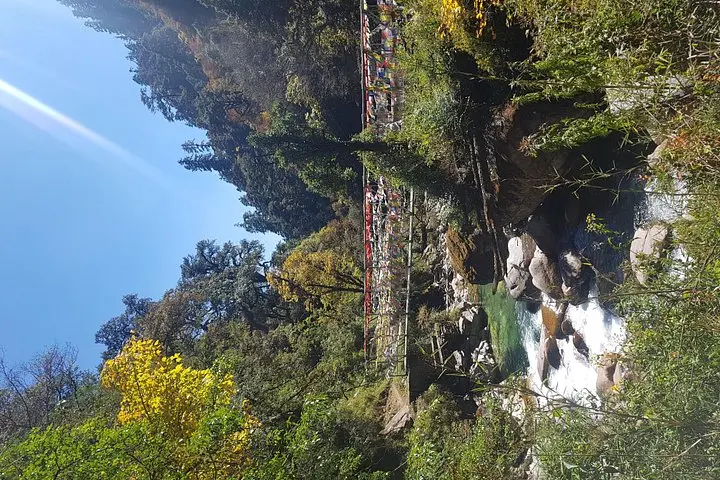
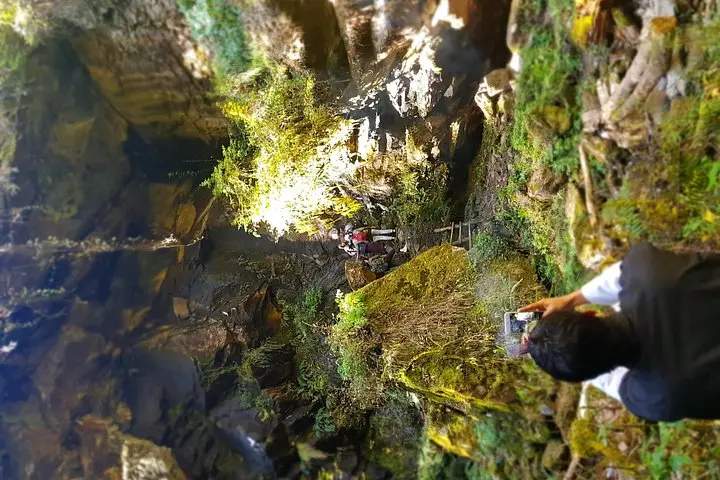
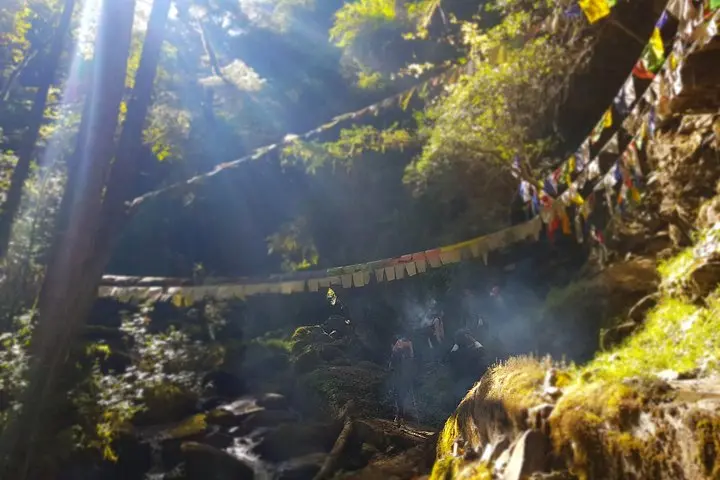
You step off the lane where Paro’s stone houses give way to thinner air and the river takes over the soundtrack—clear, insistent, challenging you to move with it. The trail follows a sapphire stream, threading between boulders and short caves, until a graceful, almost otherworldly statue of Dorji Phagmo (Vajravarahi) appears, balanced above the water as if watching over the valley.
You step off the lane where Paro’s stone houses give way to thinner air and the river takes over the soundtrack—clear, insistent, challenging you to move with it. The trail follows a sapphire stream, threading between boulders and short caves, until a graceful, almost otherworldly statue of Dorji Phagmo (Vajravarahi) appears, balanced above the water as if watching over the valley.
The route traces long-used pilgrimage routes of western Bhutan; the statue and nearby caves hold tantric and healing significance for local practitioners. Geologically, the Paro valley is carved by glacial and fluvial action—banded schist and tributary streams cut steep banks that create narrow, rocky footpaths and dramatic small waterfalls.
Culturally, this is both a hike and a devotional walk: you’ll pass prayer flags, small shrines, and stones rubbed smooth by generations of hands. Local guides often share stories of holy waters believed to aid healing and longevity.
Practical guidance: the approach is roughly 5–8 hours round trip depending on pace and stops, with uneven rock, occasional short scrambles, and wet sections near river crossings. Wear sturdy, grippy footwear and carry layered rain protection—the valley’s weather can shift quickly. Bring water, snacks, and a respectful mindset: this is a living sacred place. Start early to avoid afternoon cloud buildup and to take advantage of softer light on the river.
Expect a physically engaging, spiritually rich day—river, rock, and ritual combined into a hike that rewards both steadiness and curiosity.