THE ADVENTURE COLLECTIVE® · Independent discovery and booking for outdoor travel

Stand within sight of one of Iceland’s newest cones on a private guided excursion from Reykjavík. This short hike delivers intimate views of 2021 lava flows, clear safety oversight, and the raw geology of the Reykjanes Peninsula.
Stand within sight of one of Iceland’s newest cones on a private guided excursion from Reykjavík. This short hike delivers intimate views of 2021 lava flows, clear safety oversight, and the raw geology of the Reykjanes Peninsula.
A low, gray sky presses down over the lava field as your guide opens the passenger door; the car engine surrenders to wind and the landscape steps forward—black glassy flows, steaming vents, and a cone that only recently rose from the earth. You stand a short walk from fresh lava, where basalt ribs still glint and the ground hums with the memory of eruption.
Verified experiences and guided adventures in the surrounding area.
Operated by Gudmundur Vignir · Reykjavík, Capital Region
A low, gray sky presses down over the lava field as your guide opens the passenger door; the car engine surrenders to wind and the landscape steps forward—black glassy flows, steaming vents, and a cone that only recently rose from the earth. You stand a short walk from fresh lava, where basalt ribs still glint and the ground hums with the memory of eruption.
This tour visits the 2021 Fagradalsfjall eruption site on the Reykjanes Peninsula, part of a volcanic system that reawakened after centuries of dormancy. Geologically young, the flows are a textbook in rapid landscape change: pahoehoe and a’a textures, fumaroles, and new cinder cones. Local culture treats eruptions with practical reverence—scientists map the risk, guides manage approach, and communities balance access with caution.
Expect a roughly 45–50 minute drive from Reykjavík to the trailhead, then a 10–15 minute one-way walk across uneven lava and gravel to the viewing area; most groups spend 30–40 minutes at the site. Guides monitor weather and official warnings, set safe viewing zones, and adapt to wind and visibility.
Practical tips: wear stiff-soled hiking boots and windproof layers, carry water and a camera with extra battery (cold drains power). Wind and volcanic gas can change quickly—follow your guide’s instructions, keep to marked routes, and avoid touching warm surfaces. The tour is private and pace-controlled, making it a good choice for travelers who want time at the crater without the crowds.
One-way is about 10–15 minutes across uneven lava and gravel; allow extra time for slow sections and photos.
Guided visits follow official safety updates and set viewing perimeters, but volcanic gas, wind, and unstable ground still present hazards—always follow instructions.
This tour is not recommended for pregnant travelers or those with significant spinal or cardiovascular conditions due to terrain and potential exertion.
Yes—private tours usually allow extended time on site within safe zones, and photography is encouraged; battery life can be affected by cold.
Gudmundur Vignir operates guided outdoor trips and adventures with an emphasis on safety, stewardship, and memorable experiences.

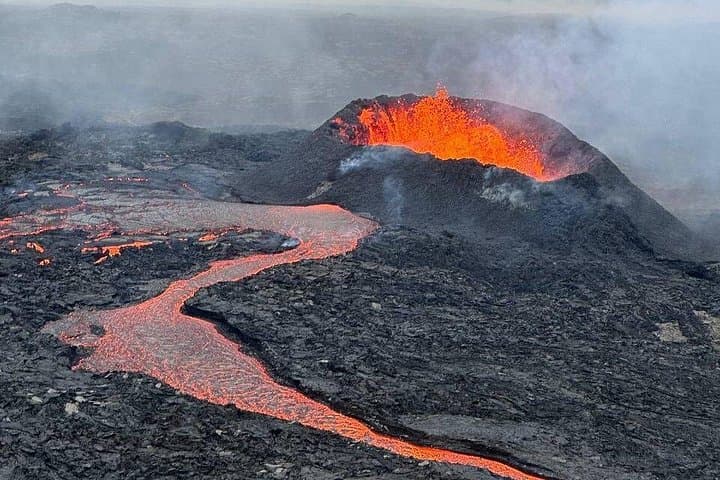
A low, gray sky presses down over the lava field as your guide opens the passenger door; the car engine surrenders to wind and the landscape steps forward—black glassy flows, steaming vents, and a cone that only recently rose from the earth. You stand a short walk from fresh lava, where basalt ribs still glint and the ground hums with the memory of eruption.
A low, gray sky presses down over the lava field as your guide opens the passenger door; the car engine surrenders to wind and the landscape steps forward—black glassy flows, steaming vents, and a cone that only recently rose from the earth. You stand a short walk from fresh lava, where basalt ribs still glint and the ground hums with the memory of eruption.
This tour visits the 2021 Fagradalsfjall eruption site on the Reykjanes Peninsula, part of a volcanic system that reawakened after centuries of dormancy. Geologically young, the flows are a textbook in rapid landscape change: pahoehoe and a’a textures, fumaroles, and new cinder cones. Local culture treats eruptions with practical reverence—scientists map the risk, guides manage approach, and communities balance access with caution.
Expect a roughly 45–50 minute drive from Reykjavík to the trailhead, then a 10–15 minute one-way walk across uneven lava and gravel to the viewing area; most groups spend 30–40 minutes at the site. Guides monitor weather and official warnings, set safe viewing zones, and adapt to wind and visibility.
Practical tips: wear stiff-soled hiking boots and windproof layers, carry water and a camera with extra battery (cold drains power). Wind and volcanic gas can change quickly—follow your guide’s instructions, keep to marked routes, and avoid touching warm surfaces. The tour is private and pace-controlled, making it a good choice for travelers who want time at the crater without the crowds.