THE ADVENTURE COLLECTIVE® · Independent discovery and booking for outdoor travel

A brisk half-day hike from Pokhara brings you to the World Peace Stupa for sweeping views of Phewa Lake and the Annapurna range. Expect stairs, mixed trails, and cultural moments at a mountaintop stupa built by Japanese Buddhists.
A brisk half-day hike from Pokhara brings you to the World Peace Stupa for sweeping views of Phewa Lake and the Annapurna range. Expect stairs, mixed trails, and cultural moments at a mountaintop stupa built by Japanese Buddhists.
You start below the rim of the hill with Phewa Lake like a glassy eye reflecting the Annapurnas; the trail climbs through terraced orchards and a scattering of rhododendron, each step loosening the city’s rhythm until only birds and the occasional prayer bell mark your pace.
Verified experiences and guided adventures in the surrounding area.
Operated by Worldwide Tourism Inc - Highly Recommended Travel Company · Pokhara, Gandaki Province
You start below the rim of the hill with Phewa Lake like a glassy eye reflecting the Annapurnas; the trail climbs through terraced orchards and a scattering of rhododendron, each step loosening the city’s rhythm until only birds and the occasional prayer bell mark your pace.
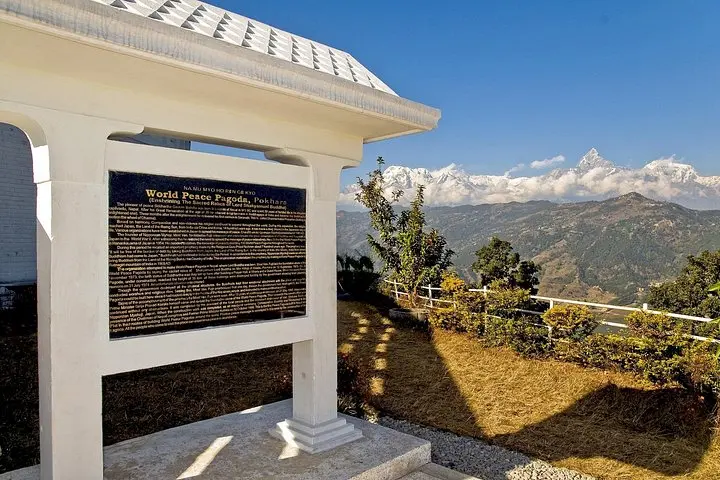
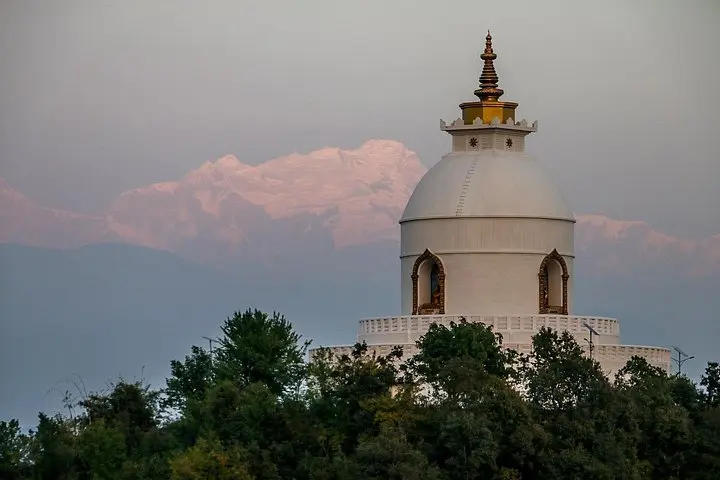
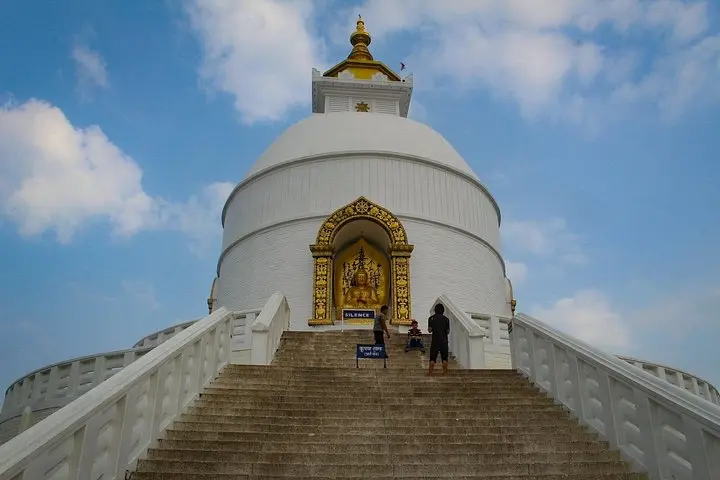
Perched above the southern shore of Phewa, the World Peace Stupa (Shanti Stupa) was built by Japanese Buddhists as a monument to peace and meditation, its white dome visible from the lakeside. Geologically the hill is composed of older foothill schists and river-deposited gravels from the Seti watershed, giving the path a mix of packed dirt, stone steps and exposed roots. Locals come to pray, take photos and sip tea at the small stalls that cluster near the base—this is as much cultural terrain as natural.
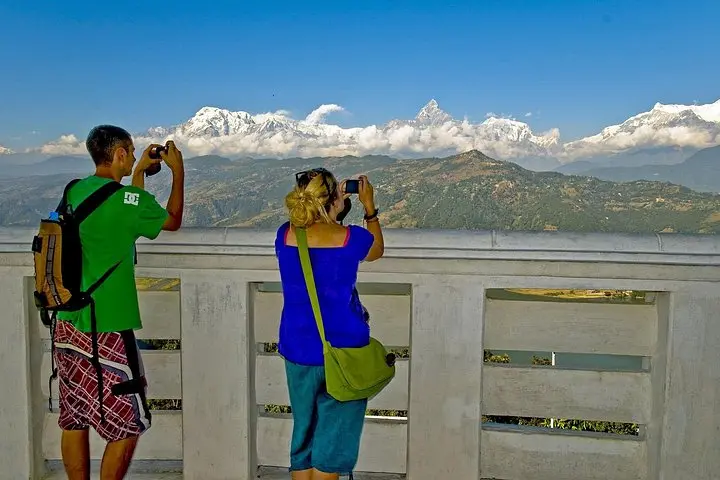
Expect sweeping 360° views: Phewa’s inky oval below, Pokhara Valley flattened by distance, and the Annapurna and Dhaulagiri ranges cutting the horizon. The ascent alternates steady switchbacks with stair pitches that test calves but reward with steady viewpoints every 10–20 minutes.
Practical guidance: allow roughly 3–4 hours round-trip; wear sturdy shoes with good grip for stairs and loose gravel; bring 1–2 liters of water, sun protection, and a light rain layer during monsoon months. Your guide will handle navigation, entry, and local context—listen for notes on religious etiquette at the stupa (remove shoes, speak quietly). Aim for early morning or late afternoon for the best light and cooler hiking conditions.
The round-trip takes about 3–4 hours with steady climbs and stair sections; it's moderate—suitable for most people with basic fitness.
A guide isn't required for navigation but adds cultural context, handles logistics like pick-up and entry, and improves safety on local paths.
Yes—the trail is accessible year-round; monsoon (June–August) brings heavy rain and slippery sections, while autumn and spring offer the clearest mountain views.
There are small stalls selling tea and snacks and space for meditation, but limited permanent facilities—carry essentials with you.
Worldwide Tourism Inc - Highly Recommended Travel Company operates guided outdoor trips and adventures with an emphasis on safety, stewardship, and memorable experiences.
You start below the rim of the hill with Phewa Lake like a glassy eye reflecting the Annapurnas; the trail climbs through terraced orchards and a scattering of rhododendron, each step loosening the city’s rhythm until only birds and the occasional prayer bell mark your pace.
You start below the rim of the hill with Phewa Lake like a glassy eye reflecting the Annapurnas; the trail climbs through terraced orchards and a scattering of rhododendron, each step loosening the city’s rhythm until only birds and the occasional prayer bell mark your pace.
Perched above the southern shore of Phewa, the World Peace Stupa (Shanti Stupa) was built by Japanese Buddhists as a monument to peace and meditation, its white dome visible from the lakeside. Geologically the hill is composed of older foothill schists and river-deposited gravels from the Seti watershed, giving the path a mix of packed dirt, stone steps and exposed roots. Locals come to pray, take photos and sip tea at the small stalls that cluster near the base—this is as much cultural terrain as natural.
Expect sweeping 360° views: Phewa’s inky oval below, Pokhara Valley flattened by distance, and the Annapurna and Dhaulagiri ranges cutting the horizon. The ascent alternates steady switchbacks with stair pitches that test calves but reward with steady viewpoints every 10–20 minutes.
Practical guidance: allow roughly 3–4 hours round-trip; wear sturdy shoes with good grip for stairs and loose gravel; bring 1–2 liters of water, sun protection, and a light rain layer during monsoon months. Your guide will handle navigation, entry, and local context—listen for notes on religious etiquette at the stupa (remove shoes, speak quietly). Aim for early morning or late afternoon for the best light and cooler hiking conditions.