THE ADVENTURE COLLECTIVE® · Independent discovery and booking for outdoor travel

Explore Aokigahara Jukai on a guided 3-hour hike and cave tour at the foot of Mt. Fuji. Expect lava-formed terrain, mossy forest trails, short cave scrambles, and local natural-history commentary.
Explore Aokigahara Jukai on a guided 3-hour hike and cave tour at the foot of Mt. Fuji. Expect lava-formed terrain, mossy forest trails, short cave scrambles, and local natural-history commentary.
A hush falls as the trail drops beneath the pines and the ground changes underfoot — black, porous lava rock, mottled with moss. Walking through Aokigahara Jukai, the forest at Mt. Fuji’s northwest base, you move between trunks that lean like patient guides while the air tastes cool and mineral-rich.
Verified experiences and guided adventures in the surrounding area.
Operated by 富士漫遊社 · Fujikawaguchiko, Yamanashi
A hush falls as the trail drops beneath the pines and the ground changes underfoot — black, porous lava rock, mottled with moss. Walking through Aokigahara Jukai, the forest at Mt. Fuji’s northwest base, you move between trunks that lean like patient guides while the air tastes cool and mineral-rich.
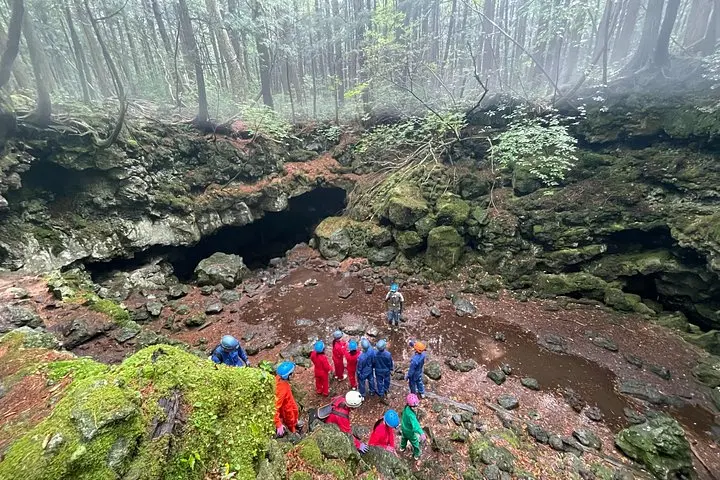
The forest grew on lava flows from an eruption roughly 1,200 years ago; the ground is riddled with caves and crevices carved by cooling rock and centuries of water. Local guides trace human and natural history here — from early woodcutting and mythic folklore to the more recent cultural sensitivity that surrounds the site today. Geology is obvious under your boots: jagged lava benches, compacted pahoehoe and ʻaʻā-like textures, and grottoes where ice and dripstone sometimes form in winter.
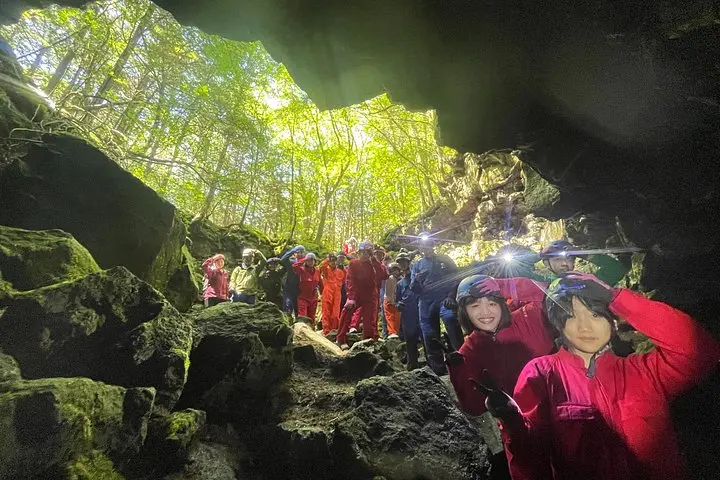
Wildlife is quiet but present: deer and foxes slip between trees, and mushrooms and moss stake out the dark soil. In the caves the world narrows to headlamp cones and the tactile work of scrambling, climbing short lava walls, and feeling for handholds.
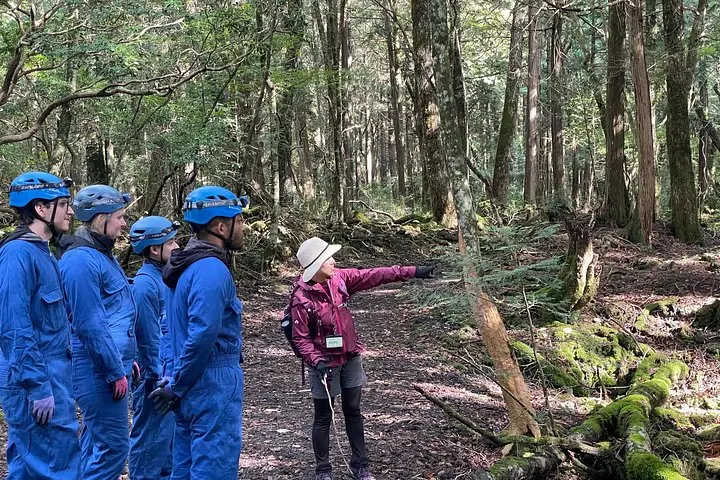
Practical guidance: the route is accessible and suitable for a wide range of ages, but expect uneven terrain and confined passages in caves. Bring sturdy boots, layered clothing, and a charged headlamp if you have one (helmets and headlamps are available). Walk with a licensed guide, follow safety briefings, and respect marked paths — this area is ecologically fragile and culturally sensitive. Plan for a roughly three-hour outing and moderate exertion; steady footing and attention pay dividends in a place where the forest seems to breathe around you.
Yes — the guided route is designed for a wide age range, but participants should be mobile and able to manage uneven ground and short climbs.
Yes — the tour includes entering small lava caves where you'll use hands and feet; helmets and headlamps are provided.
Marked trails are used for the hike portion, and guides lead cave entries to minimize impact and reduce disorientation.
You can photograph caves but keep flash use minimal to preserve natural features and avoid disturbing others; stabilize your camera on rough footing.
富士漫遊社 operates guided outdoor trips and adventures with an emphasis on safety, stewardship, and memorable experiences.
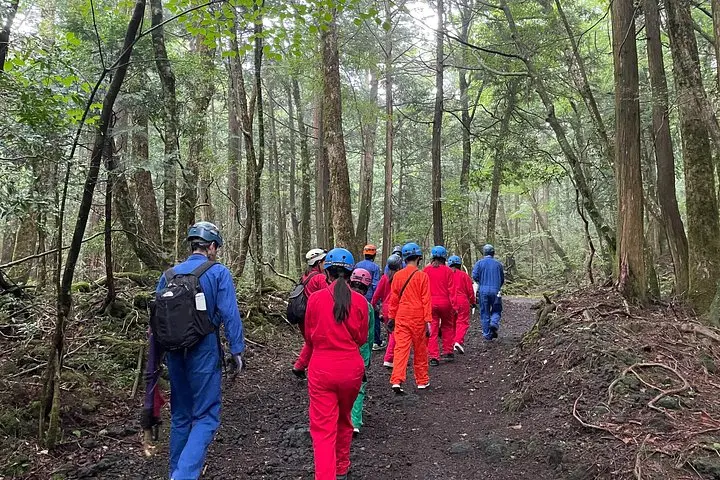
A hush falls as the trail drops beneath the pines and the ground changes underfoot — black, porous lava rock, mottled with moss. Walking through Aokigahara Jukai, the forest at Mt. Fuji’s northwest base, you move between trunks that lean like patient guides while the air tastes cool and mineral-rich.
A hush falls as the trail drops beneath the pines and the ground changes underfoot — black, porous lava rock, mottled with moss. Walking through Aokigahara Jukai, the forest at Mt. Fuji’s northwest base, you move between trunks that lean like patient guides while the air tastes cool and mineral-rich.
The forest grew on lava flows from an eruption roughly 1,200 years ago; the ground is riddled with caves and crevices carved by cooling rock and centuries of water. Local guides trace human and natural history here — from early woodcutting and mythic folklore to the more recent cultural sensitivity that surrounds the site today. Geology is obvious under your boots: jagged lava benches, compacted pahoehoe and ʻaʻā-like textures, and grottoes where ice and dripstone sometimes form in winter.
Wildlife is quiet but present: deer and foxes slip between trees, and mushrooms and moss stake out the dark soil. In the caves the world narrows to headlamp cones and the tactile work of scrambling, climbing short lava walls, and feeling for handholds.
Practical guidance: the route is accessible and suitable for a wide range of ages, but expect uneven terrain and confined passages in caves. Bring sturdy boots, layered clothing, and a charged headlamp if you have one (helmets and headlamps are available). Walk with a licensed guide, follow safety briefings, and respect marked paths — this area is ecologically fragile and culturally sensitive. Plan for a roughly three-hour outing and moderate exertion; steady footing and attention pay dividends in a place where the forest seems to breathe around you.