THE ADVENTURE COLLECTIVE® · Independent discovery and booking for outdoor travel

Follow ancient cobbled lanes above Kardamyli into the foothills of Taygetos—tower houses, olive terraces and sudden coastal outlooks define a compact, culture-rich four-hour hike. Expect limestone ridges, local stories and a picnic of regional products.
Follow ancient cobbled lanes above Kardamyli into the foothills of Taygetos—tower houses, olive terraces and sudden coastal outlooks define a compact, culture-rich four-hour hike. Expect limestone ridges, local stories and a picnic of regional products.
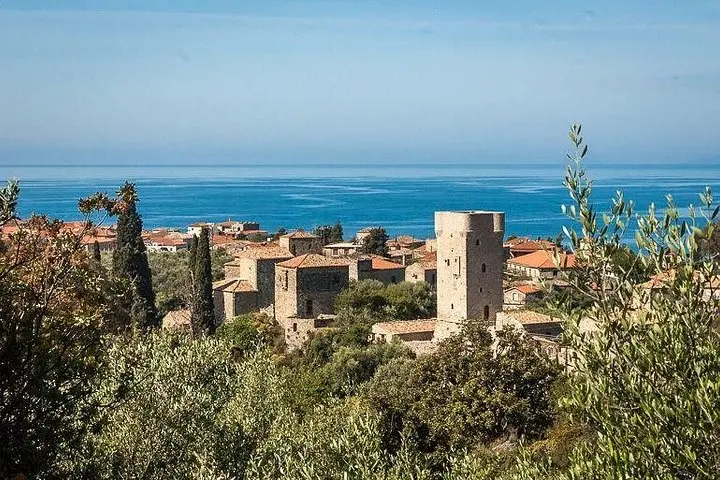
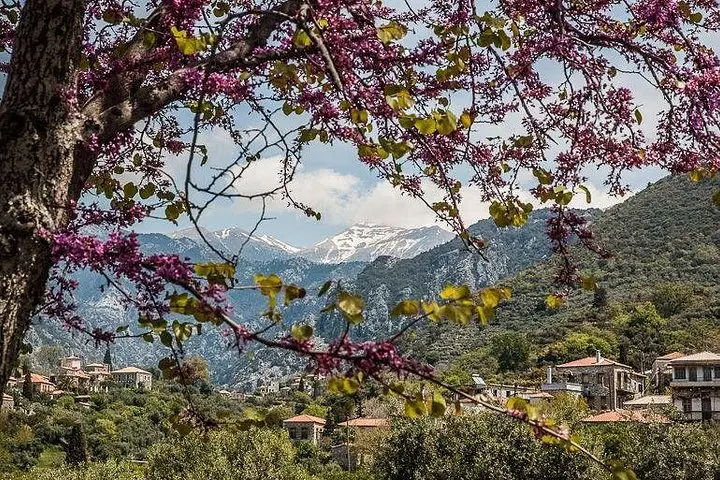
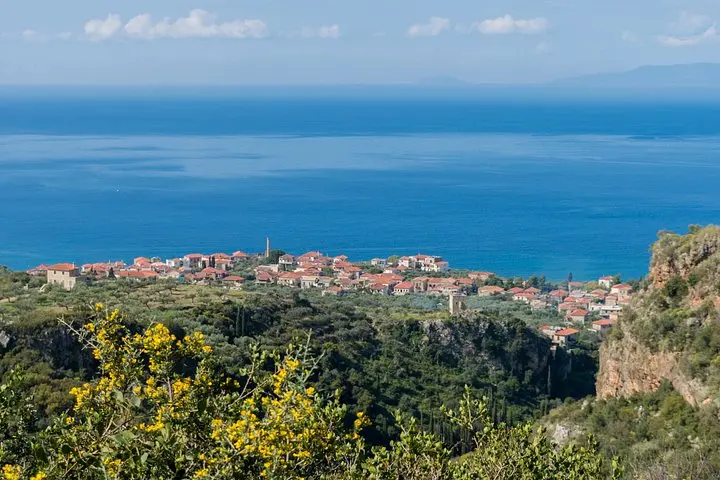
You step onto a stony cobbled lane above Kardamyli and the sea drops away in a sheet of Mediterranean blue while Taygetos rises like a raw wall behind the village.
Verified experiences and guided adventures in the surrounding area.
Operated by Explore Messinia · Kardamyli, Messinia
You step onto a stony cobbled lane above Kardamyli and the sea drops away in a sheet of Mediterranean blue while Taygetos rises like a raw wall behind the village.
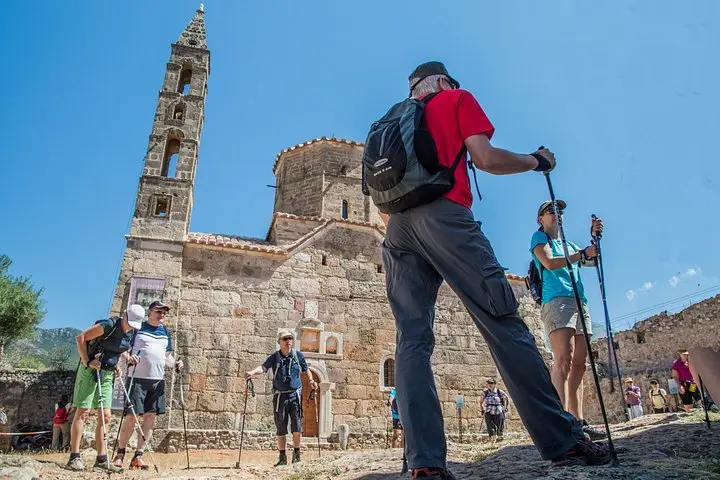
This guided four-hour hike follows the old mule and cobblepath network that knots the Mani foothills—paths that once linked tower houses, chapels and terraced olive groves. The landscape alternates between sun-baked limestone slabs, shaded oak and olive terraces, and sudden coastal outlooks where the scent of sea and thyme pulls you forward.
Mani's history is written into its architecture: centuries-old tower houses built for family defense, tiny chapels carved into rock, and grave markers that tell of clan rivalries and seafaring livelihoods. Geologically, Taygetos is a folded limestone massif—expect karst ridges, small caves and loose scree on steeper pitches.
Local culture is tangible: shepherding, olive oil production and a direct appetite for storytelling. On this route your guide typically pauses for a picnic of local cheeses, olives and bread while sharing regional anecdotes and map-worthy detours.
Practical guidance: the itinerary runs about 4 hours and suits hikers in moderate condition; plan for 6–10 km with intermittent climbs and roughly 200–400 m cumulative elevation gain. Wear sturdy trail shoes with good grip for cobbles and limestone slabs, bring 1–2 liters of water, sun protection and a light layer for changing mountain-coast winds. Start in the morning for cooler conditions and clearer views, and always follow your guide on exposed sections—the paths are historic but in places narrow and uneven.
A moderate fitness level is recommended; the hike is roughly 3–4 hours with intermittent climbs and uneven surfaces—regular walkers should manage comfortably.
The trip includes a guided hike, a picnic with locally sourced products, snacks, photographs from the tour and liability insurance.
The meeting point and finish are at the main square of Kardamyli; public transportation options are available nearby.
Children with hiking experience can join but the trail has exposed and uneven sections; it is not recommended for pregnant travelers per the provider's guidance.
Explore Messinia operates guided outdoor trips and adventures with an emphasis on safety, stewardship, and memorable experiences.
You step onto a stony cobbled lane above Kardamyli and the sea drops away in a sheet of Mediterranean blue while Taygetos rises like a raw wall behind the village.
You step onto a stony cobbled lane above Kardamyli and the sea drops away in a sheet of Mediterranean blue while Taygetos rises like a raw wall behind the village.
This guided four-hour hike follows the old mule and cobblepath network that knots the Mani foothills—paths that once linked tower houses, chapels and terraced olive groves. The landscape alternates between sun-baked limestone slabs, shaded oak and olive terraces, and sudden coastal outlooks where the scent of sea and thyme pulls you forward.
Mani's history is written into its architecture: centuries-old tower houses built for family defense, tiny chapels carved into rock, and grave markers that tell of clan rivalries and seafaring livelihoods. Geologically, Taygetos is a folded limestone massif—expect karst ridges, small caves and loose scree on steeper pitches.
Local culture is tangible: shepherding, olive oil production and a direct appetite for storytelling. On this route your guide typically pauses for a picnic of local cheeses, olives and bread while sharing regional anecdotes and map-worthy detours.
Practical guidance: the itinerary runs about 4 hours and suits hikers in moderate condition; plan for 6–10 km with intermittent climbs and roughly 200–400 m cumulative elevation gain. Wear sturdy trail shoes with good grip for cobbles and limestone slabs, bring 1–2 liters of water, sun protection and a light layer for changing mountain-coast winds. Start in the morning for cooler conditions and clearer views, and always follow your guide on exposed sections—the paths are historic but in places narrow and uneven.