THE ADVENTURE COLLECTIVE® · Independent discovery and booking for outdoor travel

Walk where cooled lava meets the Atlantic: the Baías da Agualva trail on Terceira offers columnar basalt, a small coastal lagoon, and broad northern ocean views in a compact 2‑hour outing. Ideal for hikers who want geological drama with minimal ascent.
Walk where cooled lava meets the Atlantic: the Baías da Agualva trail on Terceira offers columnar basalt, a small coastal lagoon, and broad northern ocean views in a compact 2‑hour outing. Ideal for hikers who want geological drama with minimal ascent.
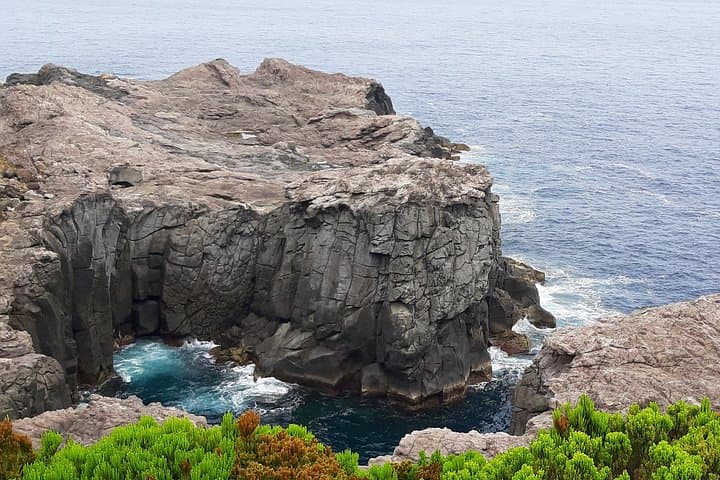
The trail begins at a cliff edge where the ocean has been cutting into black lava for centuries; salt spray lifts and dares you forward while basalt columns stand like the ribs of a cooled sea. Walking the Baías da Agualva route places you on a northern terrace of Terceira where lava fields meet sharp sea, and a small coastal lagoon—Alagoa da Fajãzinha—collects the island’s restless weather.
Verified experiences and guided adventures in the surrounding area.
Operated by Azores Nature Tours · Agualva, Azores
The trail begins at a cliff edge where the ocean has been cutting into black lava for centuries; salt spray lifts and dares you forward while basalt columns stand like the ribs of a cooled sea. Walking the Baías da Agualva route places you on a northern terrace of Terceira where lava fields meet sharp sea, and a small coastal lagoon—Alagoa da Fajãzinha—collects the island’s restless weather.
Terceira is volcanic: the basalt here is columnar jointing formed as thick flows cooled and fractured. Human history is compact—settlers shaped terraces and tiny roadways to access coves, and fishermen still draw from these bays. Expect the language and culture to be quietly maritime: small villages, stone walls, and a focus on seafood and seamanship.
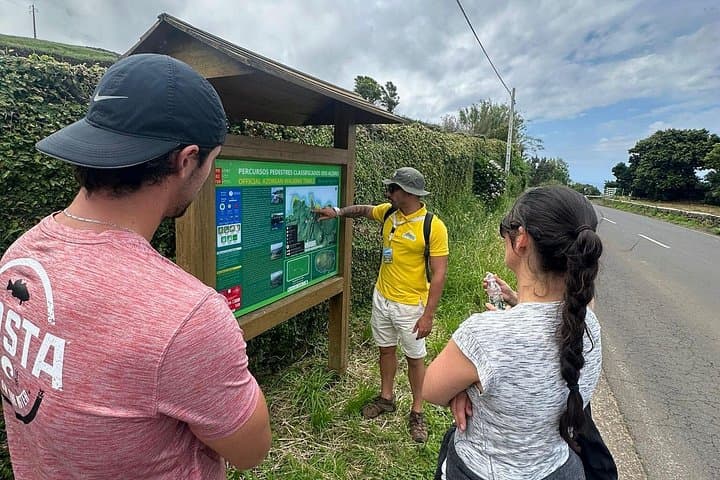
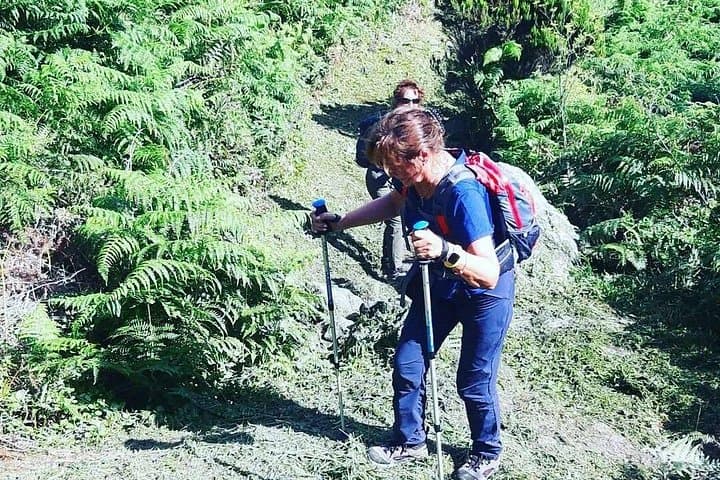
The hike itself is about two hours of easy-to-moderate walking across uneven volcanic rock and dirt paths. Ground can be sharp and sloping; views open to the north and west. The guide-backed walk typically includes pickup, an informative local guide, and light stops at viewpoints. Practical notes: wear sturdy shoes with toe protection, bring windproof layers and at least 1–2 liters of water, and time your walk for morning or late afternoon to avoid the strongest sun and catch softer light on the basalt.
Respect cliff edges and seabird nesting areas; tides and swell can change the character of the shoreline quickly. For photographers and hikers who like geological drama without long ascents, Baías da Agualva delivers focused coastal geology and Atlantic exposure in a compact, accessible outing.
The guided outing is about 2 hours with easy-to-moderate difficulty—uneven ground but no technical climbing.
Most operators include pickup and drop-off from central points on Terceira—confirm your exact pickup location when booking.
Walks may be canceled in heavy rain, high winds, or dangerous sea conditions; check cancellation terms and local forecasts.
Expect coastal seabirds like shearwaters and the occasional sighting of dolphins offshore; keep distance from nesting areas.
Azores Nature Tours operates guided outdoor trips and adventures with an emphasis on safety, stewardship, and memorable experiences.

The trail begins at a cliff edge where the ocean has been cutting into black lava for centuries; salt spray lifts and dares you forward while basalt columns stand like the ribs of a cooled sea. Walking the Baías da Agualva route places you on a northern terrace of Terceira where lava fields meet sharp sea, and a small coastal lagoon—Alagoa da Fajãzinha—collects the island’s restless weather.
The trail begins at a cliff edge where the ocean has been cutting into black lava for centuries; salt spray lifts and dares you forward while basalt columns stand like the ribs of a cooled sea. Walking the Baías da Agualva route places you on a northern terrace of Terceira where lava fields meet sharp sea, and a small coastal lagoon—Alagoa da Fajãzinha—collects the island’s restless weather.
Terceira is volcanic: the basalt here is columnar jointing formed as thick flows cooled and fractured. Human history is compact—settlers shaped terraces and tiny roadways to access coves, and fishermen still draw from these bays. Expect the language and culture to be quietly maritime: small villages, stone walls, and a focus on seafood and seamanship.
The hike itself is about two hours of easy-to-moderate walking across uneven volcanic rock and dirt paths. Ground can be sharp and sloping; views open to the north and west. The guide-backed walk typically includes pickup, an informative local guide, and light stops at viewpoints. Practical notes: wear sturdy shoes with toe protection, bring windproof layers and at least 1–2 liters of water, and time your walk for morning or late afternoon to avoid the strongest sun and catch softer light on the basalt.
Respect cliff edges and seabird nesting areas; tides and swell can change the character of the shoreline quickly. For photographers and hikers who like geological drama without long ascents, Baías da Agualva delivers focused coastal geology and Atlantic exposure in a compact, accessible outing.