THE ADVENTURE COLLECTIVE® · Independent discovery and booking for outdoor travel

Traverse Tenerife’s recent volcanic past on a guided hike between Trevejo and the Chinyero cone. Expect black lava fields, steep ridge climbs and interpretive guides who explain the island’s last eruptions.
Traverse Tenerife’s recent volcanic past on a guided hike between Trevejo and the Chinyero cone. Expect black lava fields, steep ridge climbs and interpretive guides who explain the island’s last eruptions.
You step out of the minibus into wind‑shaped pine and the black grain of recent lava; the air smells faintly mineral, as if the island is still cooling beneath your feet.
Verified experiences and guided adventures in the surrounding area.
Operated by Sergio Walking Tours · Santiago del Teide, Santa Cruz de Tenerife
You step out of the minibus into wind‑shaped pine and the black grain of recent lava; the air smells faintly mineral, as if the island is still cooling beneath your feet.
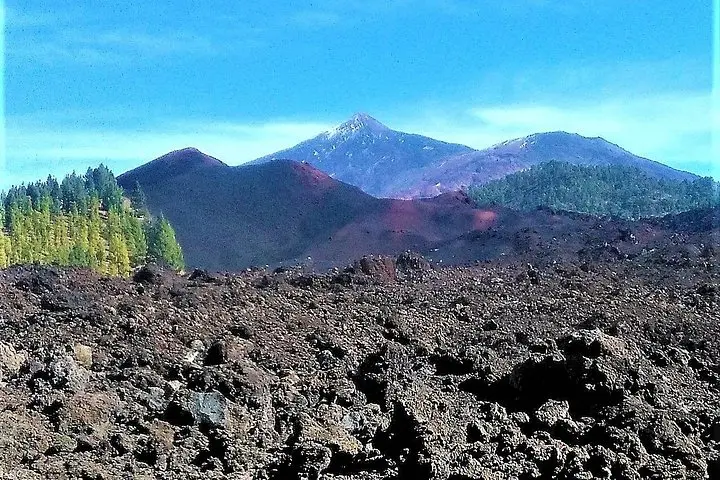
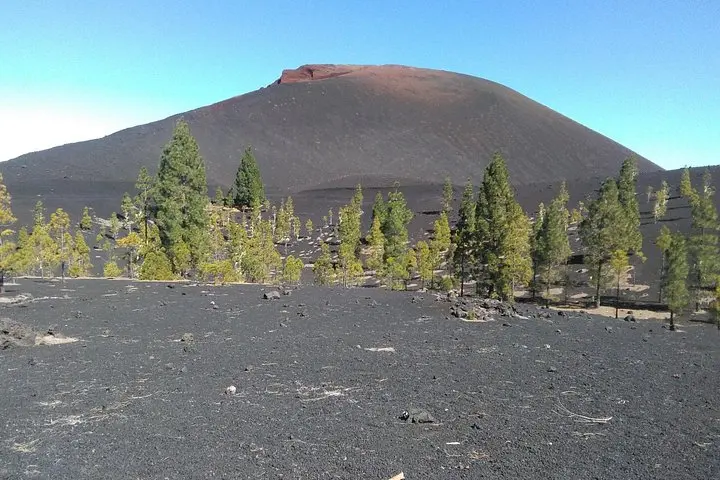
This guided trek moves along the Abeque ridge between the Trevejo area and the monogenic Chinyero cone, crossing altitudes that range roughly from 565 m up to Chinyero’s summit at 1,561 m. Geology here is open history: pahoehoe and aa flows, cinder cones and scoria beds laid down by eruptions recorded in 1706 (Arenas Negras) and the 1909 Chinyero event — Tenerife’s most recent eruption.
Culturally the route threads past volcanic agriculture and small hamlets tied to Garachico and Santiago del Teide; birdlife is protected under a Special Protection Area and the reserve is a live laboratory of ecological succession as plants recolonize fresh lava.
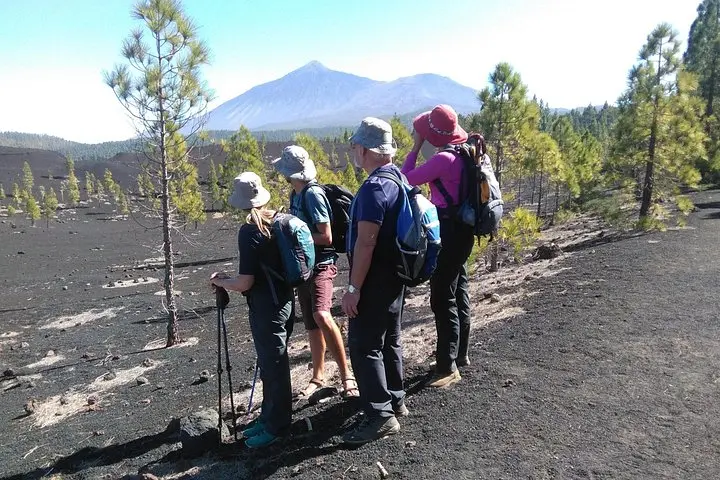
Expect broken lava rock, compacted ash, and broom‑lined slopes; footing can be loose and uneven, with sustained climbs and open exposure. The experience is sensory — the crack of boot on lava, wind that seems to push you toward the crater rim — but practical: allow roughly 4–5 hours, bring 1.5–2 liters of water, sun protection and layered clothing for temperature swings between sea level and high ridge.
Guides provide interpretation, safety equipment and optional poles. Stick to designated paths to protect fragile pioneer vegetation and nesting birds; check local weather and volcanic advisories before you go.
The guided program runs about 4–5 hours and is rated moderate — expect uneven volcanic terrain and some sustained climbing between roughly 565 m and 1,561 m.
Chinyero’s last eruption was in 1909 and the volcano is currently inactive; the area is a protected reserve with established trails and guided access for safety.
Guides commonly speak multiple languages and the tour typically provides safety gear and can supply trekking poles on request.
The trek requires moderate fitness and is not recommended for those with serious heart, spinal, or mobility issues; check operator guidance for age limits.
Sergio Walking Tours operates guided outdoor trips and adventures with an emphasis on safety, stewardship, and memorable experiences.
You step out of the minibus into wind‑shaped pine and the black grain of recent lava; the air smells faintly mineral, as if the island is still cooling beneath your feet.
You step out of the minibus into wind‑shaped pine and the black grain of recent lava; the air smells faintly mineral, as if the island is still cooling beneath your feet.
This guided trek moves along the Abeque ridge between the Trevejo area and the monogenic Chinyero cone, crossing altitudes that range roughly from 565 m up to Chinyero’s summit at 1,561 m. Geology here is open history: pahoehoe and aa flows, cinder cones and scoria beds laid down by eruptions recorded in 1706 (Arenas Negras) and the 1909 Chinyero event — Tenerife’s most recent eruption.
Culturally the route threads past volcanic agriculture and small hamlets tied to Garachico and Santiago del Teide; birdlife is protected under a Special Protection Area and the reserve is a live laboratory of ecological succession as plants recolonize fresh lava.
Expect broken lava rock, compacted ash, and broom‑lined slopes; footing can be loose and uneven, with sustained climbs and open exposure. The experience is sensory — the crack of boot on lava, wind that seems to push you toward the crater rim — but practical: allow roughly 4–5 hours, bring 1.5–2 liters of water, sun protection and layered clothing for temperature swings between sea level and high ridge.
Guides provide interpretation, safety equipment and optional poles. Stick to designated paths to protect fragile pioneer vegetation and nesting birds; check local weather and volcanic advisories before you go.