THE ADVENTURE COLLECTIVE® · Independent discovery and booking for outdoor travel

Stand on the rim of Sierra Negra and watch a 6‑mile crater stretch to the horizon. This full‑day hike on Isabela Island combines recent lava fields, panoramic rim walks and endemic wildlife encounters — all guided by a certified naturalist.
Stand on the rim of Sierra Negra and watch a 6‑mile crater stretch to the horizon. This full‑day hike on Isabela Island combines recent lava fields, panoramic rim walks and endemic wildlife encounters — all guided by a certified naturalist.
A morning on Isabela begins with the slope under your boots and a crater that refuses to be ignored. The trail climbs through open highland scrub, wind-scoured lava and patches of fern where the air tastes faintly of sulfur; the caldera of Sierra Negra opens ahead, a nearly 6‑mile diameter bowl that frames the horizon. Guides point out lava ribs and a string of recent flows; the ground itself seems to push the day forward.
Verified experiences and guided adventures in the surrounding area.
Operated by Latin Adventures Cía Ltda · Puerto Villamil, Galápagos
A morning on Isabela begins with the slope under your boots and a crater that refuses to be ignored. The trail climbs through open highland scrub, wind-scoured lava and patches of fern where the air tastes faintly of sulfur; the caldera of Sierra Negra opens ahead, a nearly 6‑mile diameter bowl that frames the horizon. Guides point out lava ribs and a string of recent flows; the ground itself seems to push the day forward.
Geology here is recent and visible — shield-volcanism layered by modern flows — and the volcano’s eruptions are part of Isabela’s ongoing story. Human history is shorter but present: local farmers and guides who read the seasons, and a park system that manages access to protect fragile highland vegetation and endemic species.
On the walk you’ll pass volcanic rock fields, the smaller cones of Volcán Chico, and viewpoints that look down to mangroves and the ocean. Expect variable footing: compact dirt, volcanic scree, and occasional muddy sections after rain. Wildlife is subtle in the highlands — giant tortoises and ground finches often make an appearance — while the guide will interpret the island’s distinctive flora.
Practicalities: the shared full‑day tour runs about six hours with moderate distance and steady climbs; bring sun protection, 2–3 liters of water, sturdy boots, and a light windproof layer. Start early to avoid heat and to keep time for the rim walk and Volcán Chico overlook. Follow park regulations, keep to trails, and carry out any waste: these landscapes are active and resilient, but fragile under heavy foot traffic.
Yes — Sierra Negra is inside Galápagos National Park; access is managed and guided tours generally include required permits administered by the operator.
The route is described as family‑friendly but involves sustained walking; children and older adults should be comfortable with several hours of hiking and take frequent rests.
In the highlands you may encounter giant tortoises, ground finches and occasionally land iguanas; marine species are visible from some rim viewpoints but are less common on the trail itself.
Follow your certified naturalist guide and local park instructions — tours will reroute or return to base if conditions change; always carry a rain layer and emergency contact info.
Latin Adventures Cía Ltda operates guided outdoor trips and adventures with an emphasis on safety, stewardship, and memorable experiences.


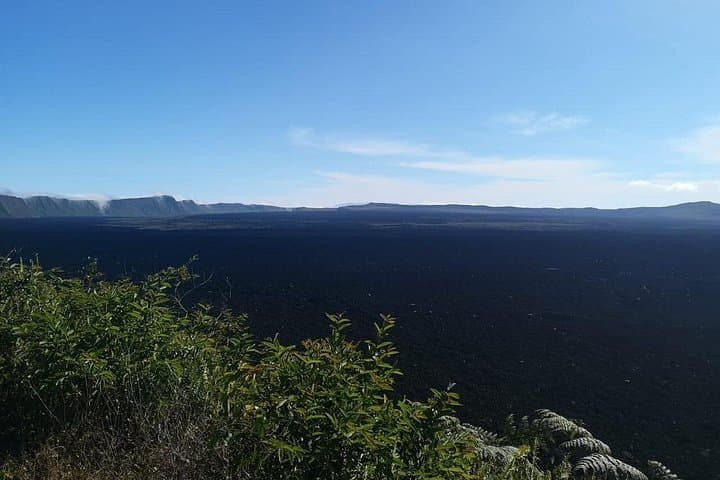
A morning on Isabela begins with the slope under your boots and a crater that refuses to be ignored. The trail climbs through open highland scrub, wind-scoured lava and patches of fern where the air tastes faintly of sulfur; the caldera of Sierra Negra opens ahead, a nearly 6‑mile diameter bowl that frames the horizon. Guides point out lava ribs and a string of recent flows; the ground itself seems to push the day forward.
A morning on Isabela begins with the slope under your boots and a crater that refuses to be ignored. The trail climbs through open highland scrub, wind-scoured lava and patches of fern where the air tastes faintly of sulfur; the caldera of Sierra Negra opens ahead, a nearly 6‑mile diameter bowl that frames the horizon. Guides point out lava ribs and a string of recent flows; the ground itself seems to push the day forward.
Geology here is recent and visible — shield-volcanism layered by modern flows — and the volcano’s eruptions are part of Isabela’s ongoing story. Human history is shorter but present: local farmers and guides who read the seasons, and a park system that manages access to protect fragile highland vegetation and endemic species.
On the walk you’ll pass volcanic rock fields, the smaller cones of Volcán Chico, and viewpoints that look down to mangroves and the ocean. Expect variable footing: compact dirt, volcanic scree, and occasional muddy sections after rain. Wildlife is subtle in the highlands — giant tortoises and ground finches often make an appearance — while the guide will interpret the island’s distinctive flora.
Practicalities: the shared full‑day tour runs about six hours with moderate distance and steady climbs; bring sun protection, 2–3 liters of water, sturdy boots, and a light windproof layer. Start early to avoid heat and to keep time for the rim walk and Volcán Chico overlook. Follow park regulations, keep to trails, and carry out any waste: these landscapes are active and resilient, but fragile under heavy foot traffic.