THE ADVENTURE COLLECTIVE® · Independent discovery and booking for outdoor travel

Walk into one of Zion’s most dramatic slot canyons: the Narrows. This guide explains what you’ll see, why the canyon formed, and the practical gear and safety steps needed for a dignified day on the Virgin River.
Walk into one of Zion’s most dramatic slot canyons: the Narrows. This guide explains what you’ll see, why the canyon formed, and the practical gear and safety steps needed for a dignified day on the Virgin River.
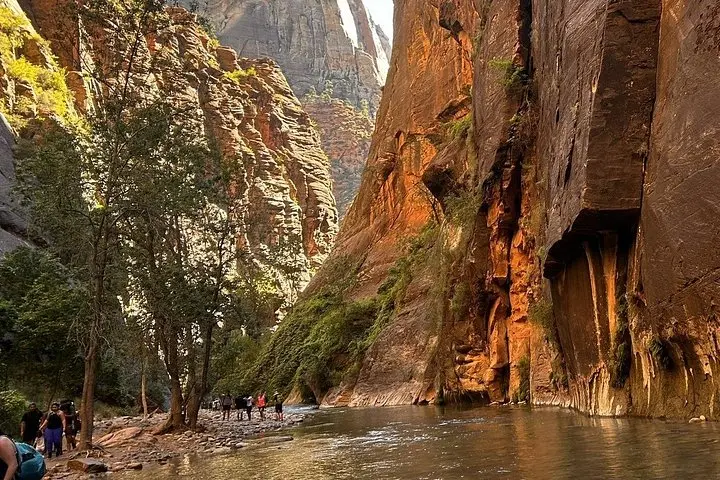
The river narrows and the canyon walls pinch shut overhead; light falls in thin strips and the Virgin River dares you forward. Start at the Riverside Walk where the paved trail gives way to ankle-deep currents and a corridor of slick, water-polished Navajo sandstone.
Verified experiences and guided adventures in the surrounding area.
Operated by Tour Zion and Bryce · Springdale, Utah
The river narrows and the canyon walls pinch shut overhead; light falls in thin strips and the Virgin River dares you forward. Start at the Riverside Walk where the paved trail gives way to ankle-deep currents and a corridor of slick, water-polished Navajo sandstone.
Geology here is obvious: layer upon layer of cross-bedded sandstone carved by millennia of flowing water. The Narrows is a classic slot canyon formed as the Virgin River exploited fractures, cutting deep and vertical in a narrow band. Southern Paiute people inhabited these cliffs long before Euro-American settlers mapped Zion; today the park balances heavy visitation with fragile river ecology.
On the walk in you’ll pass the Riverside Walk’s easy benches, then step into a different rhythm—wading, choosing footholds, watching light move down the walls. Expect boulder fields, warm seep springs and the odd minute snail clinging to a rock. Birdsong is lateral here: canyon wrens call from a crevice; swallows wheel above the river.
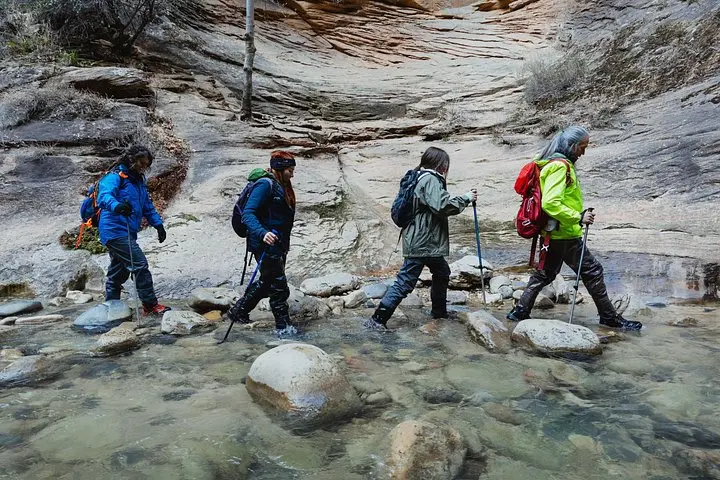
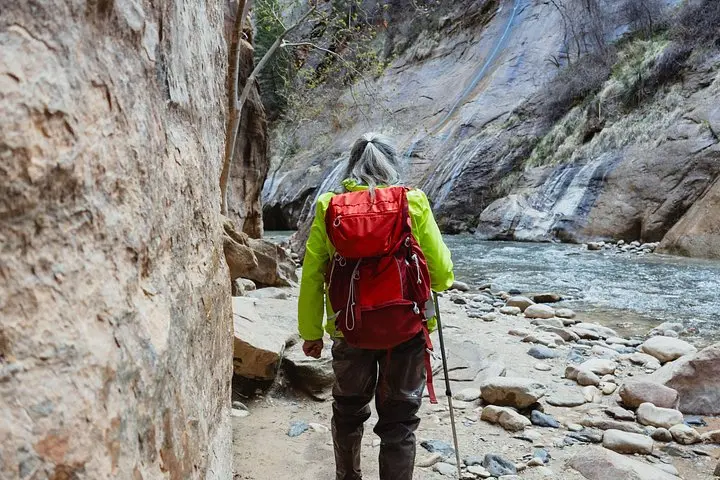
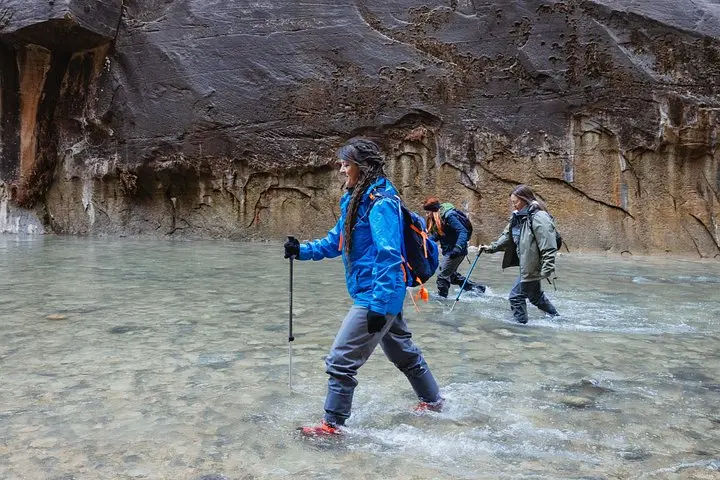
Practical part: the standard day hike requires the Zion shuttle to Temple of Sinawava, stable water footwear, and an eye on river levels—flash floods can close the canyon without warning. Most groups go up 1–2 miles and turn around; underfoot is uneven rock and occasional current. Bring a dry bag for gear, neoprene socks if the season’s cold, and trekking poles for balance.
This is a river hike first and a trail hike second—respect the water, check park alerts, and plan for a return that often feels different than the approach.
Day hikers do not need a permit; permits are required only for overnight trips into the upper Narrows.
No—rain upstream can cause sudden flash floods. Check NPS alerts and avoid the canyon if storms are forecast.
Many go 1–2 miles upstream from the Riverside Walk and turn around; experienced hikers may go further but should plan time and temperature accordingly.
Children can do sections of the Narrows, but it’s not recommended for kids under about 8 due to cold water, slippery footing, and river currents.
Tour Zion and Bryce operates guided outdoor trips and adventures with an emphasis on safety, stewardship, and memorable experiences.
The river narrows and the canyon walls pinch shut overhead; light falls in thin strips and the Virgin River dares you forward. Start at the Riverside Walk where the paved trail gives way to ankle-deep currents and a corridor of slick, water-polished Navajo sandstone.
The river narrows and the canyon walls pinch shut overhead; light falls in thin strips and the Virgin River dares you forward. Start at the Riverside Walk where the paved trail gives way to ankle-deep currents and a corridor of slick, water-polished Navajo sandstone.
Geology here is obvious: layer upon layer of cross-bedded sandstone carved by millennia of flowing water. The Narrows is a classic slot canyon formed as the Virgin River exploited fractures, cutting deep and vertical in a narrow band. Southern Paiute people inhabited these cliffs long before Euro-American settlers mapped Zion; today the park balances heavy visitation with fragile river ecology.
On the walk in you’ll pass the Riverside Walk’s easy benches, then step into a different rhythm—wading, choosing footholds, watching light move down the walls. Expect boulder fields, warm seep springs and the odd minute snail clinging to a rock. Birdsong is lateral here: canyon wrens call from a crevice; swallows wheel above the river.
Practical part: the standard day hike requires the Zion shuttle to Temple of Sinawava, stable water footwear, and an eye on river levels—flash floods can close the canyon without warning. Most groups go up 1–2 miles and turn around; underfoot is uneven rock and occasional current. Bring a dry bag for gear, neoprene socks if the season’s cold, and trekking poles for balance.
This is a river hike first and a trail hike second—respect the water, check park alerts, and plan for a return that often feels different than the approach.