THE ADVENTURE COLLECTIVE® · Independent discovery and booking for outdoor travel

Walk the legendary Sentiero degli Dei with a private guide and transfer from Amalfi Coast accommodations. This accessible 4–5 hour guided hike threads cliffside terraces, dramatic viewpoints and village history into one memorable morning on the Amalfi cliffs.
Walk the legendary Sentiero degli Dei with a private guide and transfer from Amalfi Coast accommodations. This accessible 4–5 hour guided hike threads cliffside terraces, dramatic viewpoints and village history into one memorable morning on the Amalfi cliffs.
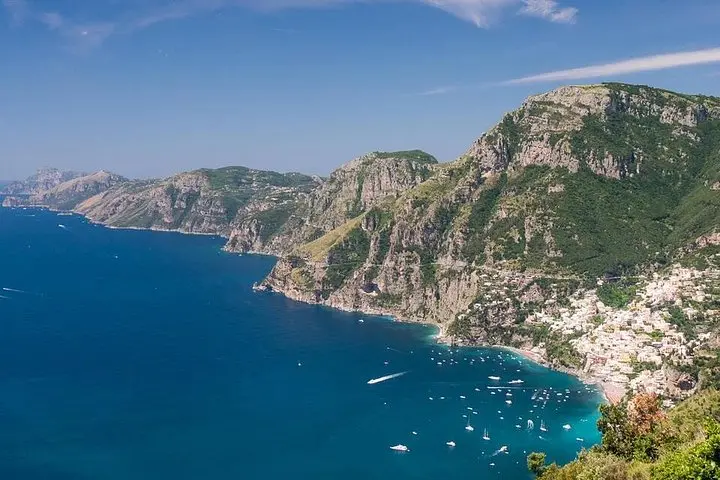
You step off the minivan into a wash of salt air and sun-dried stone; behind you the Mediterranean flickers like a held breath, ahead a narrow ribbon of trail winds along a cliff edge where the land drops away in vertiginous terraces. This is the Path of the Gods—the Sentiero degli Dei—where shepherd tracks become a high coastal promenade and every bend offers a new frame of sea and village.
Verified experiences and guided adventures in the surrounding area.
Operated by Wine tour Amalfi Coast · Agerola, Campania
You step off the minivan into a wash of salt air and sun-dried stone; behind you the Mediterranean flickers like a held breath, ahead a narrow ribbon of trail winds along a cliff edge where the land drops away in vertiginous terraces. This is the Path of the Gods—the Sentiero degli Dei—where shepherd tracks become a high coastal promenade and every bend offers a new frame of sea and village.
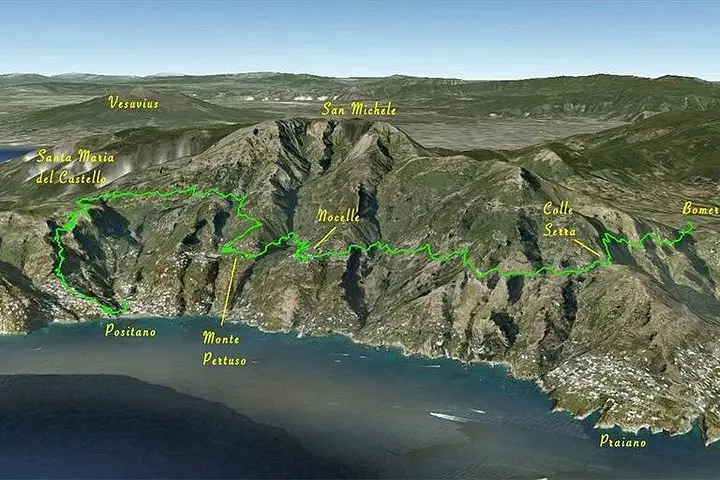
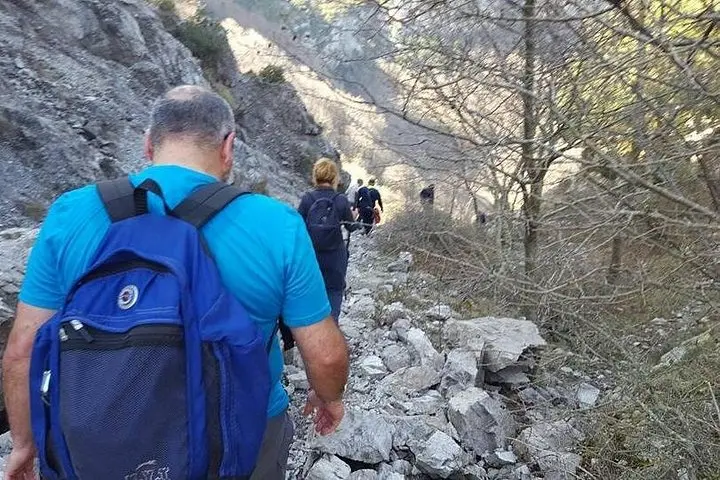
The route most guides use runs from the high hamlet of Bomerano (Agerola) toward the hamlets above Positano, following ancient mule tracks carved into limestone. Geologically, these cliffs are folded sedimentary rock pushed up by the Apennine tectonics; underfoot you’ll find compacted scree, worn stone steps, and occasional dry-stone retaining walls that mark centuries of human maintenance. Culturally, the trail links mountain farms and cliffside hamlets—past terraces where tomatoes and grapes still grow and near chapels whose bells punctuate the quiet.
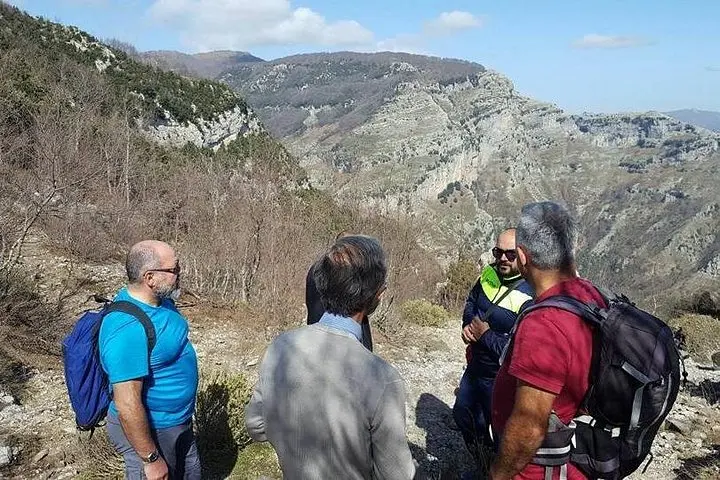
Walkers here trade skyline for intimacy: gulls wheel below, a breeze reads the cliff faces like a page, and the sea dares you to look away. Guides on the tour thread local stories into the ascent—how mule trains carried salt and citrus, how bands of shepherds used the path for seasonal migration—giving the landscape a human scale that matches its drama.
Practically speaking, the hike is accessible to anyone with a moderate level of fitness. Expect roughly 7–8 km on mostly single-track with some steep stone steps and short rocky sections; the route is largely downhill if you start in Bomerano, but there are undulating stretches and cumulative elevation change of a few hundred meters. The company’s transfer handles the logistics: round-trip private transfer from Amalfi Coast accommodations to the Bomerano trailhead, a professional guide for navigation and local interpretation, and national park fees are included.
Timing matters: morning light keeps temperatures tolerable and slants across the cliffs for the best views; late-afternoon heat in summer can make the same distance feel much longer. Wear grippy hiking shoes, bring 1–2 liters of water, sun protection, and a light shell—weather along the ridge can turn breezy and cool.
For photographers and curious travelers, pause at terraces overlooking the Furore fjord and at the Nocelle viewpoint above Positano to watch the village cling to its stones like an argument between sea and mountain. The trail is popular but move at the guide’s pace to enjoy the quieter moments—the scent of wild oregano, a distant goat, the slow reshaping of coastline under sky.
This private, guided morning walk is as much about who you meet on the path—the guide, the farmers, the other walkers—as it is about the view. Bring sensible gear, a willingness to descend and climb, and leave time afterward to explore a coastal village with salt on your clothes and a clearer sense of how this strip of coast earned its name.
Typical guided route is about 7–8 km and takes 3–4 hours on foot; it's mostly single-track with uneven stone steps—moderate difficulty.
Yes—round-trip private transfer from Amalfi Coast accommodations to Bomerano is included in this tour.
The usual start is Bomerano (Agerola) and the route descends toward Nocelle/Positano; exact endpoints can vary by guide and weather.
Older children and fit older adults can do it, but it's not recommended for people with serious mobility, heart, or back issues.
Grippy hiking shoes, layered clothing, 1–2 liters of water, sun protection, and small snacks are recommended.
The operator may cancel for bad weather; check cancellation terms—full refund is usually available with 24+ hours' notice.
Wine tour Amalfi Coast operates guided outdoor trips and adventures with an emphasis on safety, stewardship, and memorable experiences.
You step off the minivan into a wash of salt air and sun-dried stone; behind you the Mediterranean flickers like a held breath, ahead a narrow ribbon of trail winds along a cliff edge where the land drops away in vertiginous terraces. This is the Path of the Gods—the Sentiero degli Dei—where shepherd tracks become a high coastal promenade and every bend offers a new frame of sea and village.
You step off the minivan into a wash of salt air and sun-dried stone; behind you the Mediterranean flickers like a held breath, ahead a narrow ribbon of trail winds along a cliff edge where the land drops away in vertiginous terraces. This is the Path of the Gods—the Sentiero degli Dei—where shepherd tracks become a high coastal promenade and every bend offers a new frame of sea and village.
The route most guides use runs from the high hamlet of Bomerano (Agerola) toward the hamlets above Positano, following ancient mule tracks carved into limestone. Geologically, these cliffs are folded sedimentary rock pushed up by the Apennine tectonics; underfoot you’ll find compacted scree, worn stone steps, and occasional dry-stone retaining walls that mark centuries of human maintenance. Culturally, the trail links mountain farms and cliffside hamlets—past terraces where tomatoes and grapes still grow and near chapels whose bells punctuate the quiet.
Walkers here trade skyline for intimacy: gulls wheel below, a breeze reads the cliff faces like a page, and the sea dares you to look away. Guides on the tour thread local stories into the ascent—how mule trains carried salt and citrus, how bands of shepherds used the path for seasonal migration—giving the landscape a human scale that matches its drama.
Practically speaking, the hike is accessible to anyone with a moderate level of fitness. Expect roughly 7–8 km on mostly single-track with some steep stone steps and short rocky sections; the route is largely downhill if you start in Bomerano, but there are undulating stretches and cumulative elevation change of a few hundred meters. The company’s transfer handles the logistics: round-trip private transfer from Amalfi Coast accommodations to the Bomerano trailhead, a professional guide for navigation and local interpretation, and national park fees are included.
Timing matters: morning light keeps temperatures tolerable and slants across the cliffs for the best views; late-afternoon heat in summer can make the same distance feel much longer. Wear grippy hiking shoes, bring 1–2 liters of water, sun protection, and a light shell—weather along the ridge can turn breezy and cool.
For photographers and curious travelers, pause at terraces overlooking the Furore fjord and at the Nocelle viewpoint above Positano to watch the village cling to its stones like an argument between sea and mountain. The trail is popular but move at the guide’s pace to enjoy the quieter moments—the scent of wild oregano, a distant goat, the slow reshaping of coastline under sky.
This private, guided morning walk is as much about who you meet on the path—the guide, the farmers, the other walkers—as it is about the view. Bring sensible gear, a willingness to descend and climb, and leave time afterward to explore a coastal village with salt on your clothes and a clearer sense of how this strip of coast earned its name.