THE ADVENTURE COLLECTIVE® · Independent discovery and booking for outdoor travel

Trade the cruise-ship crowd for a private, customizable tour of Hilo’s greatest hits: thundering Rainbow Falls, black-sand coves, and the living geology of Hawai‘i Volcanoes National Park. With short walks, plenty of viewpoints, and a guide who adapts the route on the fly, this shore day balances big scenery with practical comfort.
Trade the cruise-ship crowd for a private, customizable tour of Hilo’s greatest hits: thundering Rainbow Falls, black-sand coves, and the living geology of Hawai‘i Volcanoes National Park. With short walks, plenty of viewpoints, and a guide who adapts the route on the fly, this shore day balances big scenery with practical comfort.
The morning sea breeze moves through Hilo Harbor as the ship eases in, and the island makes its case fast: banyan shade, salt in the air, and the hiss of waves rolling black sand. A private vehicle is waiting at the pier—no bus lines, no scripted timetable—just your group and a local guide steering toward rain-fed waterfalls, sea turtle coves, and the live geology of Hawai‘i Volcanoes National Park.
Verified experiences and guided adventures in the surrounding area.
Operated by Big Island Backroad Adventures · Volcano, Hawaii
The morning sea breeze moves through Hilo Harbor as the ship eases in, and the island makes its case fast: banyan shade, salt in the air, and the hiss of waves rolling black sand. A private vehicle is waiting at the pier—no bus lines, no scripted timetable—just your group and a local guide steering toward rain-fed waterfalls, sea turtle coves, and the live geology of Hawai‘i Volcanoes National Park.
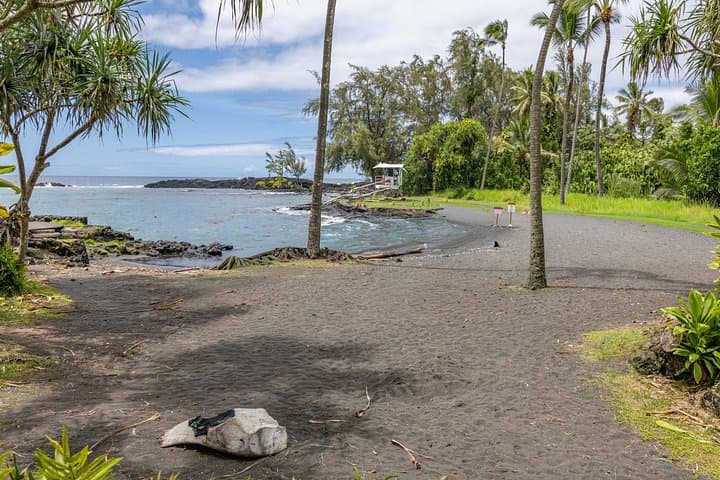
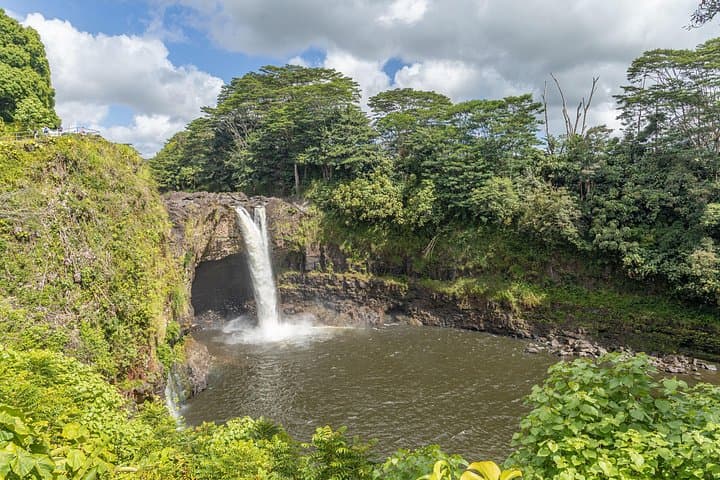
First stop is the Wailuku River, where Rainbow Falls spills over a lava cave. When the sun cooperates, a band of color hangs in the mist and dares you to get the shot before it fades. Upstream, Boiling Pots gurgles through old lava tubes, the river shouldering its way forward as if impatient to reach the bay. Then the coastline: a black-sand beach where waves polish basalt fragments into glittering grains and honu—Hawaiian green sea turtles—sometimes bob in the shorebreak.
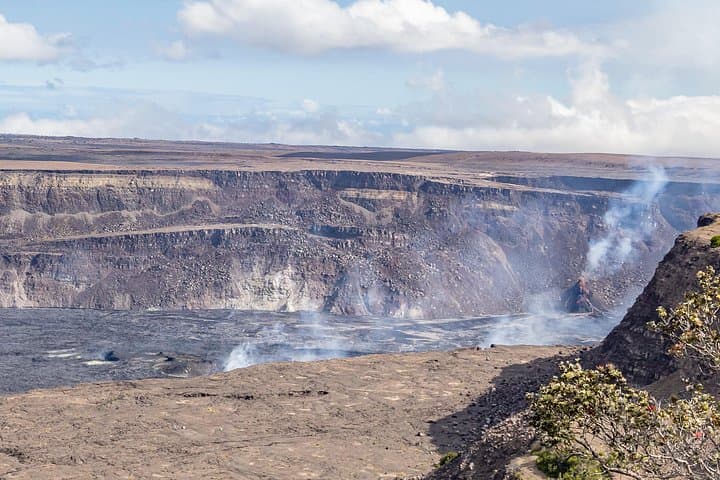
From sea level, the road climbs about 4,000 feet in roughly 45 minutes to Kīlauea’s summit. Here, steam vents whisper from the earth at Wahinekapu, and the crater rim edge delivers the kind of scale that hushes a conversation. Halema‘uma‘u—home of Pele in Hawaiian tradition—pulls the eye across fresh ash and sulfur-streaked stone. This park is a UNESCO World Heritage Site and Biosphere Reserve, and it feels like a living classroom: new rock forming under your feet, native birds lifting over ‘ōhi‘a trees, a rim trail tracing the boundary between forest and fire.
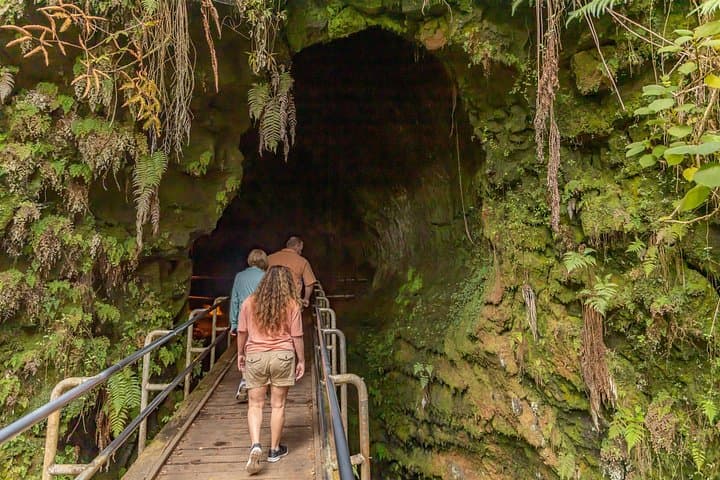
Short walks keep the day varied without demanding big mileage. Expect 1–3 miles total on mostly paved or packed cinder surfaces with minimal elevation change. Step into Nāhuku (Thurston Lava Tube), a 600-foot corridor where the island once flowed around you, then stretch the legs on Devastation Trail or pause at Kīlauea Iki Overlook to study a crater that hardened from a lava lake in 1959. Your guide keeps an eye on conditions—eruptions are intermittent and viewpoints may shift—and sets a relaxed pace with time for photos and a picnic lunch under the trees.
Practicality runs alongside the drama: layers for summit chill, closed-toe footwear for sharp rock, sun and rain protection for Hilo’s quick-change skies. Stay on marked paths—this landscape is fragile and culturally significant—and resist the temptation to pocket lava. With private transport, you shape the day: linger longer at a favorite overlook or swap in extra coastline if the surf is calling. Either way, the island does the heavy lifting—steam rising, currents urging, rainforest breathing—while you ride the rhythm from harbor to crater and back again.
Lava activity is intermittent and never guaranteed. Your guide monitors conditions and will bring you to the best safe viewpoints available that day.
Expect 1–3 miles total on mostly flat paths with optional add-ons. Guests may skip any segment and enjoy viewpoints nearby.
Yes. It’s a private tour with flexible pacing. Collapsible strollers and wheelchairs can be accommodated; guests must be able to enter/exit the vehicle independently.
Private transportation from the Hilo cruise terminal, snacks, non-alcoholic drinks, picnic-style lunch, rain jackets, umbrellas, and binoculars are provided.
Light, breathable clothing with a warm layer for the summit, closed-toe shoes, hat, and sunscreen. Bring swimwear if your group plans a beach stop.
From Hilo, it’s about 45 minutes each way to Kīlauea’s summit area, with scenic stops en route.
Big Island Backroad Adventures operates guided outdoor trips and adventures with an emphasis on safety, stewardship, and memorable experiences.
The morning sea breeze moves through Hilo Harbor as the ship eases in, and the island makes its case fast: banyan shade, salt in the air, and the hiss of waves rolling black sand. A private vehicle is waiting at the pier—no bus lines, no scripted timetable—just your group and a local guide steering toward rain-fed waterfalls, sea turtle coves, and the live geology of Hawai‘i Volcanoes National Park.
The morning sea breeze moves through Hilo Harbor as the ship eases in, and the island makes its case fast: banyan shade, salt in the air, and the hiss of waves rolling black sand. A private vehicle is waiting at the pier—no bus lines, no scripted timetable—just your group and a local guide steering toward rain-fed waterfalls, sea turtle coves, and the live geology of Hawai‘i Volcanoes National Park.
First stop is the Wailuku River, where Rainbow Falls spills over a lava cave. When the sun cooperates, a band of color hangs in the mist and dares you to get the shot before it fades. Upstream, Boiling Pots gurgles through old lava tubes, the river shouldering its way forward as if impatient to reach the bay. Then the coastline: a black-sand beach where waves polish basalt fragments into glittering grains and honu—Hawaiian green sea turtles—sometimes bob in the shorebreak.
From sea level, the road climbs about 4,000 feet in roughly 45 minutes to Kīlauea’s summit. Here, steam vents whisper from the earth at Wahinekapu, and the crater rim edge delivers the kind of scale that hushes a conversation. Halema‘uma‘u—home of Pele in Hawaiian tradition—pulls the eye across fresh ash and sulfur-streaked stone. This park is a UNESCO World Heritage Site and Biosphere Reserve, and it feels like a living classroom: new rock forming under your feet, native birds lifting over ‘ōhi‘a trees, a rim trail tracing the boundary between forest and fire.
Short walks keep the day varied without demanding big mileage. Expect 1–3 miles total on mostly paved or packed cinder surfaces with minimal elevation change. Step into Nāhuku (Thurston Lava Tube), a 600-foot corridor where the island once flowed around you, then stretch the legs on Devastation Trail or pause at Kīlauea Iki Overlook to study a crater that hardened from a lava lake in 1959. Your guide keeps an eye on conditions—eruptions are intermittent and viewpoints may shift—and sets a relaxed pace with time for photos and a picnic lunch under the trees.
Practicality runs alongside the drama: layers for summit chill, closed-toe footwear for sharp rock, sun and rain protection for Hilo’s quick-change skies. Stay on marked paths—this landscape is fragile and culturally significant—and resist the temptation to pocket lava. With private transport, you shape the day: linger longer at a favorite overlook or swap in extra coastline if the surf is calling. Either way, the island does the heavy lifting—steam rising, currents urging, rainforest breathing—while you ride the rhythm from harbor to crater and back again.