THE ADVENTURE COLLECTIVE® · Independent discovery and booking for outdoor travel

Trace the 1960s Hippie Trail through Bhaktapur’s courtyards, a hilltop 5th‑century temple, a 3‑mile hike to Tailkot and lunch with Himalayan views at Nagarkot. This guided day hike mixes culture, easy climbs and panoramic ridgelines.
Trace the 1960s Hippie Trail through Bhaktapur’s courtyards, a hilltop 5th‑century temple, a 3‑mile hike to Tailkot and lunch with Himalayan views at Nagarkot. This guided day hike mixes culture, easy climbs and panoramic ridgelines.
Morning light slides across the brick lanes of Bhaktapur and the city exhales—ancient courtyards, carved windows and the echo of 1960s travelers still linger in corners where music and debate once gathered.
Verified experiences and guided adventures in the surrounding area.
Operated by Suman Khatiwada · Kathmandu, Bagmati Province
Morning light slides across the brick lanes of Bhaktapur and the city exhales—ancient courtyards, carved windows and the echo of 1960s travelers still linger in corners where music and debate once gathered.
This day hike threads cultural landmarks with a short, purposeful walk into the hills: Bhaktapur Durbar Square’s Taumadi courtyard (where Hippie Era performances were once common), the 5th‑century Changu Narayan temple perched on a wooded ridge, an easy 3‑mile hike to the Tailkot viewpoint, and lunch at Nagarkot where the ridge pushes your attention out to the Greater Himalaya on clear days. The route is a mix of paved village lanes, packed-earth footpaths and short stone steps; expect roughly 150–300 m of cumulative elevation change on the hiking segment and uninterrupted views when weather permits.
History here is tactile: Newar craftsmen carved these plazas and temples centuries ago; Freak Street in central Kathmandu still carries the nickname of the counterculture era and a few old cafés and bakeries—Snowman Bakery among them—keep that narrative alive. Note: cannabis is illegal in Nepal; the experience focuses on culture, scenery and fitness.
Practical guidance: start early for clearer skies at Nagarkot, wear sturdy shoes for uneven stone and farm tracks, and carry 1–1.5 L of water for the day. The trail is guided, so navigation is straightforward, but steady rain can turn paths slippery in summer. Expect moderate exertion overall; this is a day of short climbs, cultural stops and panoramic payoff.
No—cannabis is illegal in Nepal; the tour highlights cultural and historical sites rather than drug use.
The guided hike is about 3 miles (roughly 5 km) of mixed terrain with 150–300 m of cumulative elevation change; it’s considered easy to moderate.
No—the tour includes an English‑speaking guide and transport between sites; walking segments are on well‑used local paths.
Wear comfortable, grippy shoes, layered clothing for changing temperatures, sun protection and 1–1.5 L of water; bring cash for small purchases.
Suman Khatiwada operates guided outdoor trips and adventures with an emphasis on safety, stewardship, and memorable experiences.

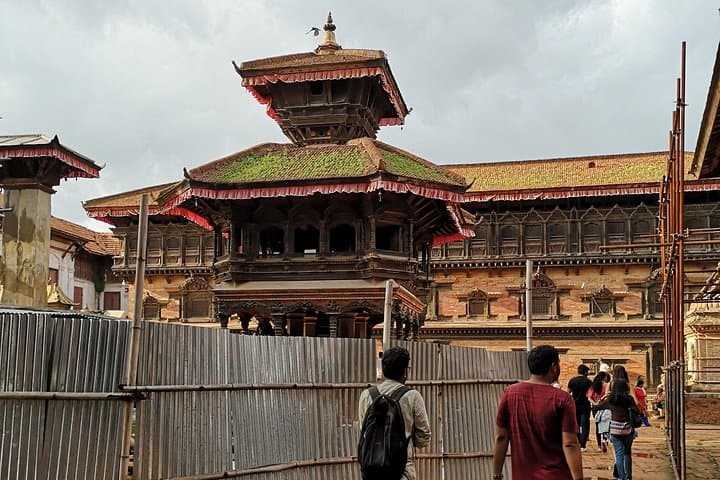


Morning light slides across the brick lanes of Bhaktapur and the city exhales—ancient courtyards, carved windows and the echo of 1960s travelers still linger in corners where music and debate once gathered.
Morning light slides across the brick lanes of Bhaktapur and the city exhales—ancient courtyards, carved windows and the echo of 1960s travelers still linger in corners where music and debate once gathered.
This day hike threads cultural landmarks with a short, purposeful walk into the hills: Bhaktapur Durbar Square’s Taumadi courtyard (where Hippie Era performances were once common), the 5th‑century Changu Narayan temple perched on a wooded ridge, an easy 3‑mile hike to the Tailkot viewpoint, and lunch at Nagarkot where the ridge pushes your attention out to the Greater Himalaya on clear days. The route is a mix of paved village lanes, packed-earth footpaths and short stone steps; expect roughly 150–300 m of cumulative elevation change on the hiking segment and uninterrupted views when weather permits.
History here is tactile: Newar craftsmen carved these plazas and temples centuries ago; Freak Street in central Kathmandu still carries the nickname of the counterculture era and a few old cafés and bakeries—Snowman Bakery among them—keep that narrative alive. Note: cannabis is illegal in Nepal; the experience focuses on culture, scenery and fitness.
Practical guidance: start early for clearer skies at Nagarkot, wear sturdy shoes for uneven stone and farm tracks, and carry 1–1.5 L of water for the day. The trail is guided, so navigation is straightforward, but steady rain can turn paths slippery in summer. Expect moderate exertion overall; this is a day of short climbs, cultural stops and panoramic payoff.