THE ADVENTURE COLLECTIVE® · Independent discovery and booking for outdoor travel

Walk where 18th-century regiments stood guard and explore a compact military museum that traces Barbados’s colonial defenses. This 2½–3 hour shore excursion blends cannon-lined ramparts, barracks, prison sites and the house George Washington visited.
Walk where 18th-century regiments stood guard and explore a compact military museum that traces Barbados’s colonial defenses. This 2½–3 hour shore excursion blends cannon-lined ramparts, barracks, prison sites and the house George Washington visited.
You step off the tender into Caribbean air that smells faintly of salt and cut grass, and the low rumble of hooves and distant waves ushers you toward the Garrison Savannah. The route threads past cannon-lined ramparts and broad lawns where soldiers once marched; coral-stone barracks stand cool in the sun while a guide’s voice draws out the creak of muskets and the hush of hospital wards.
Verified experiences and guided adventures in the surrounding area.
Operated by Chattel House Audio Tours Inc · Bridgetown, Saint Michael
You step off the tender into Caribbean air that smells faintly of salt and cut grass, and the low rumble of hooves and distant waves ushers you toward the Garrison Savannah. The route threads past cannon-lined ramparts and broad lawns where soldiers once marched; coral-stone barracks stand cool in the sun while a guide’s voice draws out the creak of muskets and the hush of hospital wards.
The Garrison dates to the early 18th century, when British regiments fortified Barbados as a strategic sugar island. The museum’s exhibits collect artillery, uniforms and medical tools; outside, the prison and court-martial site map a harsher side of colonial order. Geologically, the island’s limestone underpins the fortifications—cut blocks and coral rock visible in walls and pathways—while the Savannah’s flat sweep reflects reclaimed land and racecourse drainage practices.
Culturally, the tour touches on Barbados’s military role in the Atlantic world and on local life: the Savannah’s vendors, the island’s affinity for rum and cricket, and the story of George Washington’s documented 1751 stay. Guides often use personal stories and documented records to animate the sites. Audio headsets and a small snack are included; port pickup and drop-off simplify timing.
Practical guidance: expect 2.5–3 hours with several stops and 20–40 minutes of self-guided museum time. Wear sturdy walking shoes on uneven pavements, bring sun protection and a reusable water bottle (bottled water typically provided). The route is mostly flat but moves at a steady pace—moderate fitness helps. Morning departures avoid midday heat and give crisper light for photos of the forts and cannon-lined parapets.
The excursion lasts about 150–180 minutes and includes a guided walk, self-guided museum access, bottled water, a snack, headsets and port pickup/drop-off.
Children must be accompanied by an adult; older adults who can walk short distances over uneven surfaces can usually participate but should note there is some standing and walking.
The tour observes and interprets the house site from the road side as part of the narrative—interior access is typically not included.
Tours operate subject to favorable weather; if canceled due to inclement conditions you are offered an alternative date or full refund per the operator policy.
Chattel House Audio Tours Inc operates guided outdoor trips and adventures with an emphasis on safety, stewardship, and memorable experiences.
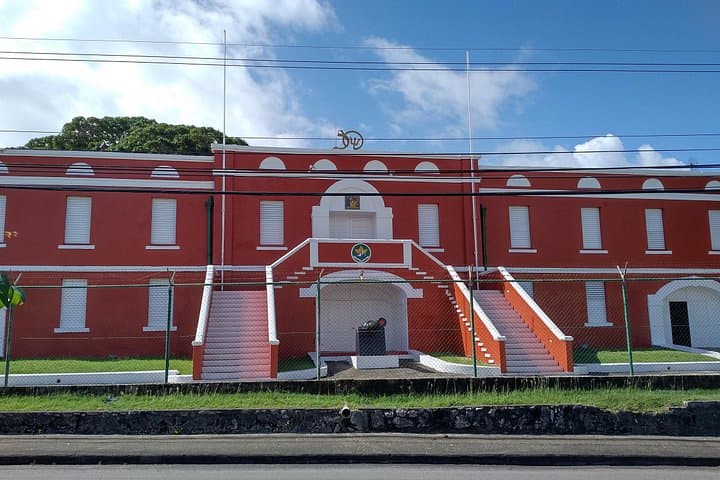

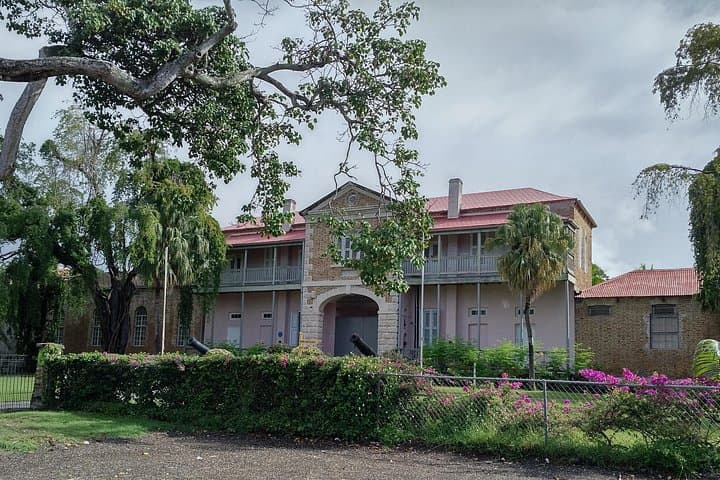

You step off the tender into Caribbean air that smells faintly of salt and cut grass, and the low rumble of hooves and distant waves ushers you toward the Garrison Savannah. The route threads past cannon-lined ramparts and broad lawns where soldiers once marched; coral-stone barracks stand cool in the sun while a guide’s voice draws out the creak of muskets and the hush of hospital wards.
You step off the tender into Caribbean air that smells faintly of salt and cut grass, and the low rumble of hooves and distant waves ushers you toward the Garrison Savannah. The route threads past cannon-lined ramparts and broad lawns where soldiers once marched; coral-stone barracks stand cool in the sun while a guide’s voice draws out the creak of muskets and the hush of hospital wards.
The Garrison dates to the early 18th century, when British regiments fortified Barbados as a strategic sugar island. The museum’s exhibits collect artillery, uniforms and medical tools; outside, the prison and court-martial site map a harsher side of colonial order. Geologically, the island’s limestone underpins the fortifications—cut blocks and coral rock visible in walls and pathways—while the Savannah’s flat sweep reflects reclaimed land and racecourse drainage practices.
Culturally, the tour touches on Barbados’s military role in the Atlantic world and on local life: the Savannah’s vendors, the island’s affinity for rum and cricket, and the story of George Washington’s documented 1751 stay. Guides often use personal stories and documented records to animate the sites. Audio headsets and a small snack are included; port pickup and drop-off simplify timing.
Practical guidance: expect 2.5–3 hours with several stops and 20–40 minutes of self-guided museum time. Wear sturdy walking shoes on uneven pavements, bring sun protection and a reusable water bottle (bottled water typically provided). The route is mostly flat but moves at a steady pace—moderate fitness helps. Morning departures avoid midday heat and give crisper light for photos of the forts and cannon-lined parapets.