THE ADVENTURE COLLECTIVE® · Independent discovery and booking for outdoor travel

Walk the heart of San José del Cabo with a local guide: an accessible, 75–90 minute tour that threads mission architecture, estuary lookouts, and the vibrant Art District into one compact cultural experience. Ideal for first-time visitors who want history, local stories, and easy photo stops.
Walk the heart of San José del Cabo with a local guide: an accessible, 75–90 minute tour that threads mission architecture, estuary lookouts, and the vibrant Art District into one compact cultural experience. Ideal for first-time visitors who want history, local stories, and easy photo stops.
You step off Álvaro Obregón Street and into a block where paint-splashed facades and the rattle of market carts set the tempo. A local guide gathers the group beneath a one-foot wooden sign that reads “CaboCityTours.com,” and the town—quiet by day, curious by history—begins to speak. The walking tour moves at a human pace: about a mile over 75–90 minutes, accessible for wheelchairs and strollers, where cobbled plazas give way to a salt-scented estuary and the sun finds the bright faces of public sculptures.
Verified experiences and guided adventures in the surrounding area.
Operated by Cabo City Tours · San José del Cabo, Baja California Sur
You step off Álvaro Obregón Street and into a block where paint-splashed facades and the rattle of market carts set the tempo. A local guide gathers the group beneath a one-foot wooden sign that reads “CaboCityTours.com,” and the town—quiet by day, curious by history—begins to speak. The walking tour moves at a human pace: about a mile over 75–90 minutes, accessible for wheelchairs and strollers, where cobbled plazas give way to a salt-scented estuary and the sun finds the bright faces of public sculptures.
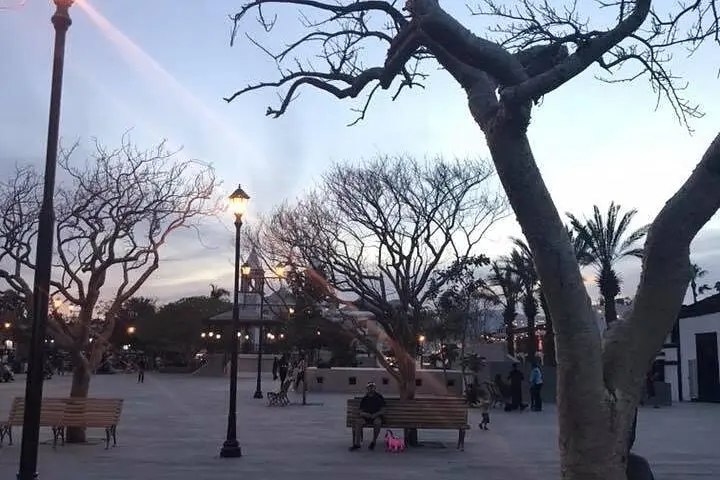
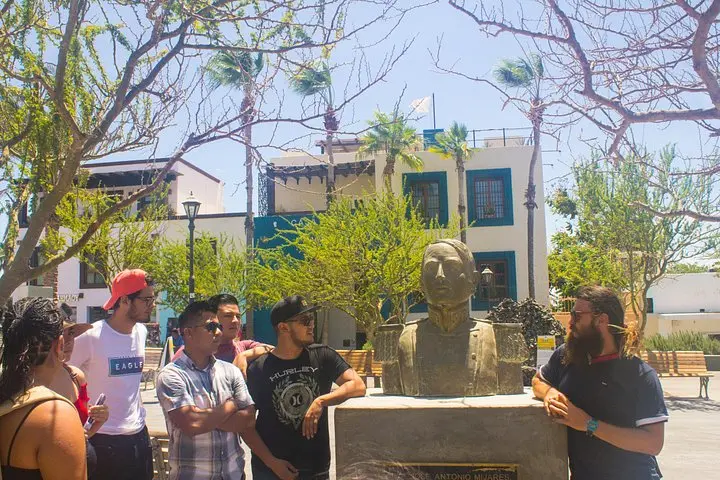
San José del Cabo’s story is volcanic and maritime. The Baja California peninsula rose from tectonic strains; the town’s mission church, built in the 18th century, anchors a colonial thread that runs through the plaza and into tales of pirates, local ranching families, and the push-and-pull of colonization. Guides unpack these chapters with concrete stops—the estuary’s edge where migratory birds test wind currents; the Mission San José del Cabo, whose façade keeps watch over Plaza Mijares; and the obelisk of Mijares, a marker for a town that has rewritten itself many times.
Art is literal and civic here. The Art District—blocks of galleries and coffee shops—grew from a community effort to revive downtown, and public sculptures line the square like a roll call of local characters. The estuary, meanwhile, is a living hinge between desert and sea: mangroves and tidal pools that breathe with the tide and draw shorebirds and herons. Local guides frame these features not just as sights but as living systems—how water shaped settlement, how trade and a 19th-century skirmish at the main square altered the town’s map.
Practical details matter on a short cultural loop. Wear sturdy, comfortable footwear for uneven sidewalks; bring a refillable water bottle—filtered water stations are common in town—and apply sun protection even on overcast days. The route keeps to public spaces with minimal elevation; rest stops include cafés and shaded benches in the plaza. The tour runs in most weather, but book ahead: groups cap at 15 and tours need at least two people to proceed.
This is a neighborhood tour with depth: expect stories about native life before missions, a close look at mission architecture without entering the church, and a stop at the estuary lookout to watch avian traffic. For photographers, late afternoon light warms the ochre walls; for curious travelers, the guide’s local context—who lived where, why a hotel became famous, which alleys hid thieves—gives the stroll a sharper edge than a simple sightseeing itinerary. Part A sets the foundation; return for Part B to follow the battle lines and celebrity-sighting lore that complete the town’s modern arc.
The tour lasts about 75–90 minutes and covers roughly one mile on mostly flat, stroller- and wheelchair-friendly streets.
The guide will stop at the Mission San José del Cabo and discuss its history, but the tour does not enter the church interior.
Yes—surfaces and stops are wheelchair accessible; note that some sidewalks have narrow sections where assistance may be helpful.
This particular tour is conducted in English; contact the operator for Spanish-language options.
Shared tours are capped at 15 guests; the operator requires at least two bookings for the tour to run.
Tours run in most weather conditions—dress appropriately. For a full refund, cancel at least 24 hours before departure if needed.
Cabo City Tours operates guided outdoor trips and adventures with an emphasis on safety, stewardship, and memorable experiences.
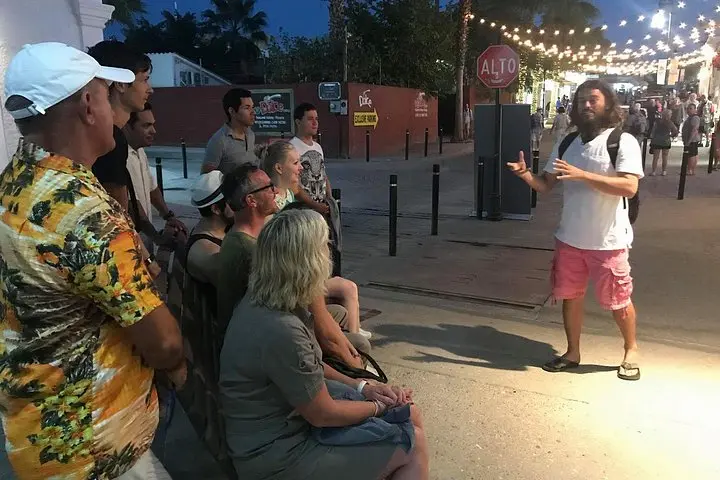
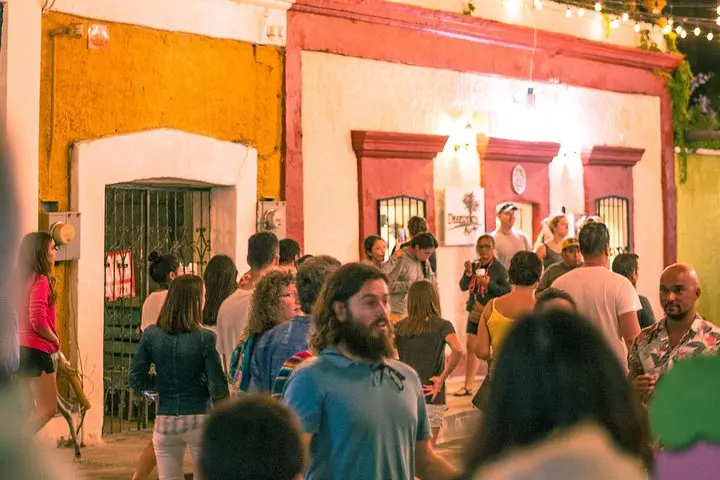
You step off Álvaro Obregón Street and into a block where paint-splashed facades and the rattle of market carts set the tempo. A local guide gathers the group beneath a one-foot wooden sign that reads “CaboCityTours.com,” and the town—quiet by day, curious by history—begins to speak. The walking tour moves at a human pace: about a mile over 75–90 minutes, accessible for wheelchairs and strollers, where cobbled plazas give way to a salt-scented estuary and the sun finds the bright faces of public sculptures.
You step off Álvaro Obregón Street and into a block where paint-splashed facades and the rattle of market carts set the tempo. A local guide gathers the group beneath a one-foot wooden sign that reads “CaboCityTours.com,” and the town—quiet by day, curious by history—begins to speak. The walking tour moves at a human pace: about a mile over 75–90 minutes, accessible for wheelchairs and strollers, where cobbled plazas give way to a salt-scented estuary and the sun finds the bright faces of public sculptures.
San José del Cabo’s story is volcanic and maritime. The Baja California peninsula rose from tectonic strains; the town’s mission church, built in the 18th century, anchors a colonial thread that runs through the plaza and into tales of pirates, local ranching families, and the push-and-pull of colonization. Guides unpack these chapters with concrete stops—the estuary’s edge where migratory birds test wind currents; the Mission San José del Cabo, whose façade keeps watch over Plaza Mijares; and the obelisk of Mijares, a marker for a town that has rewritten itself many times.
Art is literal and civic here. The Art District—blocks of galleries and coffee shops—grew from a community effort to revive downtown, and public sculptures line the square like a roll call of local characters. The estuary, meanwhile, is a living hinge between desert and sea: mangroves and tidal pools that breathe with the tide and draw shorebirds and herons. Local guides frame these features not just as sights but as living systems—how water shaped settlement, how trade and a 19th-century skirmish at the main square altered the town’s map.
Practical details matter on a short cultural loop. Wear sturdy, comfortable footwear for uneven sidewalks; bring a refillable water bottle—filtered water stations are common in town—and apply sun protection even on overcast days. The route keeps to public spaces with minimal elevation; rest stops include cafés and shaded benches in the plaza. The tour runs in most weather, but book ahead: groups cap at 15 and tours need at least two people to proceed.
This is a neighborhood tour with depth: expect stories about native life before missions, a close look at mission architecture without entering the church, and a stop at the estuary lookout to watch avian traffic. For photographers, late afternoon light warms the ochre walls; for curious travelers, the guide’s local context—who lived where, why a hotel became famous, which alleys hid thieves—gives the stroll a sharper edge than a simple sightseeing itinerary. Part A sets the foundation; return for Part B to follow the battle lines and celebrity-sighting lore that complete the town’s modern arc.