THE ADVENTURE COLLECTIVE® · Independent discovery and booking for outdoor travel

Walk Old Cairo’s layered streets with a licensed guide: Coptic churches, a centuries‑old synagogue, and Khan el‑Khalili’s markets. This private, four‑hour tour blends archaeology, faith, and marketplace life with hotel pickup and air‑conditioned transport.
Walk Old Cairo’s layered streets with a licensed guide: Coptic churches, a centuries‑old synagogue, and Khan el‑Khalili’s markets. This private, four‑hour tour blends archaeology, faith, and marketplace life with hotel pickup and air‑conditioned transport.
The morning light settles over narrow lanes as the group steps out of an air‑conditioned vehicle into Old Cairo. Dusty stone facades lean close; a church bell threads through calls to prayer, and the market beyond smells of spice and coffee. The guide leads with measured steps, opening doors to centuries where stone and faith argue gently for attention.
Verified experiences and guided adventures in the surrounding area.
Operated by Travayge · Cairo, Cairo Governorate
The morning light settles over narrow lanes as the group steps out of an air‑conditioned vehicle into Old Cairo. Dusty stone facades lean close; a church bell threads through calls to prayer, and the market beyond smells of spice and coffee. The guide leads with measured steps, opening doors to centuries where stone and faith argue gently for attention.
This route stitches together late Roman and early medieval layers: the Hanging Church built into a water gate, St. George’s circular nave, and Abu Serga’s marble colonnade where, local tradition holds, the Holy Family rested. Al‑Mu'izz Street carries the imprint of the Fatimid city plan and the sultanate-era monuments that defined Cairo’s urban spine. Khan el‑Khalili finishes the day with a tactile lesson in trade—coppersmiths, coffeehouse gear, and alleyway stalls selling dates and handblown glass.
Expect 3–4 hours of mostly flat walking on paved streets and uneven courtyards, frequent stops for interpretation, and some paid admissions included at key sites. The experience is urban archaeology: look for reused Roman blocks in church walls, 12th‑century icons, and carved wooden mashrabiyas above busy alleys. Wear supportive shoes, carry sun protection and a refillable bottle; bottled water is provided. Morning or late afternoon departures avoid peak heat and the busiest souq hours. Respect dress codes inside religious sites and keep voices low in prayer spaces.
Practicalities: hotel pickup and drop‑off, licensed guide, private vehicle transfers, and straightforward cancellation 24 hours prior. Travelers should be ready for moderate walking and brief flights of steps inside historic buildings.
Yes—hotel pickup and drop‑off in Cairo are included as part of the private tour.
Some admissions are included for specified stops; your booking details will note which entrances are covered.
Infants and small children can use a stroller, but some sites have steps and tight courtyards—expect limited accessibility in parts.
Full refunds are available if you cancel at least 24 hours before the scheduled departure; check your booking confirmation for specifics.
Travayge operates guided outdoor trips and adventures with an emphasis on safety, stewardship, and memorable experiences.
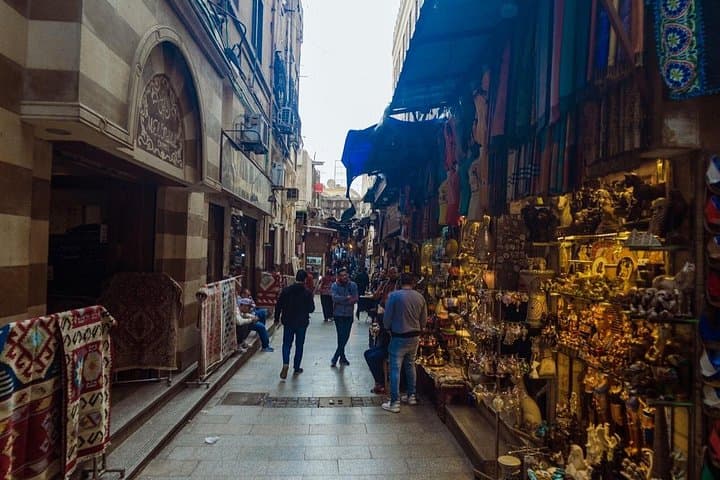


The morning light settles over narrow lanes as the group steps out of an air‑conditioned vehicle into Old Cairo. Dusty stone facades lean close; a church bell threads through calls to prayer, and the market beyond smells of spice and coffee. The guide leads with measured steps, opening doors to centuries where stone and faith argue gently for attention.
The morning light settles over narrow lanes as the group steps out of an air‑conditioned vehicle into Old Cairo. Dusty stone facades lean close; a church bell threads through calls to prayer, and the market beyond smells of spice and coffee. The guide leads with measured steps, opening doors to centuries where stone and faith argue gently for attention.
This route stitches together late Roman and early medieval layers: the Hanging Church built into a water gate, St. George’s circular nave, and Abu Serga’s marble colonnade where, local tradition holds, the Holy Family rested. Al‑Mu'izz Street carries the imprint of the Fatimid city plan and the sultanate-era monuments that defined Cairo’s urban spine. Khan el‑Khalili finishes the day with a tactile lesson in trade—coppersmiths, coffeehouse gear, and alleyway stalls selling dates and handblown glass.
Expect 3–4 hours of mostly flat walking on paved streets and uneven courtyards, frequent stops for interpretation, and some paid admissions included at key sites. The experience is urban archaeology: look for reused Roman blocks in church walls, 12th‑century icons, and carved wooden mashrabiyas above busy alleys. Wear supportive shoes, carry sun protection and a refillable bottle; bottled water is provided. Morning or late afternoon departures avoid peak heat and the busiest souq hours. Respect dress codes inside religious sites and keep voices low in prayer spaces.
Practicalities: hotel pickup and drop‑off, licensed guide, private vehicle transfers, and straightforward cancellation 24 hours prior. Travelers should be ready for moderate walking and brief flights of steps inside historic buildings.