THE ADVENTURE COLLECTIVE® · Independent discovery and booking for outdoor travel

Pedal quiet country lanes from Hoi An to Tra Que Village, help tend fragrant vegetable beds fertilized with lake algae, and try your hand at five-century-old Thanh Ha pottery. This easy 3‑hour sunset ride pairs light exercise with hands-on culture.
Pedal quiet country lanes from Hoi An to Tra Que Village, help tend fragrant vegetable beds fertilized with lake algae, and try your hand at five-century-old Thanh Ha pottery. This easy 3‑hour sunset ride pairs light exercise with hands-on culture.
Late afternoon light thins over flat rice paddies as you drop into the lane—bamboo fences, a water buffalo grazing, and the smell of wet soil and algae pressing at the edge of the road. The ride from Hoi An threads small country lanes to Tra Que Village, where bicycles are leaned against wooden houses and the day's work moves at a measured pace.
Verified experiences and guided adventures in the surrounding area.
Operated by My Son Tour · Hoi An, Quang Nam
Late afternoon light thins over flat rice paddies as you drop into the lane—bamboo fences, a water buffalo grazing, and the smell of wet soil and algae pressing at the edge of the road. The ride from Hoi An threads small country lanes to Tra Que Village, where bicycles are leaned against wooden houses and the day's work moves at a measured pace.
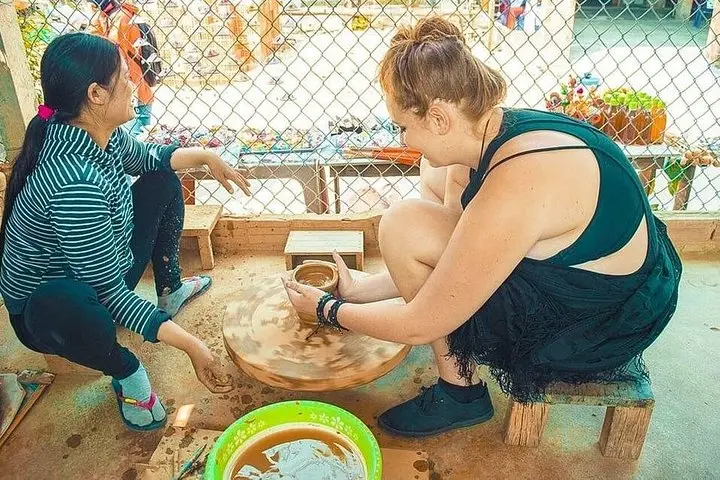
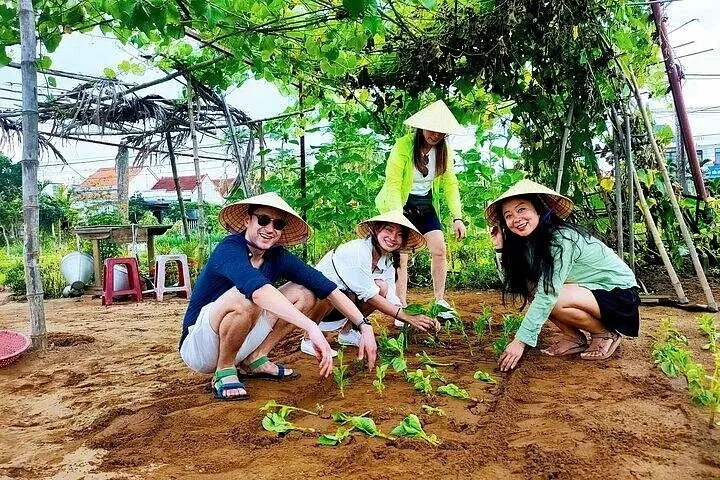
Tra Que's vegetable plots have supplied Hoi An kitchens for generations; villagers still use lake algae as organic fertilizer and apply herbs in traditional Vietnamese remedies. A short ride away, Thanh Ha Pottery Village sits on alluvial clay deposits from the Thu Bon River. Here, families shape pots on foot-powered wheels and fire them in small kilns, a craft maintained for over five centuries.
Geologically the area is river plain—low elevation, silty soils, and irrigation channels that define field patterns. Culturally the route is intimate: you'll meet farmers, try raking and sowing, and shape clay by hand under an artisan's guidance. The tour covers gentle terrain—paved and packed-dirt lanes with minimal elevation—making it suitable for most riders.
Practical guide: expect about 8–10 km of easy cycling round-trip and three hours on-site, with stops for garden work and pottery. Bring closed-toe shoes for garden tasks, sun protection, and a light rain shell in monsoon months. Respect crop beds and follow the guide's instructions when handling tools or clay; small local businesses depend on courteous visitors. Timing your ride for late afternoon gives the best light and cooler temperatures for both gardening and the pottery demonstrations.
The route covers roughly 8–10 km round-trip over flat country lanes; it’s easy-paced and suitable for most riders.
Standard bicycles and helmets are included; guides typically provide raincoats if needed.
Yes—families are welcome, but infants must sit on a guardian’s lap and cyclists should be comfortable on traffic-free lanes.
Yes, you’ll try shaping clay by hand under artisan supervision; finished pieces may be available to purchase as souvenirs.
My Son Tour operates guided outdoor trips and adventures with an emphasis on safety, stewardship, and memorable experiences.
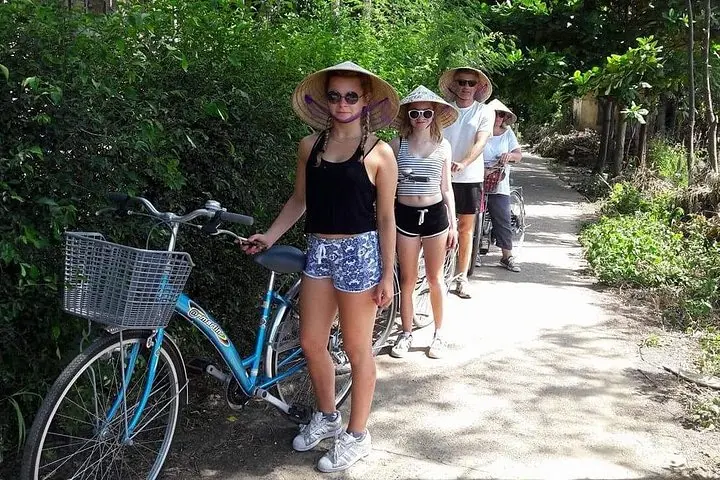
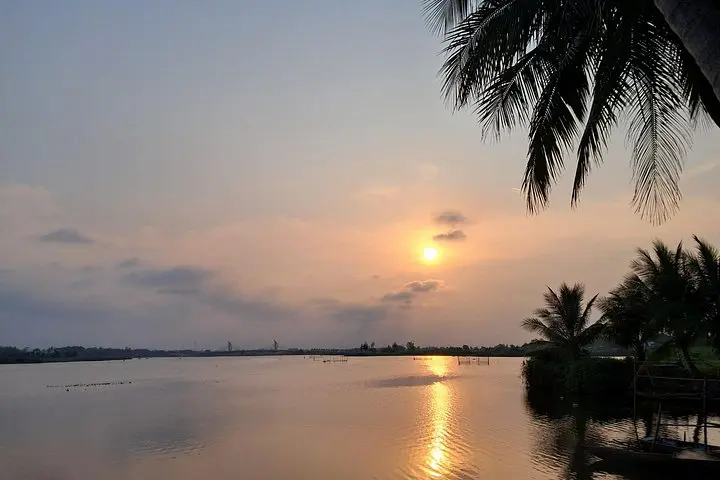
Late afternoon light thins over flat rice paddies as you drop into the lane—bamboo fences, a water buffalo grazing, and the smell of wet soil and algae pressing at the edge of the road. The ride from Hoi An threads small country lanes to Tra Que Village, where bicycles are leaned against wooden houses and the day's work moves at a measured pace.
Late afternoon light thins over flat rice paddies as you drop into the lane—bamboo fences, a water buffalo grazing, and the smell of wet soil and algae pressing at the edge of the road. The ride from Hoi An threads small country lanes to Tra Que Village, where bicycles are leaned against wooden houses and the day's work moves at a measured pace.
Tra Que's vegetable plots have supplied Hoi An kitchens for generations; villagers still use lake algae as organic fertilizer and apply herbs in traditional Vietnamese remedies. A short ride away, Thanh Ha Pottery Village sits on alluvial clay deposits from the Thu Bon River. Here, families shape pots on foot-powered wheels and fire them in small kilns, a craft maintained for over five centuries.
Geologically the area is river plain—low elevation, silty soils, and irrigation channels that define field patterns. Culturally the route is intimate: you'll meet farmers, try raking and sowing, and shape clay by hand under an artisan's guidance. The tour covers gentle terrain—paved and packed-dirt lanes with minimal elevation—making it suitable for most riders.
Practical guide: expect about 8–10 km of easy cycling round-trip and three hours on-site, with stops for garden work and pottery. Bring closed-toe shoes for garden tasks, sun protection, and a light rain shell in monsoon months. Respect crop beds and follow the guide's instructions when handling tools or clay; small local businesses depend on courteous visitors. Timing your ride for late afternoon gives the best light and cooler temperatures for both gardening and the pottery demonstrations.