THE ADVENTURE COLLECTIVE® · Independent discovery and booking for outdoor travel

Spend a full day exploring My Son’s ancient Cham temples, climbing the Marble Mountains’ caves and pagodas, and concluding at Son Tra’s Linh Ung Pagoda. This cultural day trip pairs archaeological ruins with coastal karst landscapes and practical local guidance.
Spend a full day exploring My Son’s ancient Cham temples, climbing the Marble Mountains’ caves and pagodas, and concluding at Son Tra’s Linh Ung Pagoda. This cultural day trip pairs archaeological ruins with coastal karst landscapes and practical local guidance.
The day opens with a slow drive out of Hoi An as limestone ridges and rice paddies slide past the van window. By midmorning the valley tightens and the red-brick towers of My Son appear through humid haze — stones warmed by centuries of sun and human hands.
Verified experiences and guided adventures in the surrounding area.
Operated by Hoi An Express Travel · Hoi An, Quang Nam
The day opens with a slow drive out of Hoi An as limestone ridges and rice paddies slide past the van window. By midmorning the valley tightens and the red-brick towers of My Son appear through humid haze — stones warmed by centuries of sun and human hands.
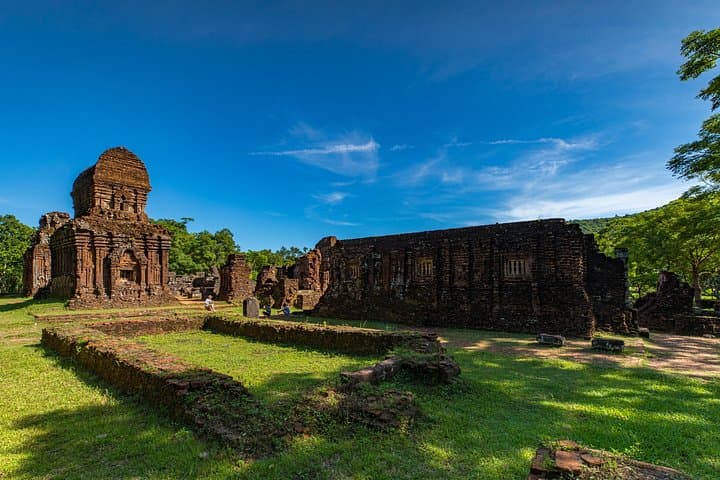
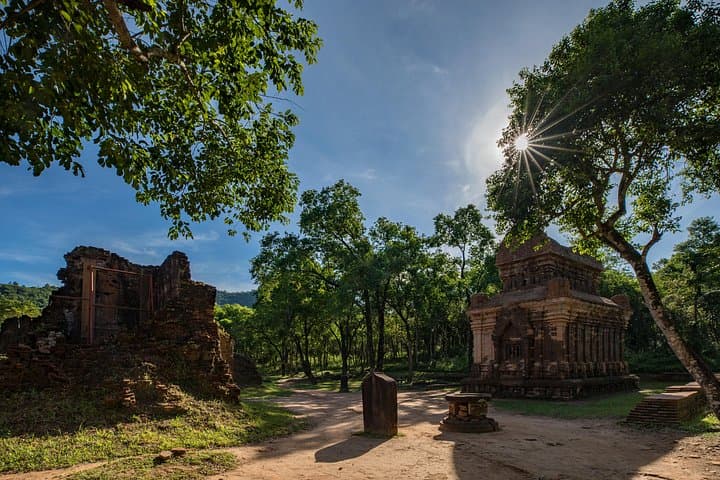
My Son is the oldest stop: a ruined capital and religious center of the Champa kingdom with temples dating from the 7th–13th centuries. The park’s compact clusters of brick towers rest on volcanic foundations, their carved lintels hinting at Hindu ritual and maritime trade that once linked central Vietnam to wider Southeast Asia.
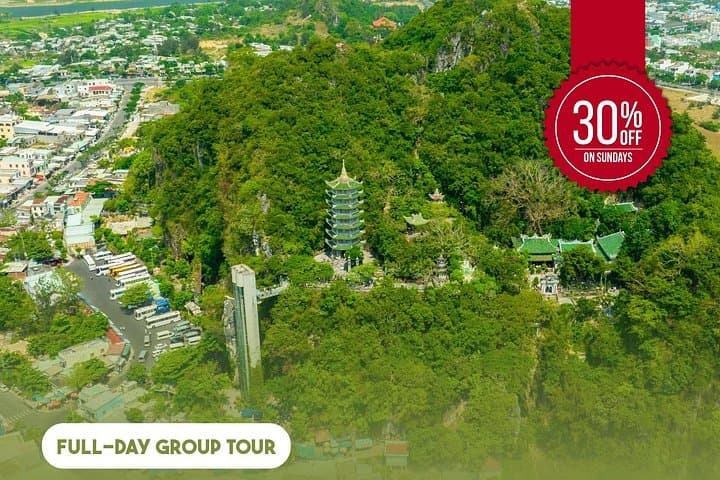
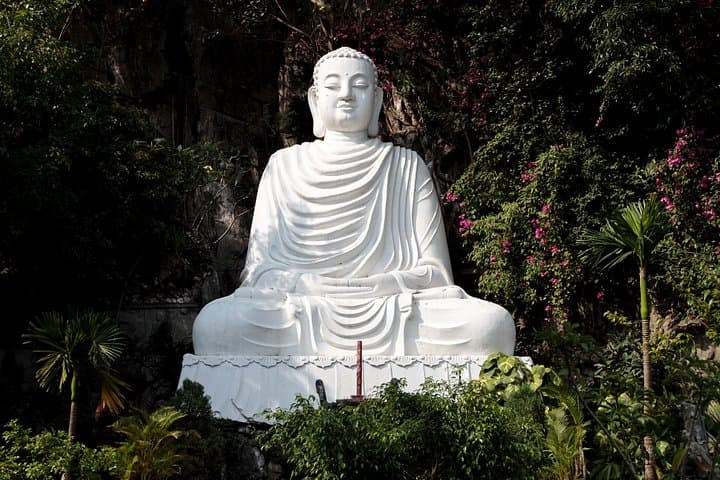
After a local lunch, the Marble Mountains (Ngu Hanh Son) introduce a different geology and mood — five marble-and-limestone peaks pierced by caves and dotted with pagodas. Stairs cut into the rock rise past shrines; Am Phu Cave’s low chambers and echoing hollows sharpen the sense of place. The route finishes on Son Tra Peninsula at Linh Ung Pagoda, where a commanding statue watches the East Vietnam Sea and the city’s spread below.
Practical side: expect roughly a 9–10 hour day with light walking, stair climbs and some narrow cave passages. Bring a hat, sturdy shoes for uneven stone, and water — the coastal heat pushes humidity and fatigue. Photography windows open late morning and late afternoon for softer light and fewer buses. The tour mixes UNESCO-listed archaeology, coastal karst, and living religious sites—ideal for travelers who want cultural depth framed by dramatic coastal geology.
The full day is about 9–10 hours with guided visits: ~3 hours at My Son, ~2 hours at Marble Mountains, and ~2 hours at Linh Ung, plus transit and lunch.
Yes — entrance fees to sites and a local lunch are included in the tour price, as is one-way elevator access at Marble Mountains where available.
The tour is family-friendly, but Marble Mountains involve stairs and some steep paths; people with limited mobility may find access restricted at certain viewpoints.
No permits required for tourists; bring ID details for booking/insurance and modest clothing for pagodas.
Hoi An Express Travel operates guided outdoor trips and adventures with an emphasis on safety, stewardship, and memorable experiences.
The day opens with a slow drive out of Hoi An as limestone ridges and rice paddies slide past the van window. By midmorning the valley tightens and the red-brick towers of My Son appear through humid haze — stones warmed by centuries of sun and human hands.
The day opens with a slow drive out of Hoi An as limestone ridges and rice paddies slide past the van window. By midmorning the valley tightens and the red-brick towers of My Son appear through humid haze — stones warmed by centuries of sun and human hands.
My Son is the oldest stop: a ruined capital and religious center of the Champa kingdom with temples dating from the 7th–13th centuries. The park’s compact clusters of brick towers rest on volcanic foundations, their carved lintels hinting at Hindu ritual and maritime trade that once linked central Vietnam to wider Southeast Asia.
After a local lunch, the Marble Mountains (Ngu Hanh Son) introduce a different geology and mood — five marble-and-limestone peaks pierced by caves and dotted with pagodas. Stairs cut into the rock rise past shrines; Am Phu Cave’s low chambers and echoing hollows sharpen the sense of place. The route finishes on Son Tra Peninsula at Linh Ung Pagoda, where a commanding statue watches the East Vietnam Sea and the city’s spread below.
Practical side: expect roughly a 9–10 hour day with light walking, stair climbs and some narrow cave passages. Bring a hat, sturdy shoes for uneven stone, and water — the coastal heat pushes humidity and fatigue. Photography windows open late morning and late afternoon for softer light and fewer buses. The tour mixes UNESCO-listed archaeology, coastal karst, and living religious sites—ideal for travelers who want cultural depth framed by dramatic coastal geology.