THE ADVENTURE COLLECTIVE® · Independent discovery and booking for outdoor travel

Cycle from Hoi An’s old town into Tra Que’s herb gardens, shop a bustling market, farm with local growers, learn to cook five Vietnamese dishes, and finish with a restorative herbal foot massage. A compact, eco-conscious half-day of food, farming, and culture.
Cycle from Hoi An’s old town into Tra Que’s herb gardens, shop a bustling market, farm with local growers, learn to cook five Vietnamese dishes, and finish with a restorative herbal foot massage. A compact, eco-conscious half-day of food, farming, and culture.
You leave the lantern-lit alleys of Hoi An on a bicycle and the town’s gentle geometry opens into rice paddies and thin canals. Morning light slides over planted beds and the market’s noise becomes a language of scents—ginger, lemongrass, tamarind—calling you toward a stall where a local vendor explains the medicinal use of each leaf.
Verified experiences and guided adventures in the surrounding area.
Operated by Local Tours SAPA · Hoi An, Quang Nam Province
You leave the lantern-lit alleys of Hoi An on a bicycle and the town’s gentle geometry opens into rice paddies and thin canals. Morning light slides over planted beds and the market’s noise becomes a language of scents—ginger, lemongrass, tamarind—calling you toward a stall where a local vendor explains the medicinal use of each leaf.
Hoi An grew wealthy as a port on the Maritime Silk Road; its farmland sits on the Thu Bon River’s alluvial plain, soils rich with silt that keep Tra Que Vegetable Village green year-round. At Tra Que, farmers wear conical hats and teach hand-farming techniques passed down through generations: soil turning, seaweed fertilizer, and companion planting that keeps pests low without chemicals.
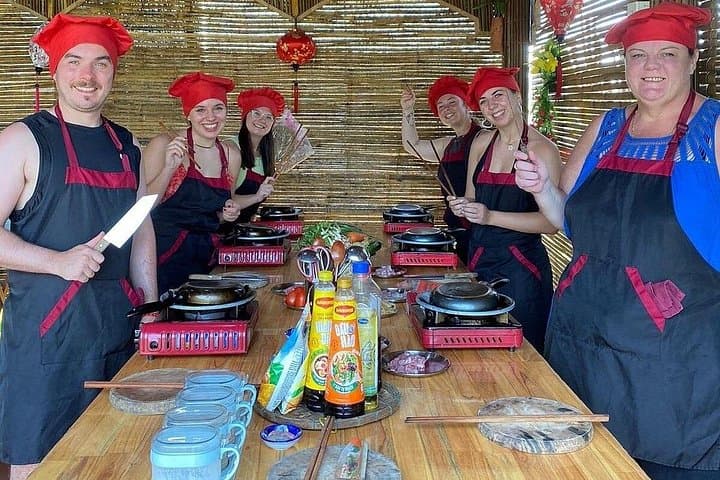
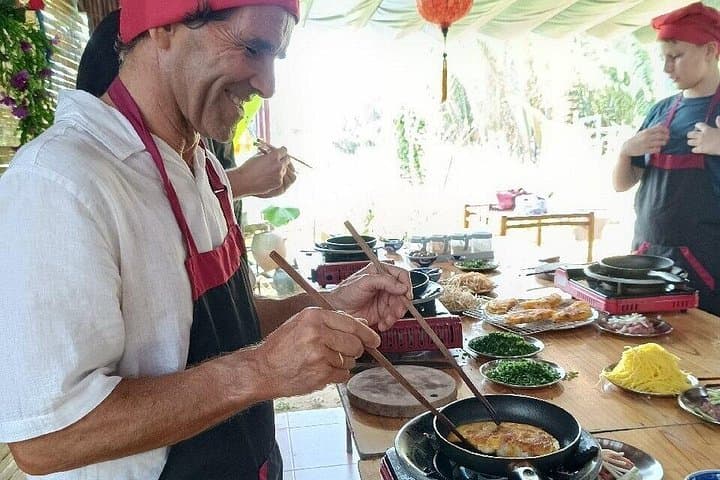
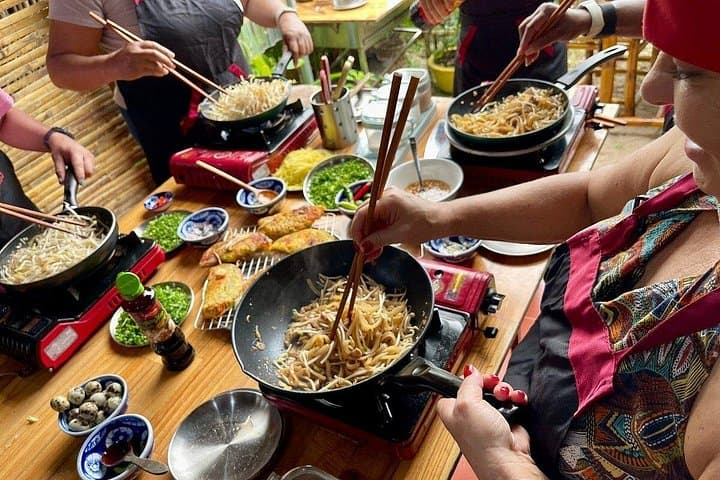
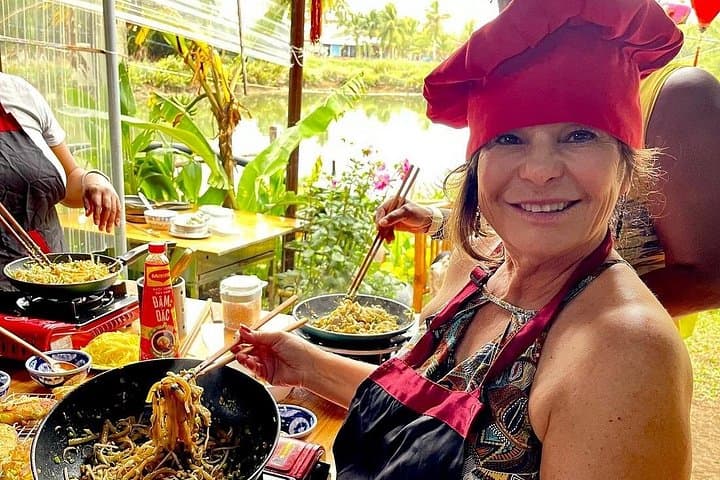
The day moves from market to mud-smeared hands to a shaded people’s house where an herb compress and foot massage use the very plants you’ve harvested. The cooking class that follows is practical and hands-on: learn to form vegetable flowers, stir-fry morning glory with garlic, and plate five local dishes before sitting down to eat your work.
Practical edge: the tour is about five hours, mostly flat cycling on quiet lanes, suitable for most fitness levels. Expect close contact with soil and local life—bring sun protection, closed-toe shoes for farm work, and a reusable water bottle. Guides speak English and Vietnamese, bicycles and ingredients are provided, and vegetarian options are available on request. It’s an eco-forward half-day that combines light activity, cultural context, and tangible culinary skills.
Yes—vegetarian and vegan menus are available if requested in advance during booking.
No, bicycles are provided by the guide and hotel pickup is included for Hoi An city area guests.
Expect light, hands-on farming: planting, weeding, and harvesting under guidance—suitable for non-experts and most fitness levels.
Yes—the class teaches you to prepare several dishes, and the meal you help cook is served at the end.
Local Tours SAPA operates guided outdoor trips and adventures with an emphasis on safety, stewardship, and memorable experiences.
You leave the lantern-lit alleys of Hoi An on a bicycle and the town’s gentle geometry opens into rice paddies and thin canals. Morning light slides over planted beds and the market’s noise becomes a language of scents—ginger, lemongrass, tamarind—calling you toward a stall where a local vendor explains the medicinal use of each leaf.
You leave the lantern-lit alleys of Hoi An on a bicycle and the town’s gentle geometry opens into rice paddies and thin canals. Morning light slides over planted beds and the market’s noise becomes a language of scents—ginger, lemongrass, tamarind—calling you toward a stall where a local vendor explains the medicinal use of each leaf.
Hoi An grew wealthy as a port on the Maritime Silk Road; its farmland sits on the Thu Bon River’s alluvial plain, soils rich with silt that keep Tra Que Vegetable Village green year-round. At Tra Que, farmers wear conical hats and teach hand-farming techniques passed down through generations: soil turning, seaweed fertilizer, and companion planting that keeps pests low without chemicals.
The day moves from market to mud-smeared hands to a shaded people’s house where an herb compress and foot massage use the very plants you’ve harvested. The cooking class that follows is practical and hands-on: learn to form vegetable flowers, stir-fry morning glory with garlic, and plate five local dishes before sitting down to eat your work.
Practical edge: the tour is about five hours, mostly flat cycling on quiet lanes, suitable for most fitness levels. Expect close contact with soil and local life—bring sun protection, closed-toe shoes for farm work, and a reusable water bottle. Guides speak English and Vietnamese, bicycles and ingredients are provided, and vegetarian options are available on request. It’s an eco-forward half-day that combines light activity, cultural context, and tangible culinary skills.