THE ADVENTURE COLLECTIVE® · Independent discovery and booking for outdoor travel

Take an open-air jeep from Hoi An into rice-paddy country, basket-boat through water coconut forests, and visit village workshops and a whale temple. This 4–5 hour tour mixes cultural stops with scenic drives and hands-on experiences.
Take an open-air jeep from Hoi An into rice-paddy country, basket-boat through water coconut forests, and visit village workshops and a whale temple. This 4–5 hour tour mixes cultural stops with scenic drives and hands-on experiences.
Dust from country tracks lifts as a vintage army jeep rolls away from Hoi An’s old town, the Thu Bon River pulling the landscape into motion. Passengers feel the quiet push of rice paddies sliding by, then the close, green hush of water coconut forests where basket boats bob like wooden eyes. Stops are deliberate: a Cam Kim home where rice paper is patted thin by hand, a Tra Nhieu temple honoring giant whales, and a riverside café that smells of strong, filtered coffee.
Verified experiences and guided adventures in the surrounding area.
Operated by Authentic PHU QUOC · Hoi An, Quang Nam
Dust from country tracks lifts as a vintage army jeep rolls away from Hoi An’s old town, the Thu Bon River pulling the landscape into motion. Passengers feel the quiet push of rice paddies sliding by, then the close, green hush of water coconut forests where basket boats bob like wooden eyes. Stops are deliberate: a Cam Kim home where rice paper is patted thin by hand, a Tra Nhieu temple honoring giant whales, and a riverside café that smells of strong, filtered coffee.
This route threads centuries of coastal trade and peasant agriculture. Hoi An’s countryside still shows the leveled floodplains carved by the Thu Bon’s seasonal flows; fishermen and farmers follow patterns set long before motor roads. Local crafts—straw mat weaving, herb beds in Tra Que, rice-paper making—offer a direct look at skills that sustain villages and attract respectful tourism.
Practically, expect a 4–5 hour tour over flat dirt lanes and paved village roads with brief river crossings and some uneven shorelines at boat launches. The Jeep seats are open to the air; bring sun protection and a light layer for wind. The basket-boat ride is steady but requires a short step into the boat; those with mobility limits should check in advance. Cash is useful for small purchases and tips. Hydrate, wear sturdy sandals or sneakers, and carry insect repellent—mornings and late afternoons can be humid and mosquito-prone.
The tour balances cultural encounters with easy adventure: an accessible, sensory-rich way to leave the town’s lantern-lit streets and see the living countryside that feeds Hoi An.
The tour runs about 4–5 hours and includes pickup and drop-off within ~8 km of Hoi An Old Town; Da Nang guests may need to meet at specified hotels.
Yes—basket boats are guided by experienced local fishermen and are generally stable, but small children should wear life jackets and be supervised during the short boarding process.
The itinerary concludes with a Vietnamese meal at a riverside restaurant; some bookings include the meal while others offer it at different prices—confirm when booking.
The tour involves stepping into basket boats and walking on uneven village paths; it is not recommended for travelers with significant mobility or spinal issues and is unsuitable for pregnant guests.
Authentic PHU QUOC operates guided outdoor trips and adventures with an emphasis on safety, stewardship, and memorable experiences.
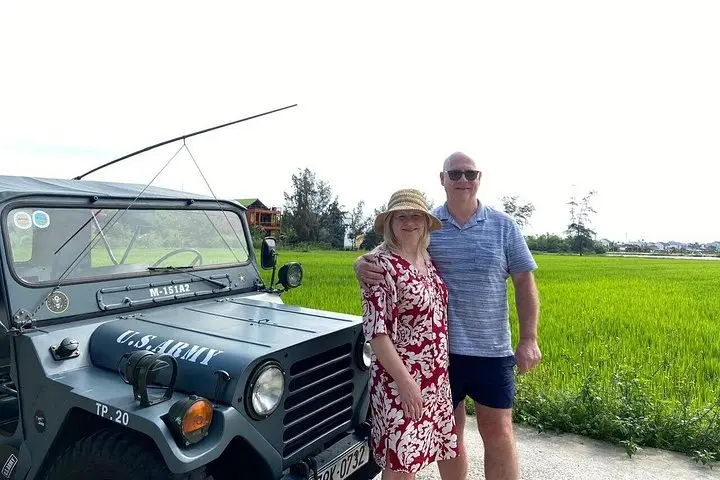
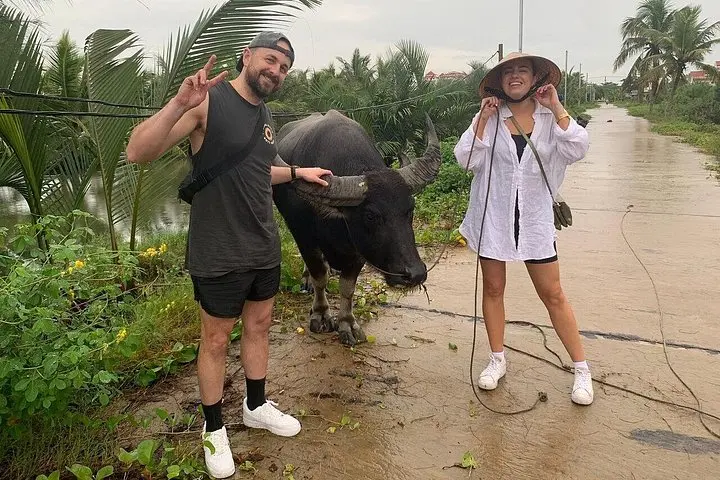
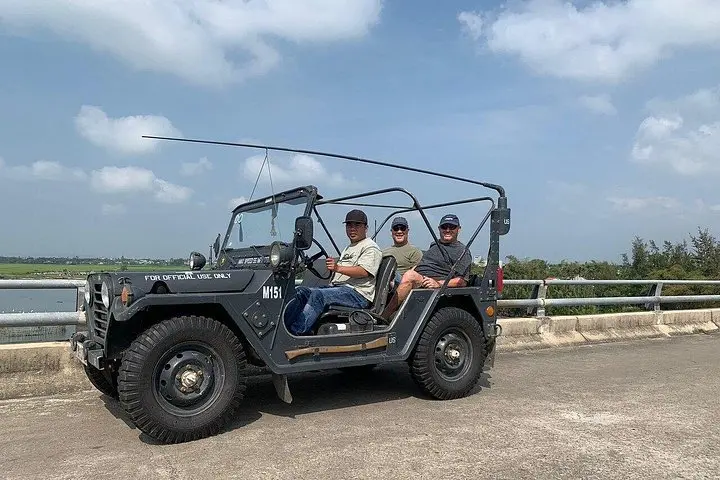
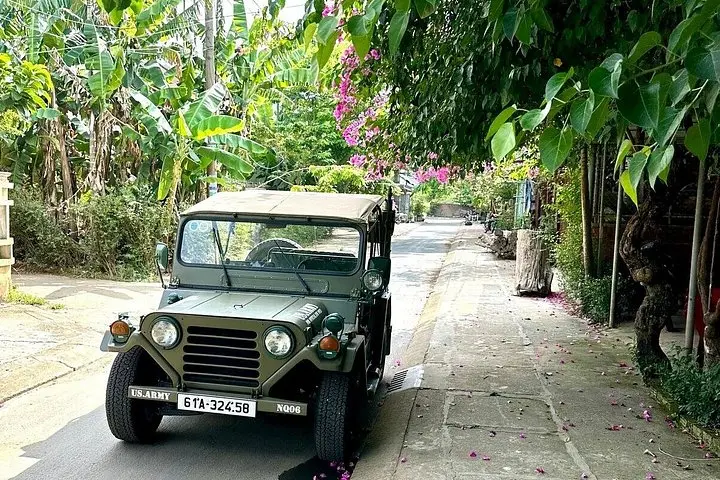
Dust from country tracks lifts as a vintage army jeep rolls away from Hoi An’s old town, the Thu Bon River pulling the landscape into motion. Passengers feel the quiet push of rice paddies sliding by, then the close, green hush of water coconut forests where basket boats bob like wooden eyes. Stops are deliberate: a Cam Kim home where rice paper is patted thin by hand, a Tra Nhieu temple honoring giant whales, and a riverside café that smells of strong, filtered coffee.
Dust from country tracks lifts as a vintage army jeep rolls away from Hoi An’s old town, the Thu Bon River pulling the landscape into motion. Passengers feel the quiet push of rice paddies sliding by, then the close, green hush of water coconut forests where basket boats bob like wooden eyes. Stops are deliberate: a Cam Kim home where rice paper is patted thin by hand, a Tra Nhieu temple honoring giant whales, and a riverside café that smells of strong, filtered coffee.
This route threads centuries of coastal trade and peasant agriculture. Hoi An’s countryside still shows the leveled floodplains carved by the Thu Bon’s seasonal flows; fishermen and farmers follow patterns set long before motor roads. Local crafts—straw mat weaving, herb beds in Tra Que, rice-paper making—offer a direct look at skills that sustain villages and attract respectful tourism.
Practically, expect a 4–5 hour tour over flat dirt lanes and paved village roads with brief river crossings and some uneven shorelines at boat launches. The Jeep seats are open to the air; bring sun protection and a light layer for wind. The basket-boat ride is steady but requires a short step into the boat; those with mobility limits should check in advance. Cash is useful for small purchases and tips. Hydrate, wear sturdy sandals or sneakers, and carry insect repellent—mornings and late afternoons can be humid and mosquito-prone.
The tour balances cultural encounters with easy adventure: an accessible, sensory-rich way to leave the town’s lantern-lit streets and see the living countryside that feeds Hoi An.