THE ADVENTURE COLLECTIVE® · Independent discovery and booking for outdoor travel

Ride quiet country roads from Hoi An to small artisan workshops where rice paper, fish sauce, coffee and woven mats are still made by hand. This 4–5 hour e‑bike tour pairs easy pedaling with immersive cultural stops and practical local insights.
Ride quiet country roads from Hoi An to small artisan workshops where rice paper, fish sauce, coffee and woven mats are still made by hand. This 4–5 hour e‑bike tour pairs easy pedaling with immersive cultural stops and practical local insights.
Early morning light catches the low rice paddies outside Hoi An and the silent canals seem to dare you forward. Guides fit helmets and hand over mid‑drive electric bikes; with a gentle assist you lift off the town’s bridges and pedal into a landscape of dikes, coconut groves and narrow village lanes.
Verified experiences and guided adventures in the surrounding area.
Operated by Ebike tours Hanoi, Electric bikes tour Hanoi · Hoi An, Quang Nam
Early morning light catches the low rice paddies outside Hoi An and the silent canals seem to dare you forward. Guides fit helmets and hand over mid‑drive electric bikes; with a gentle assist you lift off the town’s bridges and pedal into a landscape of dikes, coconut groves and narrow village lanes.
The ride follows quiet rural roads that have supported local craft economies for generations. Hoi An’s role as a historic trading port shaped these cottage industries—bánh tráng (rice paper) cooks, nước mắm (fish sauce) fermenters, rice‑wine distillers and mat weavers still operating on family schedules. Geologically the plain is alluvial: flat, irrigated paddies ringed by mangrove edges closer to the coast, which helped sustain small boatbuilding communities at nearby ports.
Stops are short and hands‑on: a demonstration of rice paper over the steamer, the smoky tang of coffee beans at a roastery, the slow, pungent jars of fish sauce lined in the sun. A coconut‑tree rest break (seasonal) gives you time to ask questions and photograph the fishing port where small wooden boats bob in the tide.
Practicalities are straightforward: total outing is roughly 4–5 hours with about 2.5 hours riding, helmets and a safety briefing included. Terrain is paved village roads with occasional gravel; gradients are minimal. Bring sun protection, closed‑toe shoes, and a water bottle. The electric assist lets riders cover more ground than a conventional bike tour, so expect a steady but relaxed pace.
This tour suits travelers who want cultural contact more than athletic challenge—an efficient way to see how local food and craft traditions are made and how the rivers and fields keep them alive.
No—mid‑drive electric assist helps pedal effort; guides provide a brief orientation and tune motor support to your comfort.
Yes for most ages if riders can balance and pedal; the route is flat but not recommended for those with serious back, heart, or pregnancy restrictions.
Guides typically speak English and local Vietnamese; check the operator listing if you require another language.
Light refreshments like coffee or tea and coconut water (seasonal) are included at scheduled breaks, but plan accordingly if you need a full meal after the tour.
Ebike tours Hanoi, Electric bikes tour Hanoi operates guided outdoor trips and adventures with an emphasis on safety, stewardship, and memorable experiences.
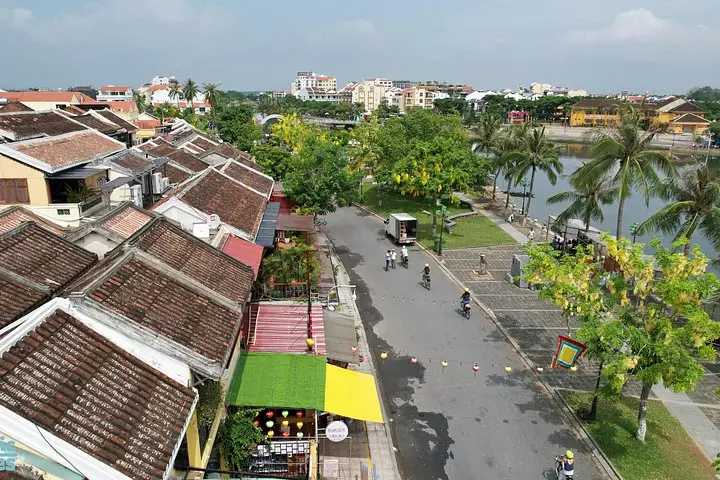
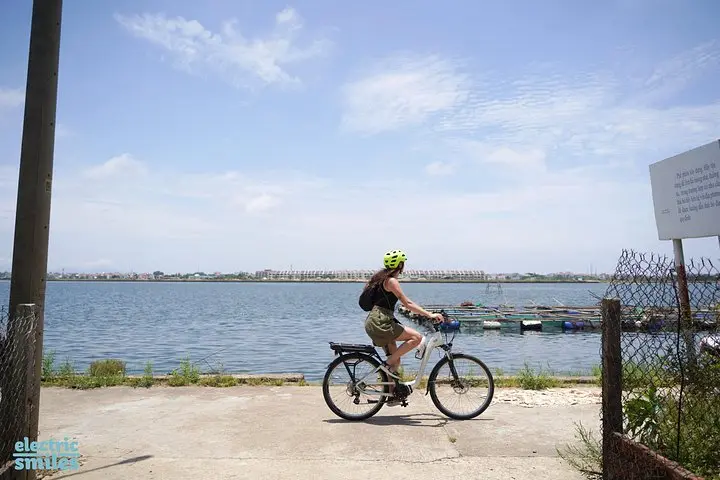
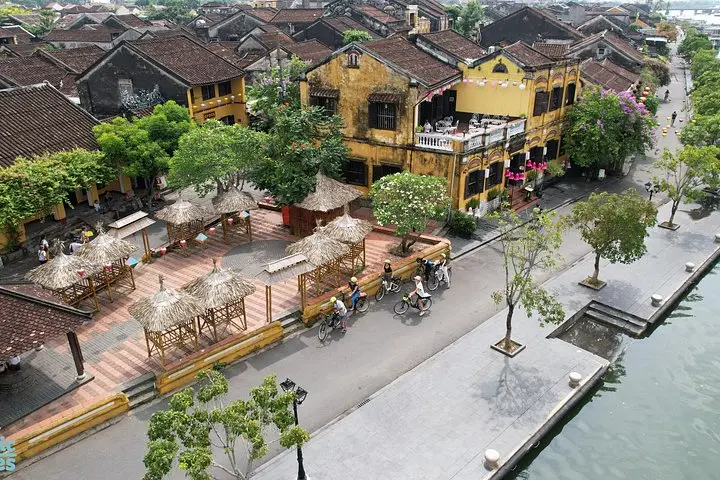
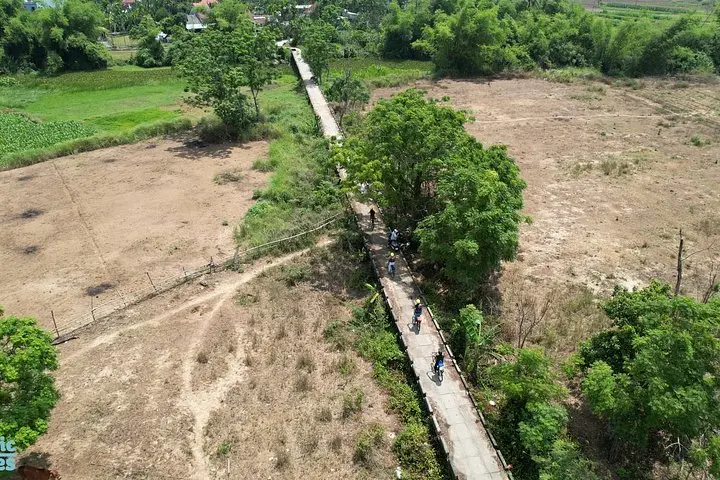
Early morning light catches the low rice paddies outside Hoi An and the silent canals seem to dare you forward. Guides fit helmets and hand over mid‑drive electric bikes; with a gentle assist you lift off the town’s bridges and pedal into a landscape of dikes, coconut groves and narrow village lanes.
Early morning light catches the low rice paddies outside Hoi An and the silent canals seem to dare you forward. Guides fit helmets and hand over mid‑drive electric bikes; with a gentle assist you lift off the town’s bridges and pedal into a landscape of dikes, coconut groves and narrow village lanes.
The ride follows quiet rural roads that have supported local craft economies for generations. Hoi An’s role as a historic trading port shaped these cottage industries—bánh tráng (rice paper) cooks, nước mắm (fish sauce) fermenters, rice‑wine distillers and mat weavers still operating on family schedules. Geologically the plain is alluvial: flat, irrigated paddies ringed by mangrove edges closer to the coast, which helped sustain small boatbuilding communities at nearby ports.
Stops are short and hands‑on: a demonstration of rice paper over the steamer, the smoky tang of coffee beans at a roastery, the slow, pungent jars of fish sauce lined in the sun. A coconut‑tree rest break (seasonal) gives you time to ask questions and photograph the fishing port where small wooden boats bob in the tide.
Practicalities are straightforward: total outing is roughly 4–5 hours with about 2.5 hours riding, helmets and a safety briefing included. Terrain is paved village roads with occasional gravel; gradients are minimal. Bring sun protection, closed‑toe shoes, and a water bottle. The electric assist lets riders cover more ground than a conventional bike tour, so expect a steady but relaxed pace.
This tour suits travelers who want cultural contact more than athletic challenge—an efficient way to see how local food and craft traditions are made and how the rivers and fields keep them alive.