THE ADVENTURE COLLECTIVE® · Independent discovery and booking for outdoor travel

Ride from the lantern-lit streets of Hoi An over the dramatic Hai Van Pass to Hue, skirting sweeping beaches, lagoon flats and fishing villages. This challenging coastal-to-mountain bike day blends steep switchbacks, tranquil lagoon roads and a restorative swim at Lang Co.
Ride from the lantern-lit streets of Hoi An over the dramatic Hai Van Pass to Hue, skirting sweeping beaches, lagoon flats and fishing villages. This challenging coastal-to-mountain bike day blends steep switchbacks, tranquil lagoon roads and a restorative swim at Lang Co.
You push off from Hoi An at first light, the old town’s tile roofs shrinking behind you as rice paddies and salt pans slide into view. The road threads along China Beach, then pulls upward—hairpins and ocean windows—toward the Hai Van Pass, where the sea stretches like a patient audience and the road carves into rock.
Verified experiences and guided adventures in the surrounding area.
Operated by Kong's Adventures · Hoi An, Quang Nam
You push off from Hoi An at first light, the old town’s tile roofs shrinking behind you as rice paddies and salt pans slide into view. The road threads along China Beach, then pulls upward—hairpins and ocean windows—toward the Hai Van Pass, where the sea stretches like a patient audience and the road carves into rock.
This route crosses a restless coastline and a layered history: Hai Van has long been a geographic border between kingdoms, and remnants of wartime bunkers dot the route. Geologically the pass is a limestone spine that drops abruptly into sandy coves and shallow lagoons—Lap An and Tam Giang—formed where rivers meet the South China Sea. Local fishing villages line the flats; seafood culture is immediate and plain: nets, lanterns, grilled catch.
Expect roughly 100–120 km of mixed riding with a sustained climb to about 500 m at Hai Van. Terrain alternates paved coastal lanes, steeper mountain switchbacks, quiet country roads and flat lagoon-side stretches; there’s an easy swim at Lang Co to reset tired legs.
Practical guidance: start early to avoid mid-day traffic and heat, use a well-serviced multi-speed road or gravel bike, and plan for sun, wind and sudden showers. A support minivan is standard on guided rides—use it if the climb or conditions spike. Bring cash for small village purchases and a charged phone with local data for maps. Hydrate frequently, protect your neck and hands, and save energy for the pass; the view from the top is the reward you earned.
Typical guided trips cover roughly 100–120 km with a sustained climb to around 500 m at Hai Van—expect a challenging full day for fit cyclists.
Yes, guided departures include an air-conditioned support minivan that can transport riders or bikes at any point on the route.
Yes—Lang Co Beach is a common stop for a swim; water conditions vary so follow your guide’s advice on safety and currents.
Operators usually supply multi-speed Trek bikes with front suspension in all sizes and women-specific saddles; confirm fit when booking.
Kong's Adventures operates guided outdoor trips and adventures with an emphasis on safety, stewardship, and memorable experiences.
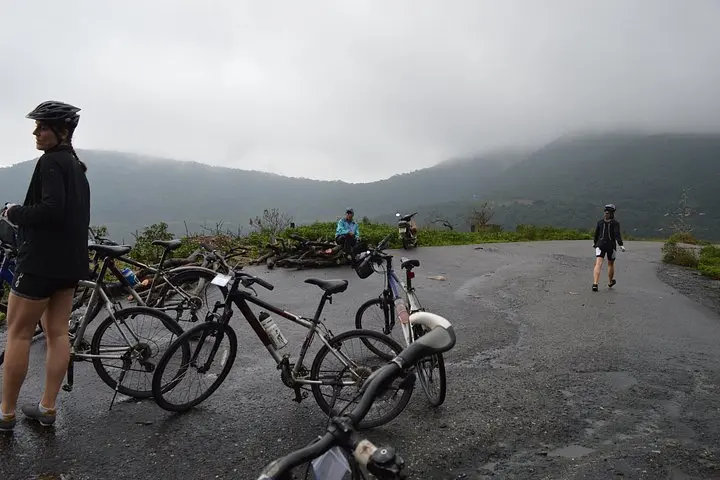
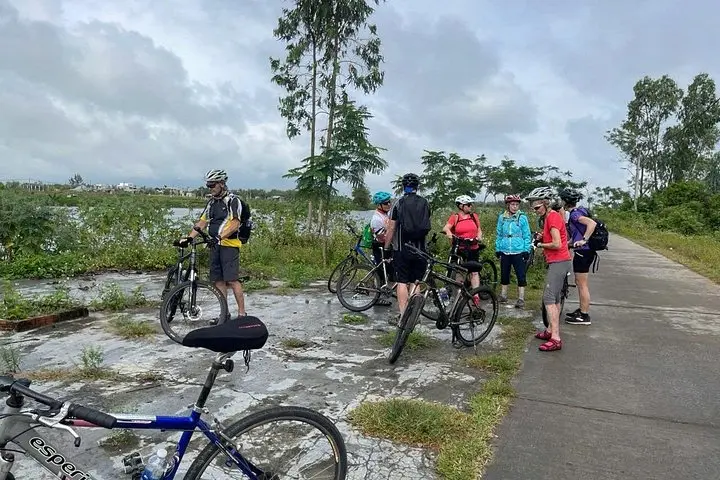
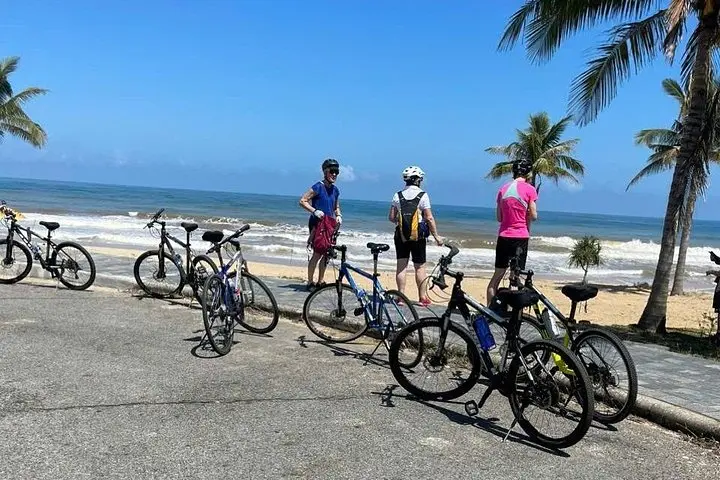
You push off from Hoi An at first light, the old town’s tile roofs shrinking behind you as rice paddies and salt pans slide into view. The road threads along China Beach, then pulls upward—hairpins and ocean windows—toward the Hai Van Pass, where the sea stretches like a patient audience and the road carves into rock.
You push off from Hoi An at first light, the old town’s tile roofs shrinking behind you as rice paddies and salt pans slide into view. The road threads along China Beach, then pulls upward—hairpins and ocean windows—toward the Hai Van Pass, where the sea stretches like a patient audience and the road carves into rock.
This route crosses a restless coastline and a layered history: Hai Van has long been a geographic border between kingdoms, and remnants of wartime bunkers dot the route. Geologically the pass is a limestone spine that drops abruptly into sandy coves and shallow lagoons—Lap An and Tam Giang—formed where rivers meet the South China Sea. Local fishing villages line the flats; seafood culture is immediate and plain: nets, lanterns, grilled catch.
Expect roughly 100–120 km of mixed riding with a sustained climb to about 500 m at Hai Van. Terrain alternates paved coastal lanes, steeper mountain switchbacks, quiet country roads and flat lagoon-side stretches; there’s an easy swim at Lang Co to reset tired legs.
Practical guidance: start early to avoid mid-day traffic and heat, use a well-serviced multi-speed road or gravel bike, and plan for sun, wind and sudden showers. A support minivan is standard on guided rides—use it if the climb or conditions spike. Bring cash for small village purchases and a charged phone with local data for maps. Hydrate frequently, protect your neck and hands, and save energy for the pass; the view from the top is the reward you earned.