THE ADVENTURE COLLECTIVE® · Independent discovery and booking for outdoor travel

Ride a Vespa through rice fields to Tra Que village, shop a bustling market, then learn to cook three classic Hoi An dishes in a family garden. This half-day market-to-table experience blends local farming, hands-on technique, and a scenic countryside ride.
Ride a Vespa through rice fields to Tra Que village, shop a bustling market, then learn to cook three classic Hoi An dishes in a family garden. This half-day market-to-table experience blends local farming, hands-on technique, and a scenic countryside ride.
The morning smells of garlic, lemongrass and warm oil meet you before the city does. You climb onto the back of a Vespa and the rice fields open up — paddies rippling like green seas and water buffaloes eyeing the road — as your driver threads through low village lanes toward Tra Que.
Verified experiences and guided adventures in the surrounding area.
Operated by Amber Journeys · Hoi An, Quang Nam
The morning smells of garlic, lemongrass and warm oil meet you before the city does. You climb onto the back of a Vespa and the rice fields open up — paddies rippling like green seas and water buffaloes eyeing the road — as your driver threads through low village lanes toward Tra Que.
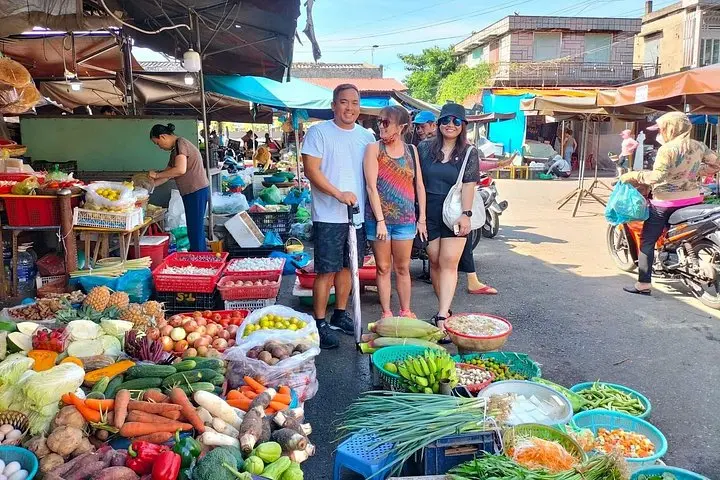
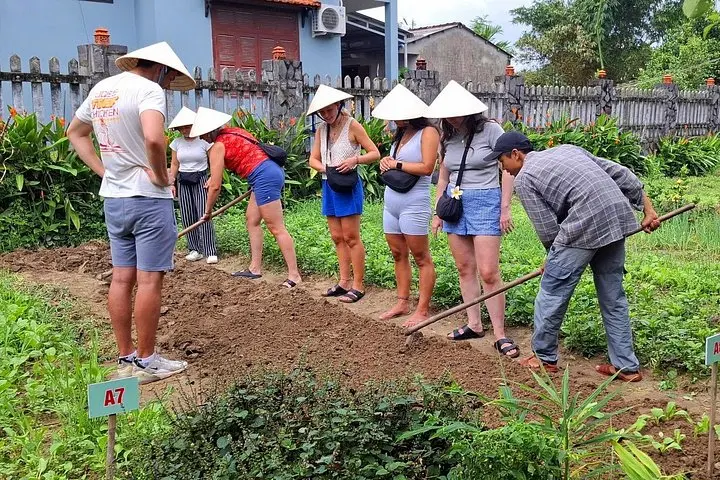
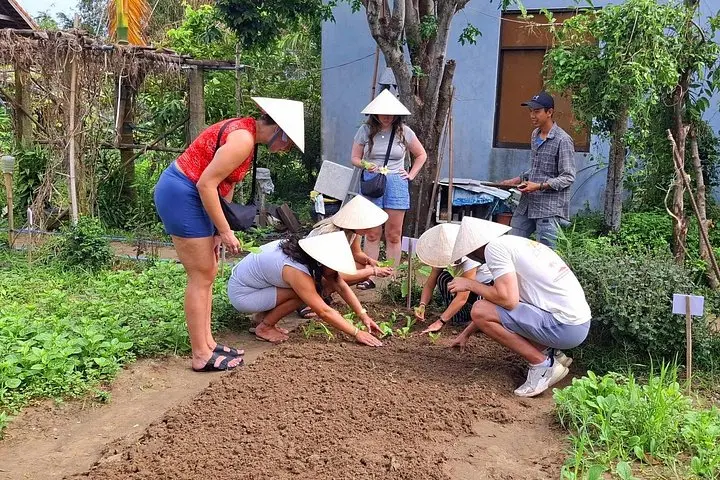
This is a coastal plain shaped by the Thu Bon River’s sediments; Hoi An grew as a trading port from the 15th century, and its food reflects Chinese, Japanese and Cham influences. Tra Que village still uses centuries-old, low-impact farming techniques to coax intense herb aromas from small plots of raised beds. At the market you’ll learn how locals size up produce: hefting fish, smelling mint, and haggling in a rhythm that keeps the supply chain small and seasonal.
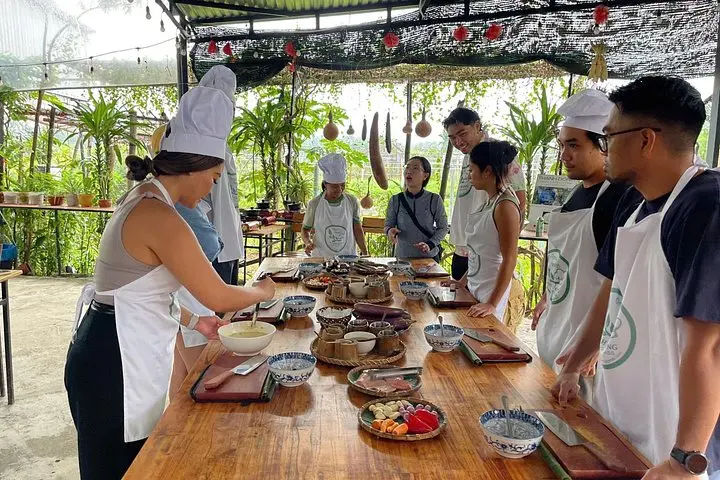
At a family-run garden restaurant a local chef shows three signature dishes — green mango salad with shrimp, Hoi An crispy pancake, and caramelized fish in a clay pot — and explains technique more than recipe: how heat shapes texture, why fish benefits from clay, and what flavors balance here on Vietnam’s central coast.
Practical guidance: bring closed-toe shoes for the garden, modest clothing for market visits, and a small camera for close-up shots of herbs. Plan for 3–5 hours; mornings are cooler and markets livelier. Note dietary needs in advance if you avoid seafood. Hydrate before the Vespa ride and keep a reusable bottle to minimize waste. This trip is sensory and social — you leave with new skills, a full plate, and a small understanding of Hoi An’s living food traditions.
No — the class is hands-on and designed for beginners; the chef walks you through each step.
You ride as a passenger with an experienced driver; helmets are provided and the route uses low-traffic village roads.
Yes — inform the operator when booking so the menu can be adjusted, though heavy seafood substitutions may be limited.
Expect light walking: a market stroll, moving through the garden restaurant, and short walks between cooking stations.
Amber Journeys operates guided outdoor trips and adventures with an emphasis on safety, stewardship, and memorable experiences.
The morning smells of garlic, lemongrass and warm oil meet you before the city does. You climb onto the back of a Vespa and the rice fields open up — paddies rippling like green seas and water buffaloes eyeing the road — as your driver threads through low village lanes toward Tra Que.
The morning smells of garlic, lemongrass and warm oil meet you before the city does. You climb onto the back of a Vespa and the rice fields open up — paddies rippling like green seas and water buffaloes eyeing the road — as your driver threads through low village lanes toward Tra Que.
This is a coastal plain shaped by the Thu Bon River’s sediments; Hoi An grew as a trading port from the 15th century, and its food reflects Chinese, Japanese and Cham influences. Tra Que village still uses centuries-old, low-impact farming techniques to coax intense herb aromas from small plots of raised beds. At the market you’ll learn how locals size up produce: hefting fish, smelling mint, and haggling in a rhythm that keeps the supply chain small and seasonal.
At a family-run garden restaurant a local chef shows three signature dishes — green mango salad with shrimp, Hoi An crispy pancake, and caramelized fish in a clay pot — and explains technique more than recipe: how heat shapes texture, why fish benefits from clay, and what flavors balance here on Vietnam’s central coast.
Practical guidance: bring closed-toe shoes for the garden, modest clothing for market visits, and a small camera for close-up shots of herbs. Plan for 3–5 hours; mornings are cooler and markets livelier. Note dietary needs in advance if you avoid seafood. Hydrate before the Vespa ride and keep a reusable bottle to minimize waste. This trip is sensory and social — you leave with new skills, a full plate, and a small understanding of Hoi An’s living food traditions.