THE ADVENTURE COLLECTIVE® · Independent discovery and booking for outdoor travel

A guided hike from Brush Canyon that puts the Hollywood Sign within arm’s-reach of your camera and gives you the backstory of Griffith Park. Expect steep singletrack, sweeping city views, and a guide who blends local lore with practical trail advice.
A guided hike from Brush Canyon that puts the Hollywood Sign within arm’s-reach of your camera and gives you the backstory of Griffith Park. Expect steep singletrack, sweeping city views, and a guide who blends local lore with practical trail advice.
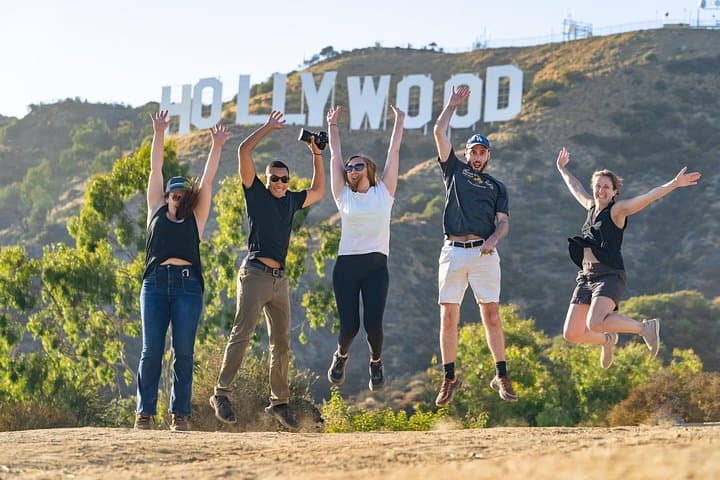
The air is thin with smog-sweet California sunlight as hikers gather at the Brush Canyon trailhead beneath the Smokey the Bear sign. The route climbs through scrubby chaparral and eucalyptus shade, the city unfolding below in angles of glass and pavement, until a single white landmark dominates the skyline: the Hollywood Sign, standing like a stage prop with a view.
Verified experiences and guided adventures in the surrounding area.
Operated by Junket: Los Angeles Tours and Premium Experiences · Los Angeles, California
The air is thin with smog-sweet California sunlight as hikers gather at the Brush Canyon trailhead beneath the Smokey the Bear sign. The route climbs through scrubby chaparral and eucalyptus shade, the city unfolding below in angles of glass and pavement, until a single white landmark dominates the skyline: the Hollywood Sign, standing like a stage prop with a view.
Griffith Park carries layers of civic history. Donated by Griffith J. Griffith in the early 20th century, the land became public recreation—and the sign itself began life as a 1923 real-estate advertisement reading "Hollywoodland" before being shortened and repaired into a cultural icon. Geologically the route follows the northern edge of the Santa Monica Mountains—rocky sandstone outcrops, fire-adapted shrubs and exposed soil that channels winter runoff down steep gullies.
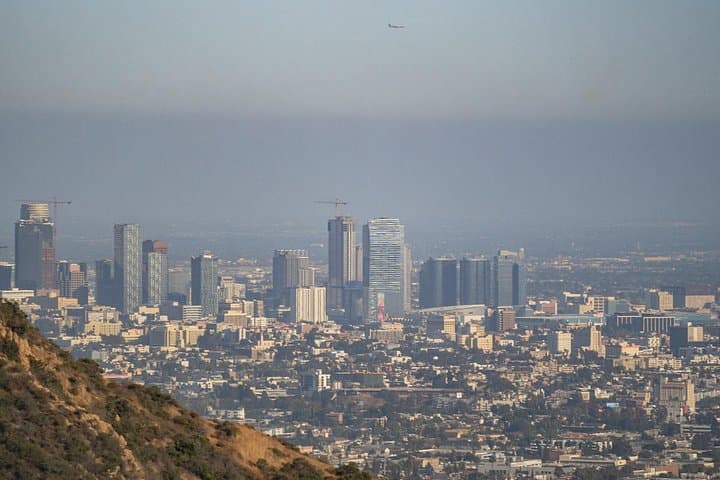
Along the way a guide will point out movie-era features—manmade caves and old observatory infrastructure—that link the landscape to Los Angeles’s film economy. The vantage points also frame neighborhoods: Downtown’s towers to the east, the Pacific hazed to the west.
Practical guidance: expect 2–3 hours round trip, roughly 3–4 miles with 600–800 ft of gain on dirt singletrack with loose rock. Wear grippy shoes, bring at least 1–2 liters of water and sun protection, and start early to avoid heat and crowds. Dogs are limited to service animals; public transit and paid parking options exist but can fill on weekends.
The tour balances storytelling and straightforward trailcraft—ideal for hikers who want a clear view of Los Angeles history and a reliable outdoor workout.
The typical route used by guided tours is about 3–4 miles round trip with roughly 600–800 feet of elevation gain, completed in 2–3 hours depending on stops.
No—access directly behind the letters is restricted. The tour brings you to the best legal vantage points for photos and views without trespassing.
Participants should have a reasonable level of fitness; children with hiking experience may do fine, but the tour is not recommended for those with serious mobility, heart, or spinal issues.
Only service animals are permitted on guided tours; recreational pets are typically not allowed for safety and trail etiquette reasons.
Junket: Los Angeles Tours and Premium Experiences operates guided outdoor trips and adventures with an emphasis on safety, stewardship, and memorable experiences.

The air is thin with smog-sweet California sunlight as hikers gather at the Brush Canyon trailhead beneath the Smokey the Bear sign. The route climbs through scrubby chaparral and eucalyptus shade, the city unfolding below in angles of glass and pavement, until a single white landmark dominates the skyline: the Hollywood Sign, standing like a stage prop with a view.
The air is thin with smog-sweet California sunlight as hikers gather at the Brush Canyon trailhead beneath the Smokey the Bear sign. The route climbs through scrubby chaparral and eucalyptus shade, the city unfolding below in angles of glass and pavement, until a single white landmark dominates the skyline: the Hollywood Sign, standing like a stage prop with a view.
Griffith Park carries layers of civic history. Donated by Griffith J. Griffith in the early 20th century, the land became public recreation—and the sign itself began life as a 1923 real-estate advertisement reading "Hollywoodland" before being shortened and repaired into a cultural icon. Geologically the route follows the northern edge of the Santa Monica Mountains—rocky sandstone outcrops, fire-adapted shrubs and exposed soil that channels winter runoff down steep gullies.
Along the way a guide will point out movie-era features—manmade caves and old observatory infrastructure—that link the landscape to Los Angeles’s film economy. The vantage points also frame neighborhoods: Downtown’s towers to the east, the Pacific hazed to the west.
Practical guidance: expect 2–3 hours round trip, roughly 3–4 miles with 600–800 ft of gain on dirt singletrack with loose rock. Wear grippy shoes, bring at least 1–2 liters of water and sun protection, and start early to avoid heat and crowds. Dogs are limited to service animals; public transit and paid parking options exist but can fill on weekends.
The tour balances storytelling and straightforward trailcraft—ideal for hikers who want a clear view of Los Angeles history and a reliable outdoor workout.