THE ADVENTURE COLLECTIVE® · Independent discovery and booking for outdoor travel

Ride the metro up to Frognerseteren and step into Oslomarka for a private 5 km forest walk that ends at the iconic Holmenkollen ski jump. This three-hour tour blends scenic viewpoints, skiing history, and practical guidance for hikers of most fitness levels.
Ride the metro up to Frognerseteren and step into Oslomarka for a private 5 km forest walk that ends at the iconic Holmenkollen ski jump. This three-hour tour blends scenic viewpoints, skiing history, and practical guidance for hikers of most fitness levels.
You board the metro at the city center and the train climbs, windows bright with fjord and skyline views, as Oslo shrinks beneath pine-clad ridges. At Frognerseteren the air sharpens; a forest path opens, the city’s hum left behind. The trail threads past Lillevann’s quiet shore, follows an old toboggan run, and drops toward the Holmenkollen Chapel before the ski jump looms like a modern monument to speed.
Verified experiences and guided adventures in the surrounding area.
Operated by When in Norway · Oslo, Oslo
You board the metro at the city center and the train climbs, windows bright with fjord and skyline views, as Oslo shrinks beneath pine-clad ridges. At Frognerseteren the air sharpens; a forest path opens, the city’s hum left behind. The trail threads past Lillevann’s quiet shore, follows an old toboggan run, and drops toward the Holmenkollen Chapel before the ski jump looms like a modern monument to speed.
Holmenkollen is more than a landmark—it's central to Norway’s skiing story. Wooden runs and early 20th-century competitions shaped the area; a historic luge run nearby hosted the first Luge World Championship in 1955. Geologically the terrain is marked by glacially scoured lakes and thin soils on exposed bedrock, which creates hummocks, exposed roots, and sudden viewpoints. Culturally, this forest belongs to Oslomarka, a protected network of trails that Norwegians use for year-round recreation.
Expect about 5 km of walking over roughly three hours, paced with stops for views and history. The route is mostly well-marked but includes rooty sections and short, steep pitches near Midtstubakken. Your English-speaking local guide handles the metro logistics—the ticket is included—so you can focus on photos and footing.
Practical notes: wear sturdy hiking shoes, dress in layers for quick weather shifts, and bring water and a small daypack. If you have cardiovascular concerns, consult your doctor—while the walk is rated easy, some descents require balance. Arrive with a sense of curiosity: the jump’s silhouette rewards those who climb a few extra steps for the view.
Meet outside Backstube Opera in central Oslo; the guide accompanies the group to the metro and the trip includes the public transport ticket.
The route is family-friendly and suitable for children 5 and older, but short steep descents may require supervision and slower pacing.
No—parts of the trail include uneven, rocky, or rooty terrain and short steep sections that are not suitable for wheelchairs or standard strollers.
The tour runs in rain or light snow; wear appropriate outer layers. The cancellation policy allows refunds if you cancel at least 24 hours in advance, but the operator does not cancel for bad weather by default.
When in Norway operates guided outdoor trips and adventures with an emphasis on safety, stewardship, and memorable experiences.
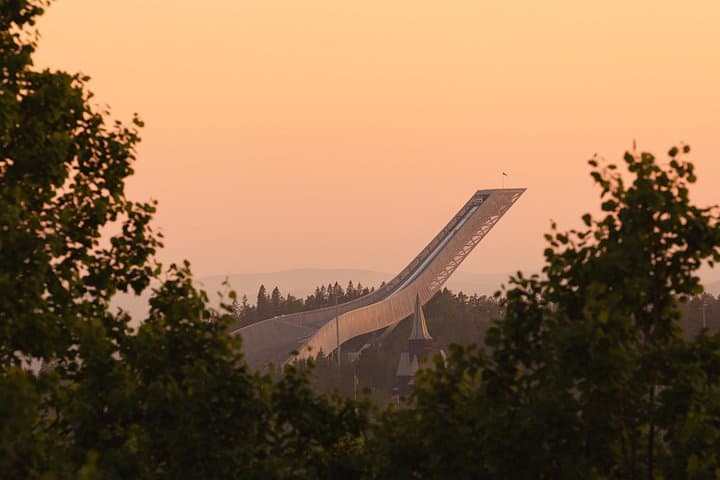

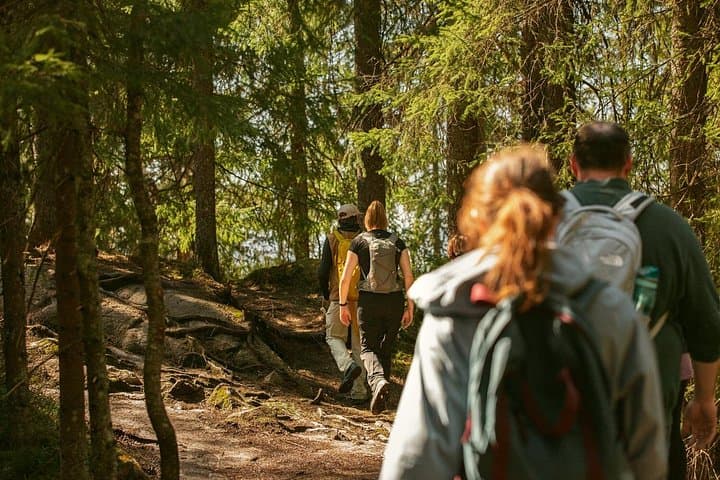
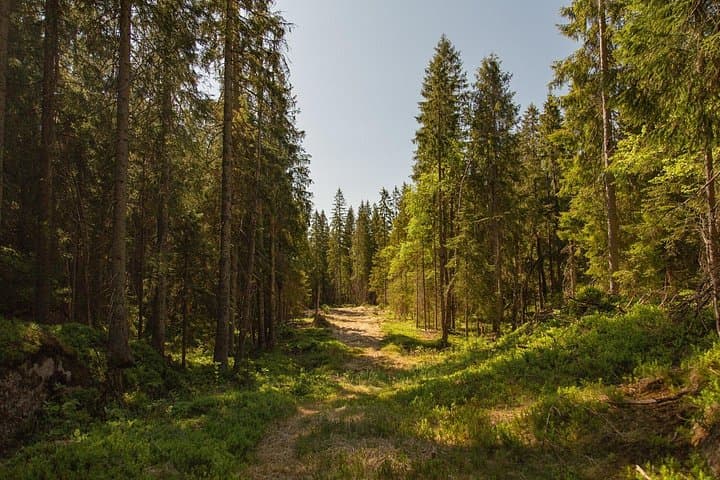
You board the metro at the city center and the train climbs, windows bright with fjord and skyline views, as Oslo shrinks beneath pine-clad ridges. At Frognerseteren the air sharpens; a forest path opens, the city’s hum left behind. The trail threads past Lillevann’s quiet shore, follows an old toboggan run, and drops toward the Holmenkollen Chapel before the ski jump looms like a modern monument to speed.
You board the metro at the city center and the train climbs, windows bright with fjord and skyline views, as Oslo shrinks beneath pine-clad ridges. At Frognerseteren the air sharpens; a forest path opens, the city’s hum left behind. The trail threads past Lillevann’s quiet shore, follows an old toboggan run, and drops toward the Holmenkollen Chapel before the ski jump looms like a modern monument to speed.
Holmenkollen is more than a landmark—it's central to Norway’s skiing story. Wooden runs and early 20th-century competitions shaped the area; a historic luge run nearby hosted the first Luge World Championship in 1955. Geologically the terrain is marked by glacially scoured lakes and thin soils on exposed bedrock, which creates hummocks, exposed roots, and sudden viewpoints. Culturally, this forest belongs to Oslomarka, a protected network of trails that Norwegians use for year-round recreation.
Expect about 5 km of walking over roughly three hours, paced with stops for views and history. The route is mostly well-marked but includes rooty sections and short, steep pitches near Midtstubakken. Your English-speaking local guide handles the metro logistics—the ticket is included—so you can focus on photos and footing.
Practical notes: wear sturdy hiking shoes, dress in layers for quick weather shifts, and bring water and a small daypack. If you have cardiovascular concerns, consult your doctor—while the walk is rated easy, some descents require balance. Arrive with a sense of curiosity: the jump’s silhouette rewards those who climb a few extra steps for the view.