THE ADVENTURE COLLECTIVE® · Independent discovery and booking for outdoor travel
Climb a Sherpa-built stone staircase above Honningsvåg for panoramic Arctic Ocean views and a summit cabin visit. This moderate 3‑hour guided loop offers dramatic coastal vistas, tundra ridgelines and practical guidance for changing weather.
Climb a Sherpa-built stone staircase above Honningsvåg for panoramic Arctic Ocean views and a summit cabin visit. This moderate 3‑hour guided loop offers dramatic coastal vistas, tundra ridgelines and practical guidance for changing weather.
A wind-cut stone stair winds up the island like a handrail for the Arctic sky — each step cut and set into the slope by Sherpa builders, guiding hikers away from the town and toward an uncompromising skyline.
Verified experiences and guided adventures in the surrounding area.
Operated by Norwegian Polar Academy · Honningsvåg, Troms og Finnmark
A wind-cut stone stair winds up the island like a handrail for the Arctic sky — each step cut and set into the slope by Sherpa builders, guiding hikers away from the town and toward an uncompromising skyline.
This three-hour guided loop climbs from Honningsvåg to a wooden summit cabin, follows a gentle ridge with sweeping views of the Arctic Ocean and North Cape, then drops back through a quiet valley. The route crosses ancient bedrock scoured by Pleistocene glaciers; underfoot the terrain is a mix of compact stonework, tundra grasses and occasional scree. Culturally, Magerøya has long been defined by fishing and seafaring, and the trail’s stonework reflects a practical, no-nonsense approach to trailbuilding in extreme conditions.
Expect strong coastal winds, fast-changing weather and long summer daylight — on clear days the Atlantic stretches to the horizon and seabirds wheel below. The hike is short but steady: plan for roughly 3–4 km round-trip with about 250–350 m elevation gain, over well-built steps and rocky singletrack.
Practical guidance: wear waterproof layers and sturdy boots, carry 1–1.5 L water and snacks, and use trekking poles for stability on the stair sections. Guides provide local context and route-finding; the group size is small, which preserves the fragile tundra and maximizes photo opportunities. Leave the path as you found it — the vegetation and nesting birds are fragile here — and schedule the hike for morning or late evening to avoid the windiest windows.
Moderate: the route is short (about 3–4 km round-trip) but includes steady uphill sections and stone steps; a moderate fitness level is recommended.
Families and fit older adults can join, but those with mobility issues or serious heart conditions are advised not to; contact the operator for specifics.
The tour operator may cancel for safety in poor visibility, high winds or storms; the booking terms allow a full refund if canceled at least 24 hours prior.
Trekking poles are listed among inclusions but availability can vary — confirm with the operator if you need poles supplied.
Norwegian Polar Academy operates guided outdoor trips and adventures with an emphasis on safety, stewardship, and memorable experiences.
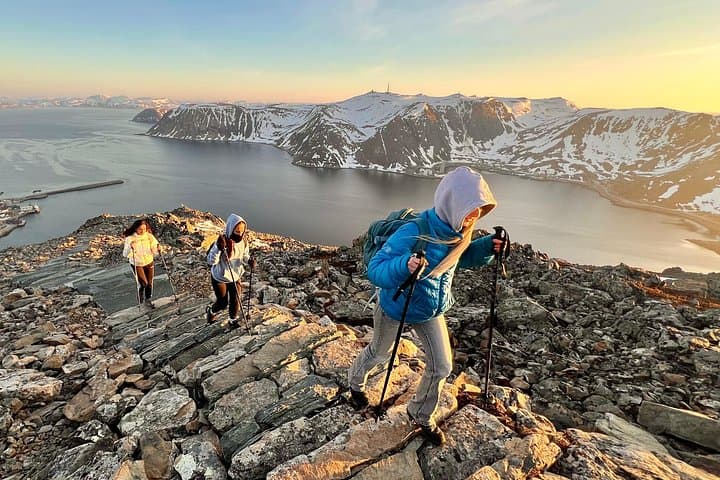
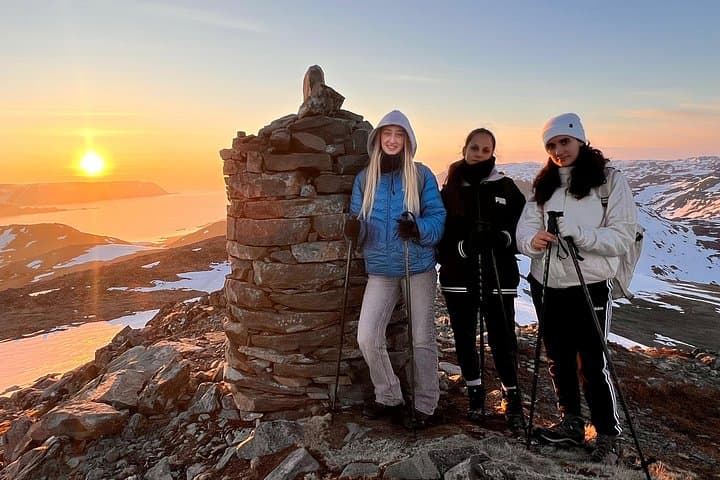
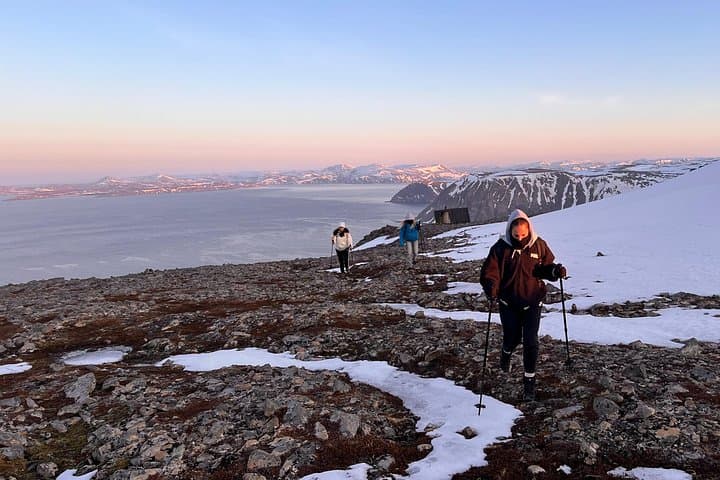
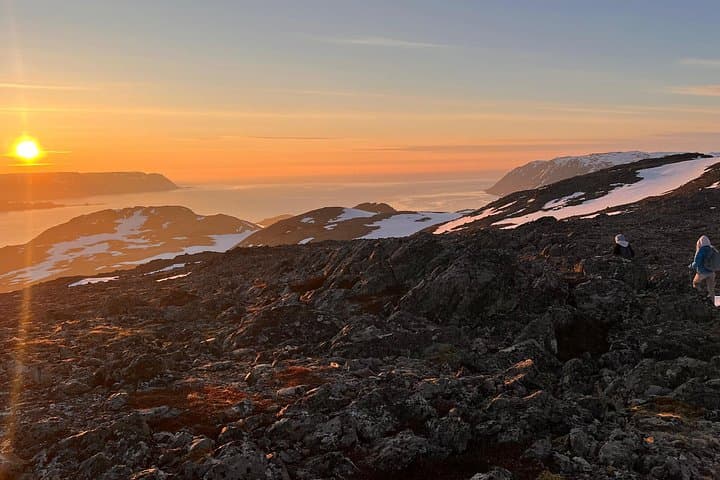
A wind-cut stone stair winds up the island like a handrail for the Arctic sky — each step cut and set into the slope by Sherpa builders, guiding hikers away from the town and toward an uncompromising skyline.
A wind-cut stone stair winds up the island like a handrail for the Arctic sky — each step cut and set into the slope by Sherpa builders, guiding hikers away from the town and toward an uncompromising skyline.
This three-hour guided loop climbs from Honningsvåg to a wooden summit cabin, follows a gentle ridge with sweeping views of the Arctic Ocean and North Cape, then drops back through a quiet valley. The route crosses ancient bedrock scoured by Pleistocene glaciers; underfoot the terrain is a mix of compact stonework, tundra grasses and occasional scree. Culturally, Magerøya has long been defined by fishing and seafaring, and the trail’s stonework reflects a practical, no-nonsense approach to trailbuilding in extreme conditions.
Expect strong coastal winds, fast-changing weather and long summer daylight — on clear days the Atlantic stretches to the horizon and seabirds wheel below. The hike is short but steady: plan for roughly 3–4 km round-trip with about 250–350 m elevation gain, over well-built steps and rocky singletrack.
Practical guidance: wear waterproof layers and sturdy boots, carry 1–1.5 L water and snacks, and use trekking poles for stability on the stair sections. Guides provide local context and route-finding; the group size is small, which preserves the fragile tundra and maximizes photo opportunities. Leave the path as you found it — the vegetation and nesting birds are fragile here — and schedule the hike for morning or late evening to avoid the windiest windows.
