THE ADVENTURE COLLECTIVE® · Independent discovery and booking for outdoor travel

Paddle 12 miles from the base of Hoover Dam through Black Canyon to hot springs, waterfalls, and the luminous Emerald Cave. This full-day guided kayak tour from Las Vegas blends engineering history, desert geology, and active exploration.
Paddle 12 miles from the base of Hoover Dam through Black Canyon to hot springs, waterfalls, and the luminous Emerald Cave. This full-day guided kayak tour from Las Vegas blends engineering history, desert geology, and active exploration.
The first paddle stroke after the Hoover Dam feels deliberate, like dropping a coin into a deep, clear well. Water, held back for decades, slips into the canyon with a quiet insistence, and the kayaks slide downstream beneath sheer basalt walls that still hold the imprint of the Colorado River’s work. Over the next 12 miles, the canyon alternates between narrow, shadowed sections and sudden sunlit beaches where steam rises from hot springs and cliff lines drip with seasonal waterfalls.
Verified experiences and guided adventures in the surrounding area.
Operated by Las Vegas SUP Kayak Club · Boulder City, NV
The first paddle stroke after the Hoover Dam feels deliberate, like dropping a coin into a deep, clear well. Water, held back for decades, slips into the canyon with a quiet insistence, and the kayaks slide downstream beneath sheer basalt walls that still hold the imprint of the Colorado River’s work. Over the next 12 miles, the canyon alternates between narrow, shadowed sections and sudden sunlit beaches where steam rises from hot springs and cliff lines drip with seasonal waterfalls.
Black Canyon is younger than the rocks that form it but old enough to hold stories. The walls here are mostly dark volcanic basalt and Precambrian crystalline rock, scraped and sculpted by ancient flows and modern engineering. The Hoover Dam—an audacious piece of 20th-century infrastructure—hovers upstream like a human punctuation point. Paddling from its base gives a rare vantage: you move with the river’s current while the dam’s concrete mass recedes behind you, a meeting of industry and geology.
Culturally, this stretch of the Colorado River was once a route and resource for Southern Paiute and Mojave people; later it became part of the bold federal projects that reshaped the Southwest. Today, the corridor balances recreation with protections—the National Park permit and carefully managed access remind visitors that this is a living system, not a playground without consequence.
On the water the day is kinetic. Guides, often competitive paddlers, parse wind lines and current seams; hot springs dare you to climb a short, rocky approach for a soak; Emerald Cave—its name earned by light refracting off mineral-tinted waters—offers a cinematic stop for photos and swims. Wildlife watches with polite curiosity: desert bighorn might silhouette on a ledge, and gulls wheel above quieter pools.
Practical guidance: expect a long, active day—about 7–8 hours on the water and roughly 9 hours overall with shuttle time. The route is downstream, but you’ll expend energy controlling your kayak across eddies, around rocks, and during the portage-like short hikes to hot springs. Wear water shoes with toe protection (no flip-flops). Layers are essential; mornings in the canyon can be cool, afternoons hot. Sun protection matters—reflective canyon walls amplify UV exposure.
Logistics are simple but firm: meet at Hoover Dam Lodge in Boulder City or use the operator’s Las Vegas pickups (Mandalay Bay noted). Permits for National Park entry are required and non-refundable—organizers will arrange them after booking. Bring a small dry bag for phone and extra layers, and be prepared for a guided, safety-first pace—this is not a leisure float. For travelers seeking a full-day immersion into the Colorado River’s contrasts—industrial scale to mineral springs—this trip delivers an authentic, physical, and photographic canyon experience.
The guided route covers about 12 miles downstream from Hoover Dam through Black Canyon, with multiple stops including Emerald Cave and hot springs.
No—this is suitable for beginners, but participants should have moderate fitness and be comfortable in water; guided instruction and stable kayaks are provided.
Yes—National Park permits are required for this section of the Colorado River; the operator arranges permits after booking and the fee is non-refundable.
Wear a swimsuit under quick-dry clothes, closed-toe water shoes (no flip-flops), sun protection, and layers for cooler mornings or windy stretches.
Yes—bottled water, snacks, and a healthy sandwich are provided; bring extra snacks if you have dietary restrictions.
Children can join if they meet safety and weight requirements, but the operator notes the tour requires stamina and is not recommended for very young or physically limited participants.
Las Vegas SUP Kayak Club operates guided outdoor trips and adventures with an emphasis on safety, stewardship, and memorable experiences.
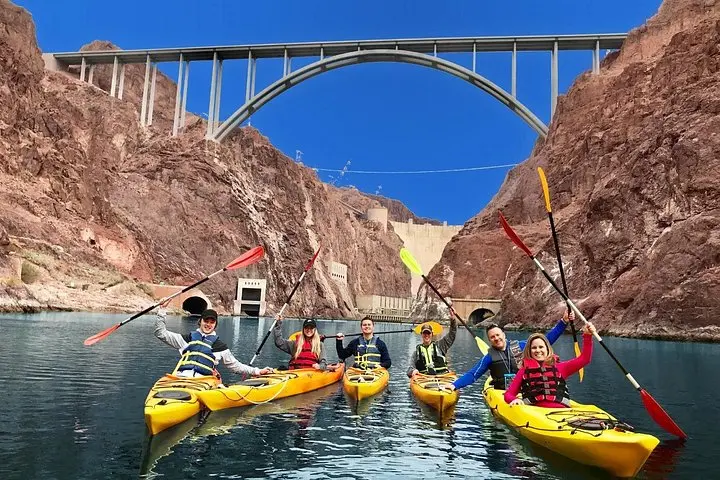
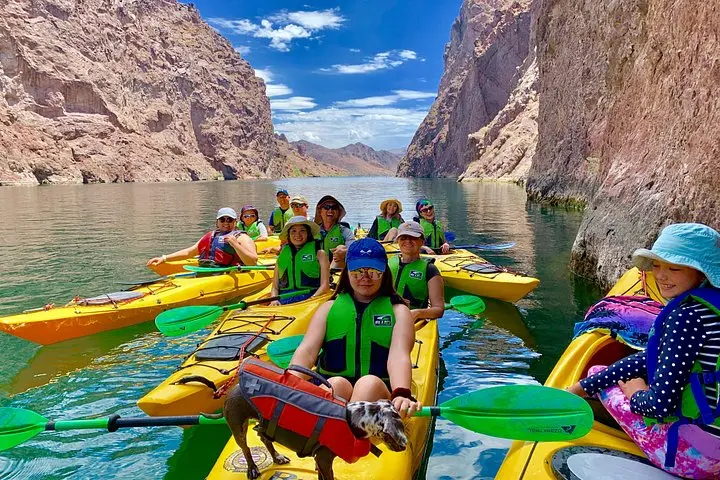
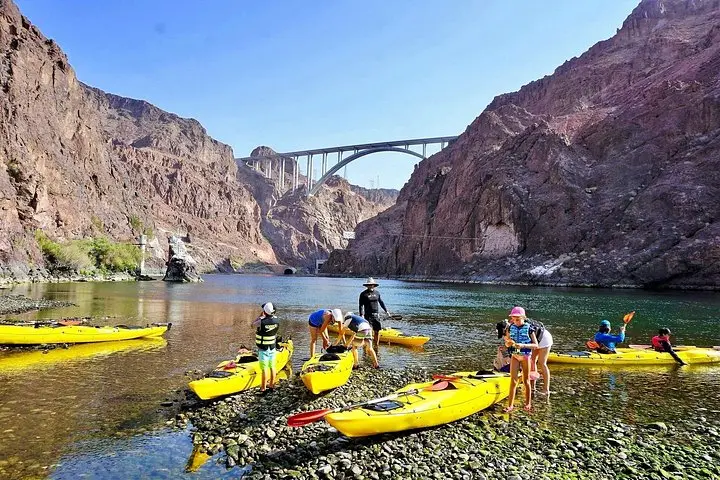
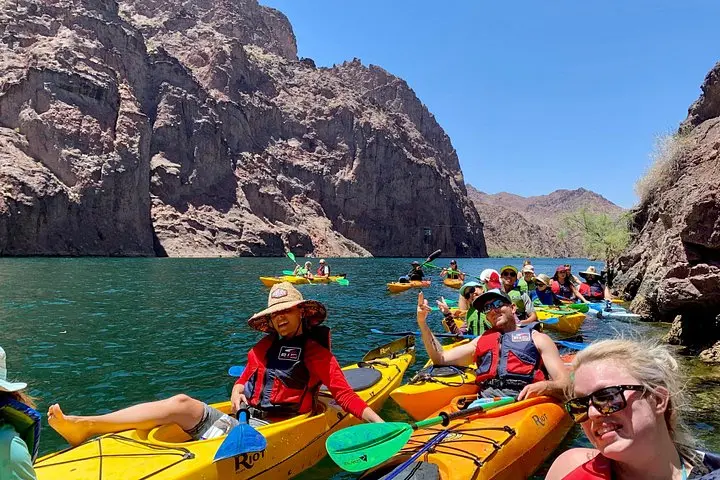
The first paddle stroke after the Hoover Dam feels deliberate, like dropping a coin into a deep, clear well. Water, held back for decades, slips into the canyon with a quiet insistence, and the kayaks slide downstream beneath sheer basalt walls that still hold the imprint of the Colorado River’s work. Over the next 12 miles, the canyon alternates between narrow, shadowed sections and sudden sunlit beaches where steam rises from hot springs and cliff lines drip with seasonal waterfalls.
The first paddle stroke after the Hoover Dam feels deliberate, like dropping a coin into a deep, clear well. Water, held back for decades, slips into the canyon with a quiet insistence, and the kayaks slide downstream beneath sheer basalt walls that still hold the imprint of the Colorado River’s work. Over the next 12 miles, the canyon alternates between narrow, shadowed sections and sudden sunlit beaches where steam rises from hot springs and cliff lines drip with seasonal waterfalls.
Black Canyon is younger than the rocks that form it but old enough to hold stories. The walls here are mostly dark volcanic basalt and Precambrian crystalline rock, scraped and sculpted by ancient flows and modern engineering. The Hoover Dam—an audacious piece of 20th-century infrastructure—hovers upstream like a human punctuation point. Paddling from its base gives a rare vantage: you move with the river’s current while the dam’s concrete mass recedes behind you, a meeting of industry and geology.
Culturally, this stretch of the Colorado River was once a route and resource for Southern Paiute and Mojave people; later it became part of the bold federal projects that reshaped the Southwest. Today, the corridor balances recreation with protections—the National Park permit and carefully managed access remind visitors that this is a living system, not a playground without consequence.
On the water the day is kinetic. Guides, often competitive paddlers, parse wind lines and current seams; hot springs dare you to climb a short, rocky approach for a soak; Emerald Cave—its name earned by light refracting off mineral-tinted waters—offers a cinematic stop for photos and swims. Wildlife watches with polite curiosity: desert bighorn might silhouette on a ledge, and gulls wheel above quieter pools.
Practical guidance: expect a long, active day—about 7–8 hours on the water and roughly 9 hours overall with shuttle time. The route is downstream, but you’ll expend energy controlling your kayak across eddies, around rocks, and during the portage-like short hikes to hot springs. Wear water shoes with toe protection (no flip-flops). Layers are essential; mornings in the canyon can be cool, afternoons hot. Sun protection matters—reflective canyon walls amplify UV exposure.
Logistics are simple but firm: meet at Hoover Dam Lodge in Boulder City or use the operator’s Las Vegas pickups (Mandalay Bay noted). Permits for National Park entry are required and non-refundable—organizers will arrange them after booking. Bring a small dry bag for phone and extra layers, and be prepared for a guided, safety-first pace—this is not a leisure float. For travelers seeking a full-day immersion into the Colorado River’s contrasts—industrial scale to mineral springs—this trip delivers an authentic, physical, and photographic canyon experience.