THE ADVENTURE COLLECTIVE® · Independent discovery and booking for outdoor travel

Ride from dune crest to shoreline on a two‑hour horseback tour outside Hurghada. This guided excursion mixes short canters across the beach with calmer traverses through wind-shaped dunes — ideal for beginners and experienced riders alike.
Ride from dune crest to shoreline on a two‑hour horseback tour outside Hurghada. This guided excursion mixes short canters across the beach with calmer traverses through wind-shaped dunes — ideal for beginners and experienced riders alike.
The first hoofbeats break the desert silence as dawn paints the dunes a pale ochre and the Red Sea unfurls a cool ribbon at the horizon. You swing into the saddle, the horse’s rhythm matching the push of wind across open sand, and the shoreline draws nearer — surf whispering, dunes daring you to pick up the pace.
Verified experiences and guided adventures in the surrounding area.
Operated by Bella Trips · Hurghada, Red Sea Governorate
The first hoofbeats break the desert silence as dawn paints the dunes a pale ochre and the Red Sea unfurls a cool ribbon at the horizon. You swing into the saddle, the horse’s rhythm matching the push of wind across open sand, and the shoreline draws nearer — surf whispering, dunes daring you to pick up the pace.
This corridor where arid plateau meets coral coast has been a corridor of trade and fishing for centuries; modern Hurghada grew from a small fishing village into a gateway for Red Sea voyages and desert crossings. Geologically, the area is built of layered sandstone and wind-scoured calcareous dunes, while offshore coral reefs tell an older story of sea-level change and tropical currents.
Culturally, rides like this echo Bedouin traditions of horsemanship and desert travel; local guides typically share brief insights into salt-tolerant plants, dune formation, and coastal ecology as they lead. Expect small groups, helmets, and horses suited to mixed terrain — flat beach gallops and firmer sandy tracks through low dunes.
Practical notes: arrive hydrated and with sun protection, wear closed-toe shoes and long pants to avoid saddle friction, and plan for early morning or late afternoon to dodge midday heat. Rides usually last about two hours, include transfers in an air-conditioned vehicle, and have a maximum rider weight near 150 kg. The experience is low-technical but active: you’ll trot and canter in short bursts and walk across variable sand. Respect local wildlife and vegetation, follow your guide’s pace, and bring a lightweight barrier for wind and spray — the sea and desert both demand respect, and they repay restraint with wide-open views and quiet that lingers after you dismount.
Yes — most operators provide helmets and a short orientation; guides calibrate pace for newcomers and will keep groups at a comfortable speed.
Typical maximum weight is around 150 kg; check with the operator in advance if you are near that limit.
Most tours include pickup and drop-off in an air-conditioned vehicle from central Hurghada hotels — confirm your pickup point when booking.
Children can usually ride but policies vary; infants may need to sit on a lap and minimum age limits depend on balance and safety rules — verify at booking.
Bella Trips operates guided outdoor trips and adventures with an emphasis on safety, stewardship, and memorable experiences.
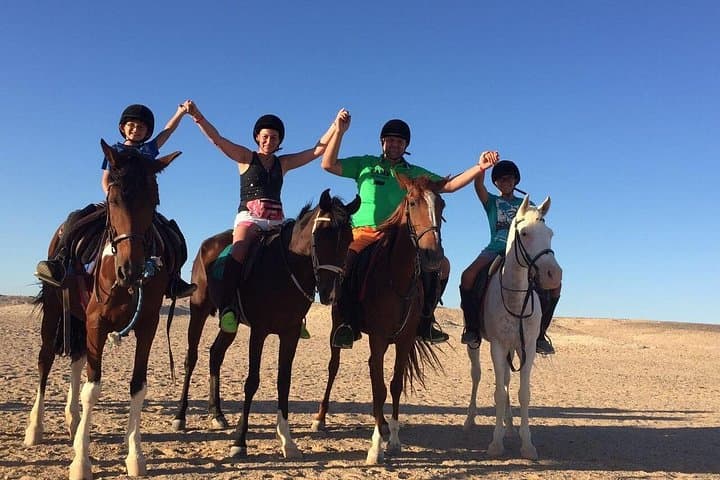
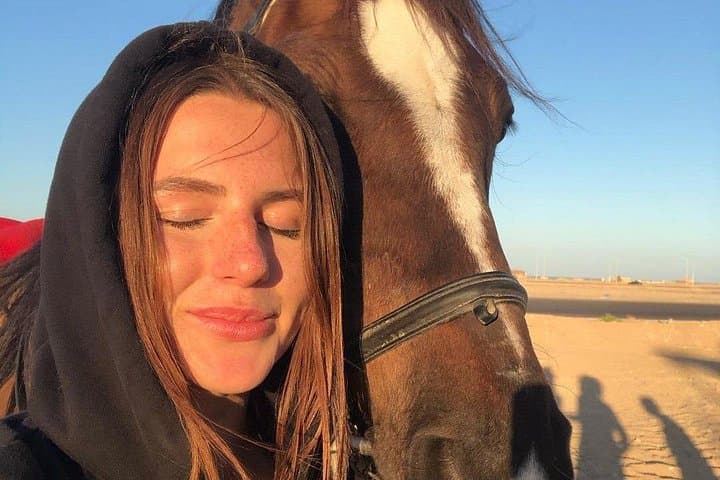
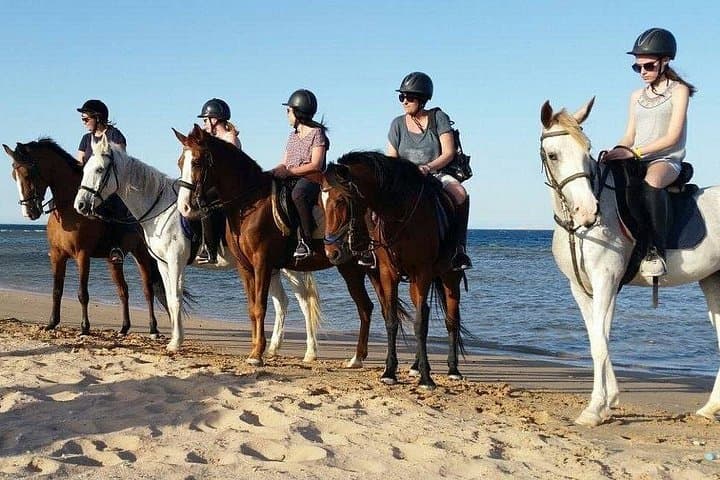
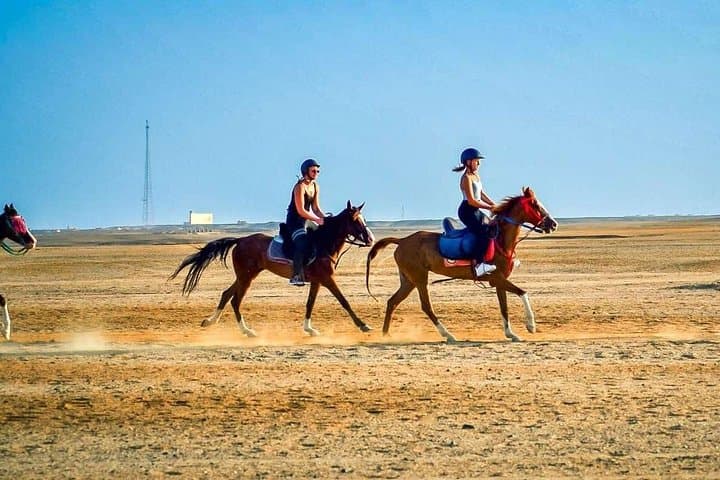
The first hoofbeats break the desert silence as dawn paints the dunes a pale ochre and the Red Sea unfurls a cool ribbon at the horizon. You swing into the saddle, the horse’s rhythm matching the push of wind across open sand, and the shoreline draws nearer — surf whispering, dunes daring you to pick up the pace.
The first hoofbeats break the desert silence as dawn paints the dunes a pale ochre and the Red Sea unfurls a cool ribbon at the horizon. You swing into the saddle, the horse’s rhythm matching the push of wind across open sand, and the shoreline draws nearer — surf whispering, dunes daring you to pick up the pace.
This corridor where arid plateau meets coral coast has been a corridor of trade and fishing for centuries; modern Hurghada grew from a small fishing village into a gateway for Red Sea voyages and desert crossings. Geologically, the area is built of layered sandstone and wind-scoured calcareous dunes, while offshore coral reefs tell an older story of sea-level change and tropical currents.
Culturally, rides like this echo Bedouin traditions of horsemanship and desert travel; local guides typically share brief insights into salt-tolerant plants, dune formation, and coastal ecology as they lead. Expect small groups, helmets, and horses suited to mixed terrain — flat beach gallops and firmer sandy tracks through low dunes.
Practical notes: arrive hydrated and with sun protection, wear closed-toe shoes and long pants to avoid saddle friction, and plan for early morning or late afternoon to dodge midday heat. Rides usually last about two hours, include transfers in an air-conditioned vehicle, and have a maximum rider weight near 150 kg. The experience is low-technical but active: you’ll trot and canter in short bursts and walk across variable sand. Respect local wildlife and vegetation, follow your guide’s pace, and bring a lightweight barrier for wind and spray — the sea and desert both demand respect, and they repay restraint with wide-open views and quiet that lingers after you dismount.