THE ADVENTURE COLLECTIVE® · Independent discovery and booking for outdoor travel

Ride along Aruba’s rugged north coast to Wariruri Beach and its mini natural bridge. This 90-minute horseback tour pairs easy terrain with dramatic coastal views—ideal for beginners and experienced riders seeking a calm, scenic outing.
Ride along Aruba’s rugged north coast to Wariruri Beach and its mini natural bridge. This 90-minute horseback tour pairs easy terrain with dramatic coastal views—ideal for beginners and experienced riders seeking a calm, scenic outing.
You climb into the saddle as trade winds press against your face and the north coast unspools to the horizon: low cliffs, scrubby cactus, and the Atlantic’s white-capped edge daring you closer. Horses pick their way over sandy tracks, slowing at viewpoints where the coastline cuts into natural rock—Wariruri’s mini natural bridge looms as a sudden, raw focal point.
Verified experiences and guided adventures in the surrounding area.
Operated by Arubahorsetour · Noord, Aruba
You climb into the saddle as trade winds press against your face and the north coast unspools to the horizon: low cliffs, scrubby cactus, and the Atlantic’s white-capped edge daring you closer. Horses pick their way over sandy tracks, slowing at viewpoints where the coastline cuts into natural rock—Wariruri’s mini natural bridge looms as a sudden, raw focal point.
This stretch of Aruba has been shaped by coral limestone and centuries of wave action; what you see is a young karst coastline with pockets of exposed bedrock and wind-sculpted coves. The island’s indigenous Arawak history and later Dutch colonial presence are quieter here than in port towns, but local ranching culture and horsemanship remain part of daily life—guides often share short stories about the land as you ride.
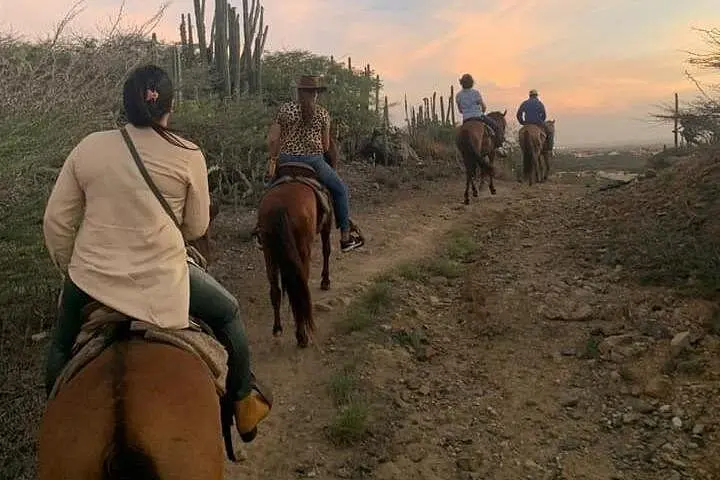
Expect mostly flat, coastal terrain with short rocky sections and sandy footing—no major elevation gain but occasional uneven ground that requires a steady seat. Wildlife is subtle: watch for lizards basking on rocks and seabirds circling offshore. The ride is social and accessible: helmets are provided, groups are small, and the route is designed for mixed experience levels.
Practical notes: 90 minutes on the trail; weight limits apply and bookings often request exact weight and age. Wear closed-toe shoes, sun protection, and bring a small water bottle in a secure pouch. Morning rides offer cooler temperatures and calmer seas; late afternoon brings warmer light but stronger winds. Follow your guide’s cues, respect coastal vegetation, and leave no trace—this stretch rewards steady attention with wide open views and the simple rhythm of horse and sea.
No—this tour is designed for mixed ability levels; guides provide instruction and steady mounts suited to beginners and experienced riders alike.
Yes—operators typically restrict riders over 225 lb for safety; you’ll be asked to provide weight at booking.
Yes—helmets are included and required; bring a hat or headband if you prefer extra padding beneath the helmet.
Most travelers stay in Oranjestad or Palm Beach; public transport and private transfers are available—confirm pickup options when booking.
Arubahorsetour operates guided outdoor trips and adventures with an emphasis on safety, stewardship, and memorable experiences.
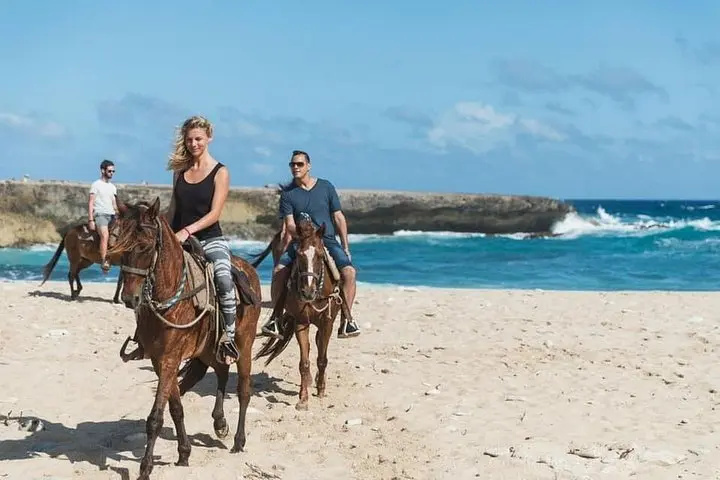
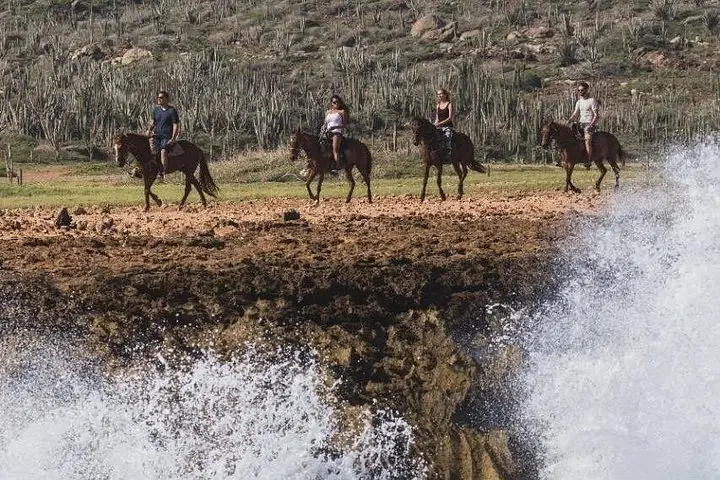
You climb into the saddle as trade winds press against your face and the north coast unspools to the horizon: low cliffs, scrubby cactus, and the Atlantic’s white-capped edge daring you closer. Horses pick their way over sandy tracks, slowing at viewpoints where the coastline cuts into natural rock—Wariruri’s mini natural bridge looms as a sudden, raw focal point.
You climb into the saddle as trade winds press against your face and the north coast unspools to the horizon: low cliffs, scrubby cactus, and the Atlantic’s white-capped edge daring you closer. Horses pick their way over sandy tracks, slowing at viewpoints where the coastline cuts into natural rock—Wariruri’s mini natural bridge looms as a sudden, raw focal point.
This stretch of Aruba has been shaped by coral limestone and centuries of wave action; what you see is a young karst coastline with pockets of exposed bedrock and wind-sculpted coves. The island’s indigenous Arawak history and later Dutch colonial presence are quieter here than in port towns, but local ranching culture and horsemanship remain part of daily life—guides often share short stories about the land as you ride.
Expect mostly flat, coastal terrain with short rocky sections and sandy footing—no major elevation gain but occasional uneven ground that requires a steady seat. Wildlife is subtle: watch for lizards basking on rocks and seabirds circling offshore. The ride is social and accessible: helmets are provided, groups are small, and the route is designed for mixed experience levels.
Practical notes: 90 minutes on the trail; weight limits apply and bookings often request exact weight and age. Wear closed-toe shoes, sun protection, and bring a small water bottle in a secure pouch. Morning rides offer cooler temperatures and calmer seas; late afternoon brings warmer light but stronger winds. Follow your guide’s cues, respect coastal vegetation, and leave no trace—this stretch rewards steady attention with wide open views and the simple rhythm of horse and sea.