THE ADVENTURE COLLECTIVE® · Independent discovery and booking for outdoor travel

Leave Medellín for a half-day on calm horses that follow colonial trails through pine forest, rivers and an eco-park. This accessible ride blends big valley views, local culture and hands-on nature in the hills above the city.
Leave Medellín for a half-day on calm horses that follow colonial trails through pine forest, rivers and an eco-park. This accessible ride blends big valley views, local culture and hands-on nature in the hills above the city.
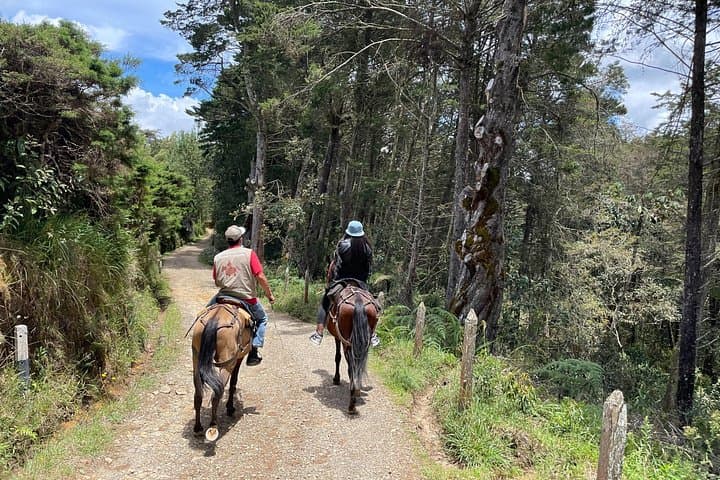
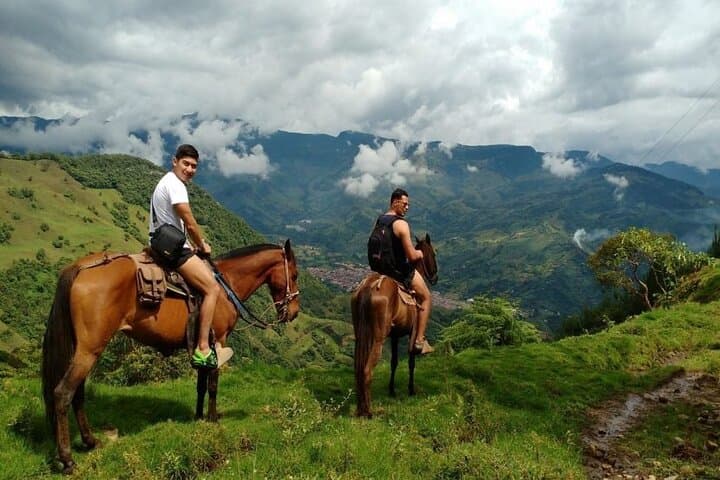
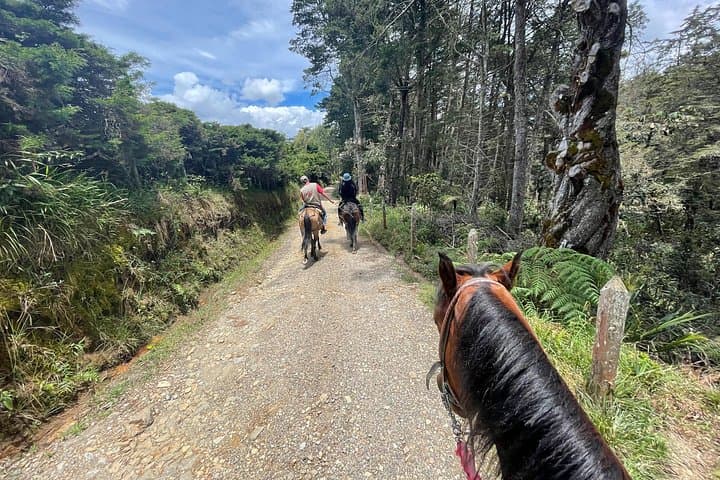
The horses know the trails better than any map. You leave the grid of Medellín behind—glass towers shrinking into a patchwork—and climb to a ridge where the city spills out like a living map. At Mirador de Las Palmas the valley opens: an amphitheater of homes, coffee plots and green ribs of mountain. The guide cinches a saddle, the animal snorts, and the ride begins through pine stands and old colonial tracks where the path narrows to nothing more than hoof and foot prints.
Verified experiences and guided adventures in the surrounding area.
Operated by The Andes Adventure Travels · Medellín, Antioquia
The horses know the trails better than any map. You leave the grid of Medellín behind—glass towers shrinking into a patchwork—and climb to a ridge where the city spills out like a living map. At Mirador de Las Palmas the valley opens: an amphitheater of homes, coffee plots and green ribs of mountain. The guide cinches a saddle, the animal snorts, and the ride begins through pine stands and old colonial tracks where the path narrows to nothing more than hoof and foot prints.
The countryside outside Medellín is geologically young—steep Andean folds carved by rivers that still dare you to cross. Pine plantations and remnant cloud forest sit beside secondary growth where butterflies and thin quartz veins catch the light. Historically these trails linked rural hamlets to the city’s markets; you’ll pass remnants of that trade in stone drainage ditches and a handful of rustic farmhouses where campesinos tend small plots of vegetables and coffee.
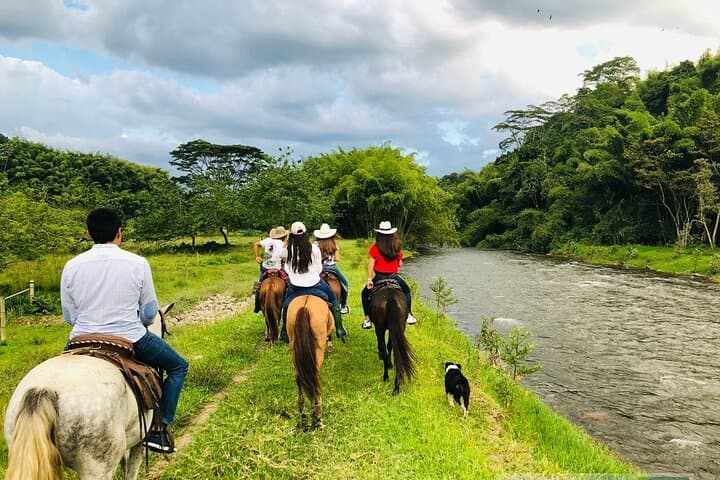
Culturally, this is Antioquia: proud, direct and hospitable. Your route threads private reserve land and a local eco-park where guides explain native tree species and the role small reserves play in protecting water sources for the Aburrá Valley. Horses here are calm breeds trained for mixed riders—first-timers and experienced alike—so the pace is conversational rather than competitive.
Practical details matter: this is a half-day outing, roughly 5–6 hours door-to-door with 3 hours in the saddle, mostly easy walking gaits but with muddy tracks after rain and a few narrow river crossings that demand steady balance. Wear long pants, closed-toe boots (or sturdy sneakers), and bring a small daypack with water, sunscreen and a rain layer. Guides provide helmets and instruction; photos stops at viewpoints make the climb worth the effort.
Expect wildlife to be subtle: songbirds, hummingbirds and if you’re quiet, the flash of a small agouti in the underbrush. The ride includes a break in an eco-park where snacks are served and you can stretch before the return to El Poblado. Pickup and drop-off from central neighborhoods simplifies logistics; the operator’s private transport means you can relax and focus on the ride.
For photographers, morning light slices the valley and late afternoon softens the hills; both reward wide-angle compositions and close-ups of tack, hooves and forest textures. Respect private land, carry out what you bring in, and tip guides who manage both tack and terrain. This is an accessible, grounded way to see the rural side of Medellín—slow, sensory and quietly vast.
You’ll spend about three hours riding across trails, rivers and forested sections; total tour time including transfers is 5–6 hours.
No—this ride accommodates first-time riders with trained horses and basic instruction; modest mobility and balance are helpful.
Yes—private pickup and drop-off from major neighborhoods such as El Poblado is included in the tour.
Long pants, closed-toe shoes, a light rain layer and sunscreen are recommended; helmets are supplied by the operator.
Children can join but operators often require they be of an age or size suitable for the horse; check booking questions for age band requirements.
Tours may be canceled for heavy rain; the cancellation policy allows a full refund if you cancel at least 24 hours before departure.
The Andes Adventure Travels operates guided outdoor trips and adventures with an emphasis on safety, stewardship, and memorable experiences.
The horses know the trails better than any map. You leave the grid of Medellín behind—glass towers shrinking into a patchwork—and climb to a ridge where the city spills out like a living map. At Mirador de Las Palmas the valley opens: an amphitheater of homes, coffee plots and green ribs of mountain. The guide cinches a saddle, the animal snorts, and the ride begins through pine stands and old colonial tracks where the path narrows to nothing more than hoof and foot prints.
The horses know the trails better than any map. You leave the grid of Medellín behind—glass towers shrinking into a patchwork—and climb to a ridge where the city spills out like a living map. At Mirador de Las Palmas the valley opens: an amphitheater of homes, coffee plots and green ribs of mountain. The guide cinches a saddle, the animal snorts, and the ride begins through pine stands and old colonial tracks where the path narrows to nothing more than hoof and foot prints.
The countryside outside Medellín is geologically young—steep Andean folds carved by rivers that still dare you to cross. Pine plantations and remnant cloud forest sit beside secondary growth where butterflies and thin quartz veins catch the light. Historically these trails linked rural hamlets to the city’s markets; you’ll pass remnants of that trade in stone drainage ditches and a handful of rustic farmhouses where campesinos tend small plots of vegetables and coffee.
Culturally, this is Antioquia: proud, direct and hospitable. Your route threads private reserve land and a local eco-park where guides explain native tree species and the role small reserves play in protecting water sources for the Aburrá Valley. Horses here are calm breeds trained for mixed riders—first-timers and experienced alike—so the pace is conversational rather than competitive.
Practical details matter: this is a half-day outing, roughly 5–6 hours door-to-door with 3 hours in the saddle, mostly easy walking gaits but with muddy tracks after rain and a few narrow river crossings that demand steady balance. Wear long pants, closed-toe boots (or sturdy sneakers), and bring a small daypack with water, sunscreen and a rain layer. Guides provide helmets and instruction; photos stops at viewpoints make the climb worth the effort.
Expect wildlife to be subtle: songbirds, hummingbirds and if you’re quiet, the flash of a small agouti in the underbrush. The ride includes a break in an eco-park where snacks are served and you can stretch before the return to El Poblado. Pickup and drop-off from central neighborhoods simplifies logistics; the operator’s private transport means you can relax and focus on the ride.
For photographers, morning light slices the valley and late afternoon softens the hills; both reward wide-angle compositions and close-ups of tack, hooves and forest textures. Respect private land, carry out what you bring in, and tip guides who manage both tack and terrain. This is an accessible, grounded way to see the rural side of Medellín—slow, sensory and quietly vast.