THE ADVENTURE COLLECTIVE® · Independent discovery and booking for outdoor travel

Spend five hours on horseback from Pokhara up to Sarangkot, moving through terraced fields and village trails with sweeping Himalayan views. This guided ride suits mixed-ability riders and blends cultural contact with steady mountain riding—ideal for an early-morning sunrise excursion.
Spend five hours on horseback from Pokhara up to Sarangkot, moving through terraced fields and village trails with sweeping Himalayan views. This guided ride suits mixed-ability riders and blends cultural contact with steady mountain riding—ideal for an early-morning sunrise excursion.
A low sun slants across terraced fields as horses pick their way up the ridge toward Sarangkot, hooves tapping a narrow trail while the Annapurna range sharpens into white teeth on the horizon. Riders move through small villages, the air carrying wood smoke, cow bells and the occasional call of a bird—each bend opening a new angle on Pokhara’s broad valley and shimmering lakes below.
Verified experiences and guided adventures in the surrounding area.
Operated by CAN Travels · Pokhara, Gandaki Province
A low sun slants across terraced fields as horses pick their way up the ridge toward Sarangkot, hooves tapping a narrow trail while the Annapurna range sharpens into white teeth on the horizon. Riders move through small villages, the air carrying wood smoke, cow bells and the occasional call of a bird—each bend opening a new angle on Pokhara’s broad valley and shimmering lakes below.
The Sarangkot ridge has long been a local vantage point for watching weather and migration; today it’s a favorite for sunrise views and short treks. Geologically, the route climbs fractured schist and sandstone outcrops formed by the uplift of the Himalaya, passing fields carved into benches where generations of farmers have grown millet and maize. Culturally, the ride crosses Gurung and Magar hamlets—simple stone homes, small temples, and tea stalls that serve salted tea and biscuits.
Practical guidance: this five-hour guided ride typically covers roughly 10–18 km with an elevation gain of about 400–900 m depending on start point and side trails; pace is controlled for mixed-ability groups. Riders should be prepared for uneven, sometimes narrow mountain tracks and occasional steep pitches; a brief skills and safety orientation is included. Bring layers (mornings can be cold), closed-toe shoes, sun protection and at least 1–2 liters of water. Expect a mix of walking and slow trotting, frequent short breaks at viewpoints, and simple local refreshments en route. Early starts reward clearer skies; late afternoons can bring hill fog. Respect livestock, follow guide instructions, and leave no trace—these trails are working landscapes as well as scenic ones.
No—guides give a safety briefing and basic riding instruction; some comfort on a horse is helpful but novices are welcome.
Trails are mountain tracks with uneven footing and some steep pitches; pace is slow and controlled to suit mixed groups.
Yes—hotel pick up and drop off in Pokhara are listed as included in the tour.
Not recommended for pregnant travelers, those with recent spinal injuries or serious heart conditions; moderate fitness is required.
CAN Travels operates guided outdoor trips and adventures with an emphasis on safety, stewardship, and memorable experiences.
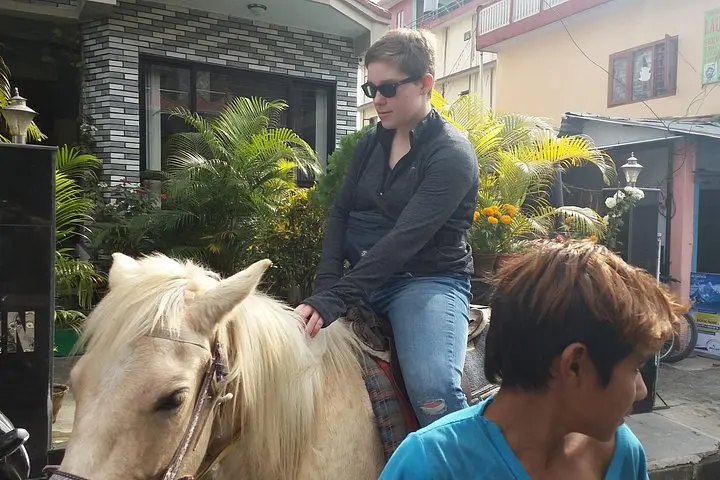
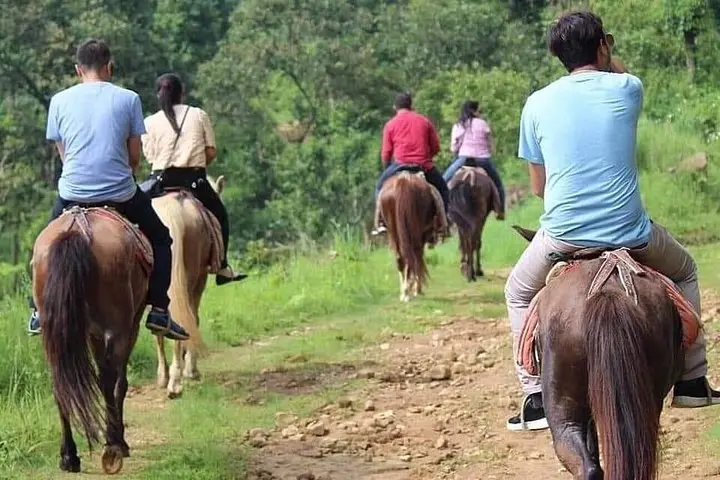
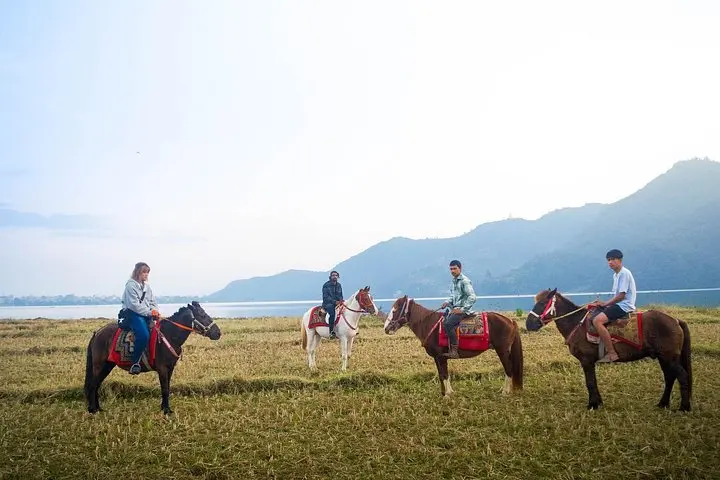
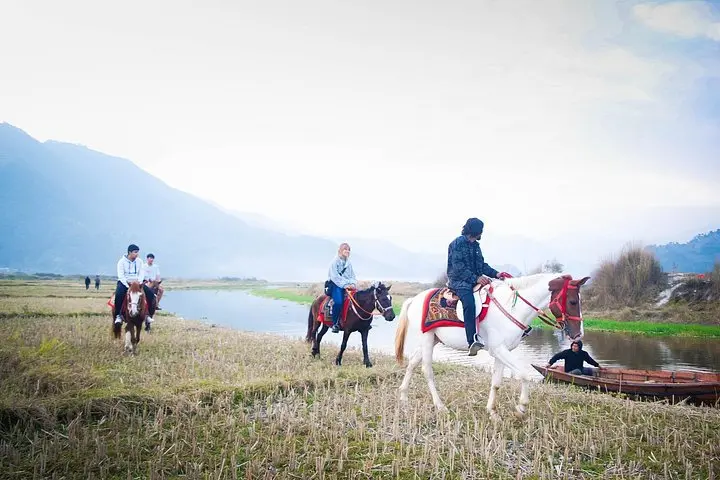
A low sun slants across terraced fields as horses pick their way up the ridge toward Sarangkot, hooves tapping a narrow trail while the Annapurna range sharpens into white teeth on the horizon. Riders move through small villages, the air carrying wood smoke, cow bells and the occasional call of a bird—each bend opening a new angle on Pokhara’s broad valley and shimmering lakes below.
A low sun slants across terraced fields as horses pick their way up the ridge toward Sarangkot, hooves tapping a narrow trail while the Annapurna range sharpens into white teeth on the horizon. Riders move through small villages, the air carrying wood smoke, cow bells and the occasional call of a bird—each bend opening a new angle on Pokhara’s broad valley and shimmering lakes below.
The Sarangkot ridge has long been a local vantage point for watching weather and migration; today it’s a favorite for sunrise views and short treks. Geologically, the route climbs fractured schist and sandstone outcrops formed by the uplift of the Himalaya, passing fields carved into benches where generations of farmers have grown millet and maize. Culturally, the ride crosses Gurung and Magar hamlets—simple stone homes, small temples, and tea stalls that serve salted tea and biscuits.
Practical guidance: this five-hour guided ride typically covers roughly 10–18 km with an elevation gain of about 400–900 m depending on start point and side trails; pace is controlled for mixed-ability groups. Riders should be prepared for uneven, sometimes narrow mountain tracks and occasional steep pitches; a brief skills and safety orientation is included. Bring layers (mornings can be cold), closed-toe shoes, sun protection and at least 1–2 liters of water. Expect a mix of walking and slow trotting, frequent short breaks at viewpoints, and simple local refreshments en route. Early starts reward clearer skies; late afternoons can bring hill fog. Respect livestock, follow guide instructions, and leave no trace—these trails are working landscapes as well as scenic ones.