THE ADVENTURE COLLECTIVE® · Independent discovery and booking for outdoor travel

A misty plateau hike to World’s End and Baker’s Falls that combines cool highland air, endemic wildlife, and sweeping escarpments. This four-day itinerary uses Nuwara Eliya as a base for early starts and quieter trails.
A misty plateau hike to World’s End and Baker’s Falls that combines cool highland air, endemic wildlife, and sweeping escarpments. This four-day itinerary uses Nuwara Eliya as a base for early starts and quieter trails.
The sun arrives slow at Horton Plains, slipping under a low ceiling of cloud that clings to rolling grasslands and the edges of stunted forest. Early on the trail you’ll feel the plateau’s cool breath—mist weaving through grass tussocks, the scrubby trees leaning as if to listen. World’s End waits like a conscious cliff, a raw drop that suddenly reveals a view across deep valleys and distant tea-carpeted hills.
Verified experiences and guided adventures in the surrounding area.
Operated by Lakpura LLC · Nuwara Eliya, Central Province
The sun arrives slow at Horton Plains, slipping under a low ceiling of cloud that clings to rolling grasslands and the edges of stunted forest. Early on the trail you’ll feel the plateau’s cool breath—mist weaving through grass tussocks, the scrubby trees leaning as if to listen. World’s End waits like a conscious cliff, a raw drop that suddenly reveals a view across deep valleys and distant tea-carpeted hills.
Horton Plains National Park sits on Sri Lanka’s central highlands and is part of a UNESCO-listed ecosystem where montane evergreen forests give way to open grassland and marsh. Geologically the plains are an ancient uplifted plateau cut by escarpments; World’s End is a 900-meter sheer fall from about 2,140 meters above sea level. Culturally the nearby towns—Nuwara Eliya and Ohiya—bear colonial-era tea estates, and the region’s history is tied to British plantation agriculture and earlier indigenous land use.
Expect a well-marked loop of roughly 8–10 km that takes 3–4 hours on firm but sometimes muddy tracks, with boardwalks across wetlands and steep viewpoints. Baker’s Falls adds a cooling spray mid-route. Wildlife includes endemic birds and a chance of sambar deer grazing in the grass.
Practical guidance: start at dawn for the best visibility and cooler weather, carry layered waterproofs for swift cloud and rain, and wear sturdy shoes with grip for wet boardwalks. Stay on designated trails to protect fragile montane vegetation and minimize disturbance to endemic species. Hydrate at the park entrance, pack out all trash, and allow extra time for changes in visibility—this is a place where weather can hide the view and then offer it all at once.
The typical visitor loop from the park entrance to World’s End and back is about 8–10 km and usually takes 3–4 hours depending on pace and stops.
Early morning offers the best chance of clear views—start around sunrise to avoid clouds and larger tour groups.
Yes—there is an entry fee and park regulations; fees support conservation and are collected at the visitor center or park gate.
Families and older walkers can do the loop if paced conservatively; expect some uneven ground and brief steep sections—assess mobility and bring layers.
Lakpura LLC operates guided outdoor trips and adventures with an emphasis on safety, stewardship, and memorable experiences.
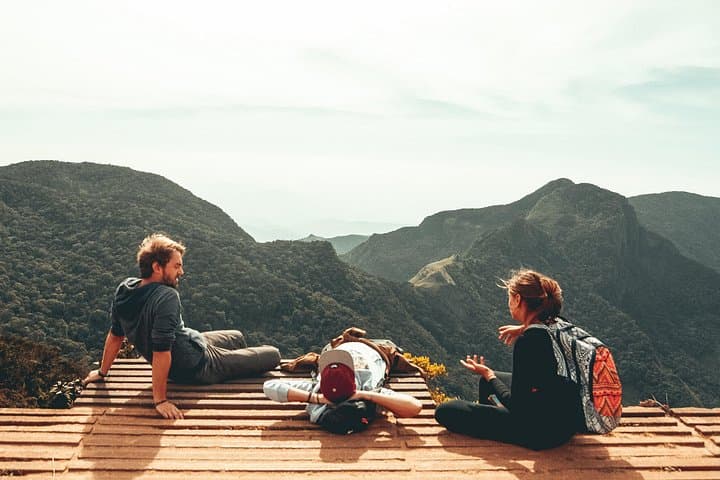

The sun arrives slow at Horton Plains, slipping under a low ceiling of cloud that clings to rolling grasslands and the edges of stunted forest. Early on the trail you’ll feel the plateau’s cool breath—mist weaving through grass tussocks, the scrubby trees leaning as if to listen. World’s End waits like a conscious cliff, a raw drop that suddenly reveals a view across deep valleys and distant tea-carpeted hills.
The sun arrives slow at Horton Plains, slipping under a low ceiling of cloud that clings to rolling grasslands and the edges of stunted forest. Early on the trail you’ll feel the plateau’s cool breath—mist weaving through grass tussocks, the scrubby trees leaning as if to listen. World’s End waits like a conscious cliff, a raw drop that suddenly reveals a view across deep valleys and distant tea-carpeted hills.
Horton Plains National Park sits on Sri Lanka’s central highlands and is part of a UNESCO-listed ecosystem where montane evergreen forests give way to open grassland and marsh. Geologically the plains are an ancient uplifted plateau cut by escarpments; World’s End is a 900-meter sheer fall from about 2,140 meters above sea level. Culturally the nearby towns—Nuwara Eliya and Ohiya—bear colonial-era tea estates, and the region’s history is tied to British plantation agriculture and earlier indigenous land use.
Expect a well-marked loop of roughly 8–10 km that takes 3–4 hours on firm but sometimes muddy tracks, with boardwalks across wetlands and steep viewpoints. Baker’s Falls adds a cooling spray mid-route. Wildlife includes endemic birds and a chance of sambar deer grazing in the grass.
Practical guidance: start at dawn for the best visibility and cooler weather, carry layered waterproofs for swift cloud and rain, and wear sturdy shoes with grip for wet boardwalks. Stay on designated trails to protect fragile montane vegetation and minimize disturbance to endemic species. Hydrate at the park entrance, pack out all trash, and allow extra time for changes in visibility—this is a place where weather can hide the view and then offer it all at once.