THE ADVENTURE COLLECTIVE® · Independent discovery and booking for outdoor travel

A high-elevation trek across Sri Lanka’s mist-swept plateau—Horton Plains offers cliff-edge views at World’s End, mossy cloud forest, Baker’s Falls and rich birdlife. Start early, dress for wind and rain, and move gently across fragile peatland.
A high-elevation trek across Sri Lanka’s mist-swept plateau—Horton Plains offers cliff-edge views at World’s End, mossy cloud forest, Baker’s Falls and rich birdlife. Start early, dress for wind and rain, and move gently across fragile peatland.
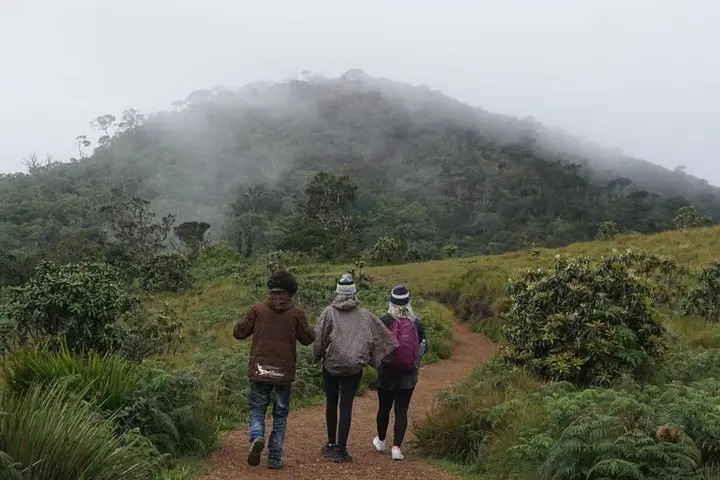
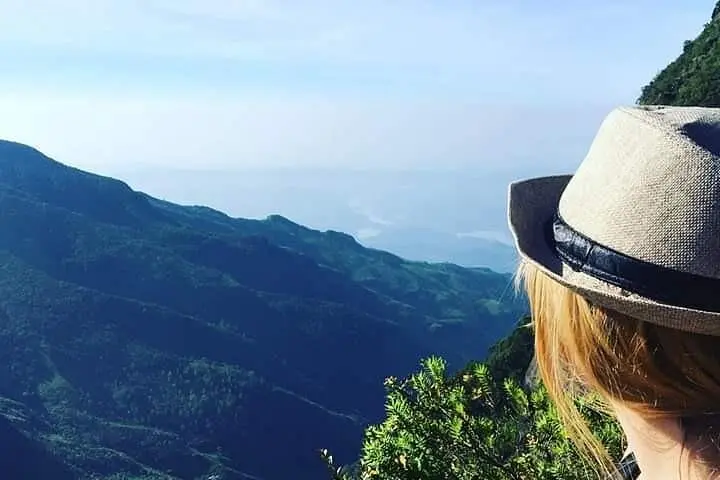
A cool mist lifts off the high plateau as you step from the visitor centre onto a ribbon of trail that threads through grass and cloud. The wind here has a voice—pushing across wide, open slopes and nudging small rivulets toward black peat bogs—until it drops away at the lip of World’s End where the land falls away in a vertiginous sweep.
Verified experiences and guided adventures in the surrounding area.
Operated by Sanaali Tours · Nuwara Eliya, Central Province
A cool mist lifts off the high plateau as you step from the visitor centre onto a ribbon of trail that threads through grass and cloud. The wind here has a voice—pushing across wide, open slopes and nudging small rivulets toward black peat bogs—until it drops away at the lip of World’s End where the land falls away in a vertiginous sweep.
The park sits on Sri Lanka’s central massif at roughly 2,100–2,300 m elevation. Named after Sir Robert Wilmot Horton, this protected montane landscape preserves ancient cloud forest, peat bogs and grassland carved by glacial-age weathering and persistent rainfall. Cultural echoes of tea-country labor and colonial-era mapping lie a short drive below in Nuwara Eliya, while the plateau itself is mostly quiet, a place for birds and the occasional sambar deer.
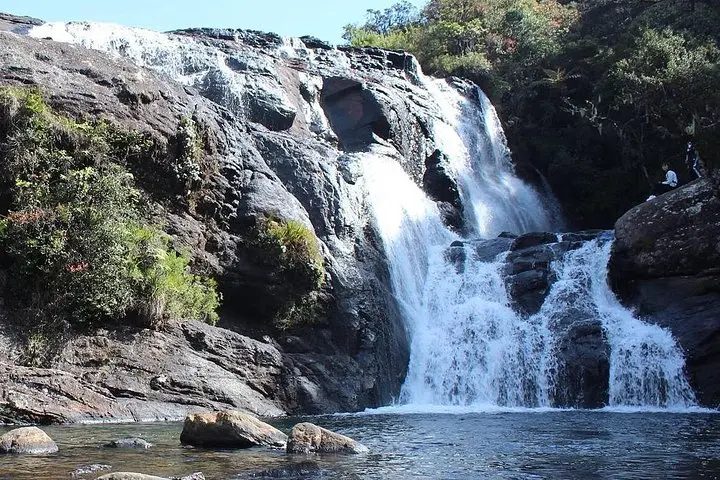
Expect a mostly well-marked walk—sections of boardwalk and packed earth across uneven, sometimes muddy ground. Highlights on a typical six-hour outing include World’s End and the smaller cliff known as Mini World’s End, the Chimney Pool and Baker’s Falls; the park is also prized for highland birdwatching. Timing is practical: start early to catch clearer views before cloud builds and to avoid mid-day crowds.
Plan for changeable weather—layers, waterproofs and sturdy footwear are non-negotiable. Bring water, a packed lunch, and a camera with a wide lens for the sweeping viewpoints. Follow park rules, stay on trails to protect fragile bogs, and allow time to watch birds along the boardwalks—Horton Plains rewards quiet observation as much as the view.
Horton Plains is a protected area and typically requires an entrance fee and a park permit; private tours often handle permits—confirm costs and inclusion when booking.
Tours are commonly 5–6 hours on the plateau; the terrain is mostly flat to rolling with short steep sections—suitable for moderately fit walkers.
Early morning offers the clearest views before clouds roll in—aim to arrive right after the park opens or at first light.
Many families visit; children should be supervised near cliff edges and kept on paths—the park lists a minimum age and tour providers can advise on suitability.
Sanaali Tours operates guided outdoor trips and adventures with an emphasis on safety, stewardship, and memorable experiences.

A cool mist lifts off the high plateau as you step from the visitor centre onto a ribbon of trail that threads through grass and cloud. The wind here has a voice—pushing across wide, open slopes and nudging small rivulets toward black peat bogs—until it drops away at the lip of World’s End where the land falls away in a vertiginous sweep.
A cool mist lifts off the high plateau as you step from the visitor centre onto a ribbon of trail that threads through grass and cloud. The wind here has a voice—pushing across wide, open slopes and nudging small rivulets toward black peat bogs—until it drops away at the lip of World’s End where the land falls away in a vertiginous sweep.
The park sits on Sri Lanka’s central massif at roughly 2,100–2,300 m elevation. Named after Sir Robert Wilmot Horton, this protected montane landscape preserves ancient cloud forest, peat bogs and grassland carved by glacial-age weathering and persistent rainfall. Cultural echoes of tea-country labor and colonial-era mapping lie a short drive below in Nuwara Eliya, while the plateau itself is mostly quiet, a place for birds and the occasional sambar deer.
Expect a mostly well-marked walk—sections of boardwalk and packed earth across uneven, sometimes muddy ground. Highlights on a typical six-hour outing include World’s End and the smaller cliff known as Mini World’s End, the Chimney Pool and Baker’s Falls; the park is also prized for highland birdwatching. Timing is practical: start early to catch clearer views before cloud builds and to avoid mid-day crowds.
Plan for changeable weather—layers, waterproofs and sturdy footwear are non-negotiable. Bring water, a packed lunch, and a camera with a wide lens for the sweeping viewpoints. Follow park rules, stay on trails to protect fragile bogs, and allow time to watch birds along the boardwalks—Horton Plains rewards quiet observation as much as the view.