
Hot Air Balloon & Luxor Full-Day: Valley of the Kings, Karnak & More
Rise above Luxor at sunrise in a hot-air balloon, then spend the day touring Valley of the Kings, Hatshepsut’s temple, Karnak and Luxor Temple. This combo pairs aerial perspective with intensive archaeology and practical tips for navigating heat and crowds.
An Adventure In Luxor.
Rise above Luxor at sunrise in a hot-air balloon, then spend the day touring Valley of the Kings, Hatshepsut’s temple, Karnak and Luxor Temple. This combo pairs aerial perspective with intensive archaeology and practical tips for navigating heat and crowds.
Read the full experience
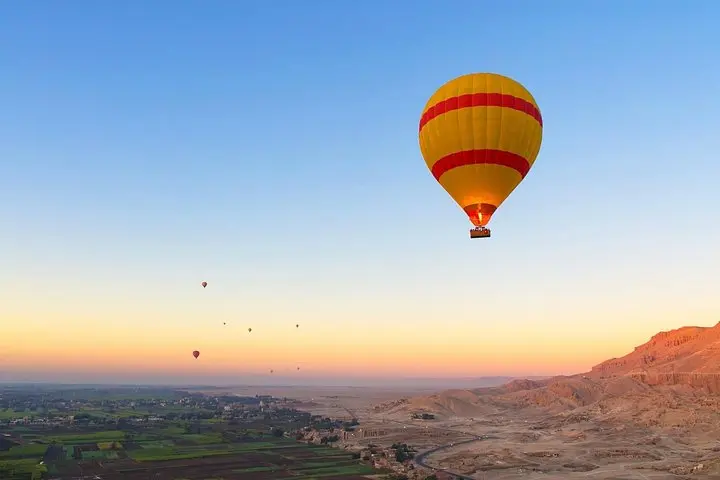
Dawn breaks over the Nile and the desert exhales cool air as a bank of balloons lifts from the fields outside Luxor. From the basket, the West Bank’s stone coffins and temple pylons shrink into a patterned carpet of shadow and sun; camels pick their way along faint tracks and the river glints like a ribbon of mercury.
Dawn breaks over the Nile and the desert exhales cool air as a bank of balloons lifts from the fields outside Luxor. From the basket, the West Bank’s stone coffins and temple pylons shrink into a patterned carpet of shadow and sun; camels pick their way along faint tracks and the river glints like a ribbon of mercury.
This combined morning balloon flight and full-day Luxor tour pairs aerial perspective with on-the-ground archaeology. After a light breakfast at the launch site, the itinerary typically heads to the Valley of the Kings—the burial ground for New Kingdom pharaohs—then to Queen Hatshepsut’s mortuary temple and the Colossi of Memnon. Afternoon visits usually include Karnak’s hypostyle halls and the Temple of Luxor, monuments shaped by Nile silt, limestone quarries and 3,000 years of ritual practice.
Geology here is simple and stark: Nile alluvium meets uplifted limestone cliffs that ancient builders cut into tombs and pylons. Culture remains vivid—local guides recount dynastic politics, funerary rites and the changing role of the river in daily life.
Practically, expect a 4–8 a.m. pickup for the balloon and a 7–8 hour day overall, with lots of walking on uneven stone and open sun. Wear closed-toe shoes, sun protection, and carry water; balloon flights are weather-dependent and may be canceled for wind. Photography opportunities are constant, but remember to respect restricted areas and fragile reliefs. For travelers who want both sweep and detail—airborne and archaeological—this pairing is efficient, evocative and memorable.
Frequently asked questions
Typical flights last about 45–60 minutes; the overall tour runs 7–8 hours including transfers and ground visits.
A light breakfast and tea are usually provided at the balloon launch; lunch during the full-day tour is often optional—confirm with the operator.
Operators follow local aviation rules and use experienced pilots, but flights are weather-dependent and can be canceled for safety reasons—check licensing and reviews.
Many operators accept children but may enforce age or weight limits; check the specific provider’s policy before booking.
Adventure tips
Recommended gear
- Sun hat & sunglasses: Protects from intense desert sun during morning and afternoon tours.
- Sturdy walking shoes: Required for uneven temple floors, tomb steps and desert tracks.
- Refillable water bottle (1–2L): Hydration is critical in Luxor’s heat—many operators provide water but carry your own.
- Light layer or windbreaker: Mornings in winter can be cool at altitude during the balloon flight.
Photos of the experience
Related adventures & guides
Read the full experience
Dawn breaks over the Nile and the desert exhales cool air as a bank of balloons lifts from the fields outside Luxor. From the basket, the West Bank’s stone coffins and temple pylons shrink into a patterned carpet of shadow and sun; camels pick their way along faint tracks and the river glints like a ribbon of mercury.
Dawn breaks over the Nile and the desert exhales cool air as a bank of balloons lifts from the fields outside Luxor. From the basket, the West Bank’s stone coffins and temple pylons shrink into a patterned carpet of shadow and sun; camels pick their way along faint tracks and the river glints like a ribbon of mercury.
This combined morning balloon flight and full-day Luxor tour pairs aerial perspective with on-the-ground archaeology. After a light breakfast at the launch site, the itinerary typically heads to the Valley of the Kings—the burial ground for New Kingdom pharaohs—then to Queen Hatshepsut’s mortuary temple and the Colossi of Memnon. Afternoon visits usually include Karnak’s hypostyle halls and the Temple of Luxor, monuments shaped by Nile silt, limestone quarries and 3,000 years of ritual practice.
Geology here is simple and stark: Nile alluvium meets uplifted limestone cliffs that ancient builders cut into tombs and pylons. Culture remains vivid—local guides recount dynastic politics, funerary rites and the changing role of the river in daily life.
Practically, expect a 4–8 a.m. pickup for the balloon and a 7–8 hour day overall, with lots of walking on uneven stone and open sun. Wear closed-toe shoes, sun protection, and carry water; balloon flights are weather-dependent and may be canceled for wind. Photography opportunities are constant, but remember to respect restricted areas and fragile reliefs. For travelers who want both sweep and detail—airborne and archaeological—this pairing is efficient, evocative and memorable.
Make a day of it nearby.
Verified experiences and guided adventures in the surrounding area.