THE ADVENTURE COLLECTIVE® · Independent discovery and booking for outdoor travel

Two hours of riverside ghats, bustling bazaars and colonial-era architecture — this guided Howrah walking tour packs local history and everyday life into a compact, walkable route. Perfect for first-time visitors who want an immediate sense of the city’s rhythm.
Two hours of riverside ghats, bustling bazaars and colonial-era architecture — this guided Howrah walking tour packs local history and everyday life into a compact, walkable route. Perfect for first-time visitors who want an immediate sense of the city’s rhythm.
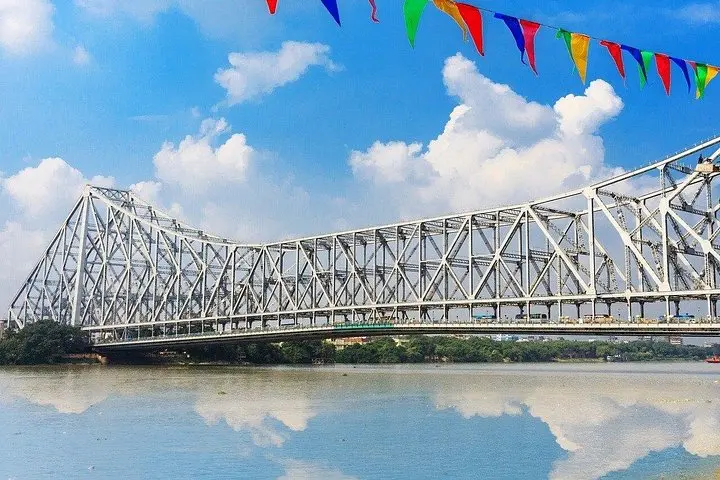
The river arrives first: a spread of braided ferries and the hard silhouette of iron trusses where Rabindra Setu leans over the Hooghly, daring you to step off the pavement and into Howrah's busy rhythm. This two-hour walk threads through markets, colonial warehouses and riverside ghats, where the tide and the daily commute set the city's pulse.
Verified experiences and guided adventures in the surrounding area.
Operated by Opatrip.com India · Howrah, West Bengal
The river arrives first: a spread of braided ferries and the hard silhouette of iron trusses where Rabindra Setu leans over the Hooghly, daring you to step off the pavement and into Howrah's busy rhythm. This two-hour walk threads through markets, colonial warehouses and riverside ghats, where the tide and the daily commute set the city's pulse.
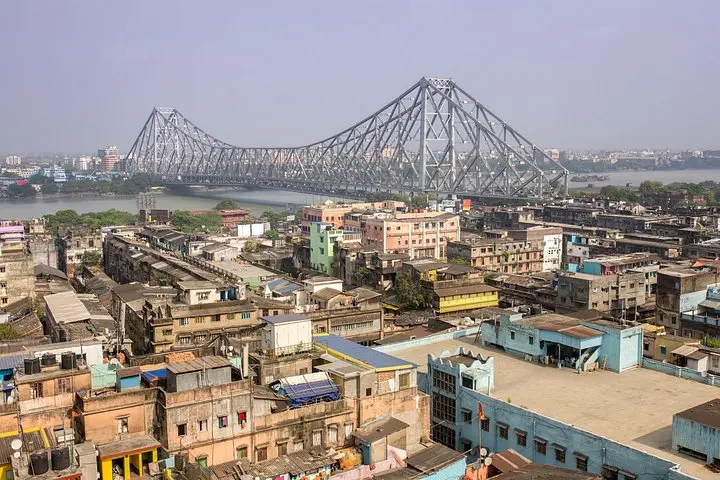
Howrah’s streets carry layers of history — a 19th‑century transport hub built by steam and steel, neighborhoods shaped by trade with Bengal’s inland delta, and the enduring presence of the rail terminus that funnels people to and from eastern India. Geologically, the Hooghly’s alluvial plain has formed the flat, walkable streets and the riverfront ghats where silt and water shape the city’s edge. Culturally, Howrah blends Bengali traditions with working-class industries: tea stalls, ferry calls, and small artisans at work offer constant, human-scale storytelling.
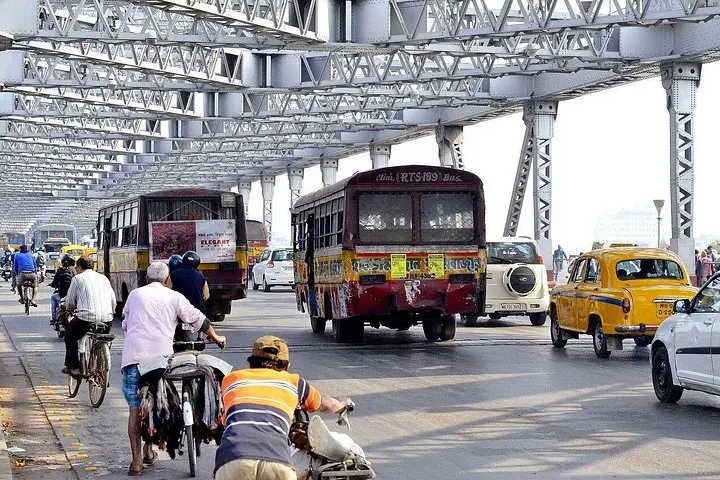
Expect to move at an urban pace: narrow lanes that open into market squares, the hiss of autorickshaws, and the rhythm of commuters crossing the bridge. Your guide will point out architectural details, local legends and practical shortcuts through crowded bazaars.
Practical guidance: wear closed, comfortable shoes for uneven pavements, carry water and a small partitioned bag for purchases, and start early to avoid peak heat and crowds. Bring cash for small vendors; mobile payments are common but not universal. Time the walk to catch late afternoon light on the bridge — it sharpens the ironwork and cools the air for a more comfortable finish.
Expect busy streets and market areas; groups are usually kept compact to move more easily through lanes.
Yes—route is labeled physically easy, but participants should be comfortable walking unpaved or uneven surfaces for up to a couple of hours.
No—guide services are included; refreshments and snacks from local vendors are available at additional cost.
Private tours often accommodate requests to focus on transport history, local crafts or riverfront views if arranged in advance.
Opatrip.com India operates guided outdoor trips and adventures with an emphasis on safety, stewardship, and memorable experiences.
The river arrives first: a spread of braided ferries and the hard silhouette of iron trusses where Rabindra Setu leans over the Hooghly, daring you to step off the pavement and into Howrah's busy rhythm. This two-hour walk threads through markets, colonial warehouses and riverside ghats, where the tide and the daily commute set the city's pulse.
The river arrives first: a spread of braided ferries and the hard silhouette of iron trusses where Rabindra Setu leans over the Hooghly, daring you to step off the pavement and into Howrah's busy rhythm. This two-hour walk threads through markets, colonial warehouses and riverside ghats, where the tide and the daily commute set the city's pulse.
Howrah’s streets carry layers of history — a 19th‑century transport hub built by steam and steel, neighborhoods shaped by trade with Bengal’s inland delta, and the enduring presence of the rail terminus that funnels people to and from eastern India. Geologically, the Hooghly’s alluvial plain has formed the flat, walkable streets and the riverfront ghats where silt and water shape the city’s edge. Culturally, Howrah blends Bengali traditions with working-class industries: tea stalls, ferry calls, and small artisans at work offer constant, human-scale storytelling.
Expect to move at an urban pace: narrow lanes that open into market squares, the hiss of autorickshaws, and the rhythm of commuters crossing the bridge. Your guide will point out architectural details, local legends and practical shortcuts through crowded bazaars.
Practical guidance: wear closed, comfortable shoes for uneven pavements, carry water and a small partitioned bag for purchases, and start early to avoid peak heat and crowds. Bring cash for small vendors; mobile payments are common but not universal. Time the walk to catch late afternoon light on the bridge — it sharpens the ironwork and cools the air for a more comfortable finish.