THE ADVENTURE COLLECTIVE® · Independent discovery and booking for outdoor travel
Leave Chongqing on a high-speed train and spend a day among Huanglong's striking travertine terraces, turquoise pools, waterfalls, and a quiet mountain temple. This private day trip bundles train tickets, transfers, cable car, and park entry for a seamless, independent visit.
Leave Chongqing on a high-speed train and spend a day among Huanglong's striking travertine terraces, turquoise pools, waterfalls, and a quiet mountain temple. This private day trip bundles train tickets, transfers, cable car, and park entry for a seamless, independent visit.
Dawn at Chongqing's railway concourse feels like a promise: commuters blur past, while you slip into a bullet train that will carry you from dense city heat toward high mountain air and a valley strewn with colored pools.
Verified experiences and guided adventures in the surrounding area.
Operated by Samtour of Chengdu OTC Travel · Songpan, Sichuan
Dawn at Chongqing's railway concourse feels like a promise: commuters blur past, while you slip into a bullet train that will carry you from dense city heat toward high mountain air and a valley strewn with colored pools.
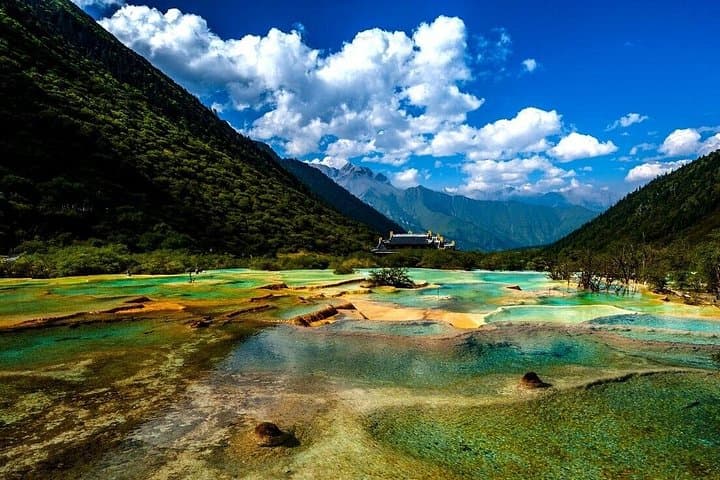
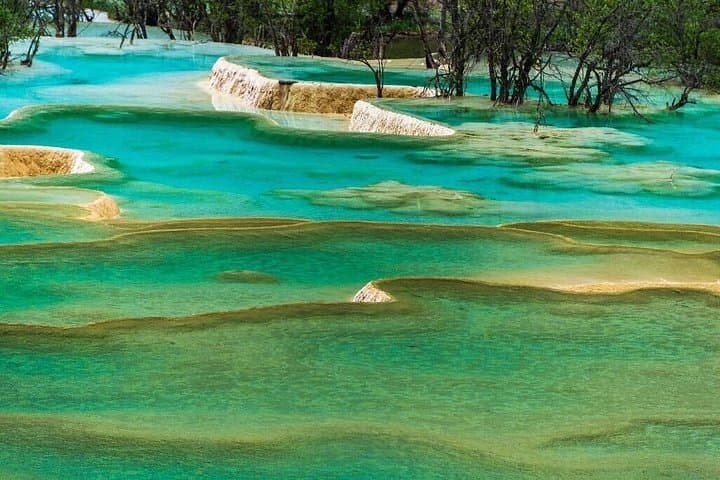
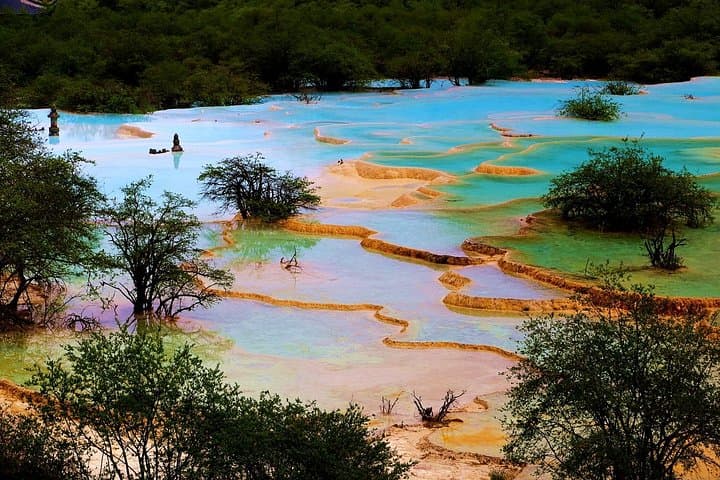
By mid-morning the landscape has already shifted — terraces of white travertine and bands of jade-blue water open beneath peaks dusted with alpine forest. Huanglong's five-color ponds reflect light like geological lenses; waterfalls thread between them, and the Huanglong Ancient Temple perches quietly among rhododendron and fir.
Geology does the heavy lifting here: centuries of calcium-rich spring water depositing travertine created the stepped basins that make the site globally distinct, earning UNESCO protection in 1992. The region is also a cultural crossroads where Tibetan and Han histories intersect — prayer flags and monastery architecture punctuate a landscape shaped over millennia.
This private, self-guided arrangement typically uses a cable car to rise above the main terraces, letting visitors conserve energy for a controlled descent on well-built trails. Expect five hours of on-foot exploration inside the park, with panoramas and many short, paved stair sections rather than technical scrambling.
Practical notes: carry good grippy shoes, layered clothing for sudden temperature swings, and water — facilities are present but limited in peak season. Allow time for transfers and passport checks when trains and ticketing are pre-arranged. Respect boardwalks and stay behind barriers; the travertine formations are fragile and recover slowly from erosion.
For independent travelers who want a high-altitude day of color and quiet temples with the efficiency of China’s high-speed rail, this route is a focused, accessible way to experience one of Sichuan’s most striking natural sites.
Yes. Passport information is required for train ticket booking and may be checked at boarding and ticket collection.
Most visitors spend about 3–5 hours walking the main terraces and trails, using the cable car for ascent.
Yes. The tour includes a one-way cable car up; the common approach is to ride up and walk down on well-maintained paths.
Basic facilities and snack kiosks exist near main scenic areas, but options are limited — bring water and any personal necessities.
Samtour of Chengdu OTC Travel operates guided outdoor trips and adventures with an emphasis on safety, stewardship, and memorable experiences.

Dawn at Chongqing's railway concourse feels like a promise: commuters blur past, while you slip into a bullet train that will carry you from dense city heat toward high mountain air and a valley strewn with colored pools.
Dawn at Chongqing's railway concourse feels like a promise: commuters blur past, while you slip into a bullet train that will carry you from dense city heat toward high mountain air and a valley strewn with colored pools.
By mid-morning the landscape has already shifted — terraces of white travertine and bands of jade-blue water open beneath peaks dusted with alpine forest. Huanglong's five-color ponds reflect light like geological lenses; waterfalls thread between them, and the Huanglong Ancient Temple perches quietly among rhododendron and fir.
Geology does the heavy lifting here: centuries of calcium-rich spring water depositing travertine created the stepped basins that make the site globally distinct, earning UNESCO protection in 1992. The region is also a cultural crossroads where Tibetan and Han histories intersect — prayer flags and monastery architecture punctuate a landscape shaped over millennia.
This private, self-guided arrangement typically uses a cable car to rise above the main terraces, letting visitors conserve energy for a controlled descent on well-built trails. Expect five hours of on-foot exploration inside the park, with panoramas and many short, paved stair sections rather than technical scrambling.
Practical notes: carry good grippy shoes, layered clothing for sudden temperature swings, and water — facilities are present but limited in peak season. Allow time for transfers and passport checks when trains and ticketing are pre-arranged. Respect boardwalks and stay behind barriers; the travertine formations are fragile and recover slowly from erosion.
For independent travelers who want a high-altitude day of color and quiet temples with the efficiency of China’s high-speed rail, this route is a focused, accessible way to experience one of Sichuan’s most striking natural sites.
