THE ADVENTURE COLLECTIVE® · Independent discovery and booking for outdoor travel

Board Stenella and head miles offshore with marine biologists who track dolphins, turtles and humpback whales; two guided reef snorkels and an underwater microphone make this a half‑day of close encounters and conservation.
Board Stenella and head miles offshore with marine biologists who track dolphins, turtles and humpback whales; two guided reef snorkels and an underwater microphone make this a half‑day of close encounters and conservation.
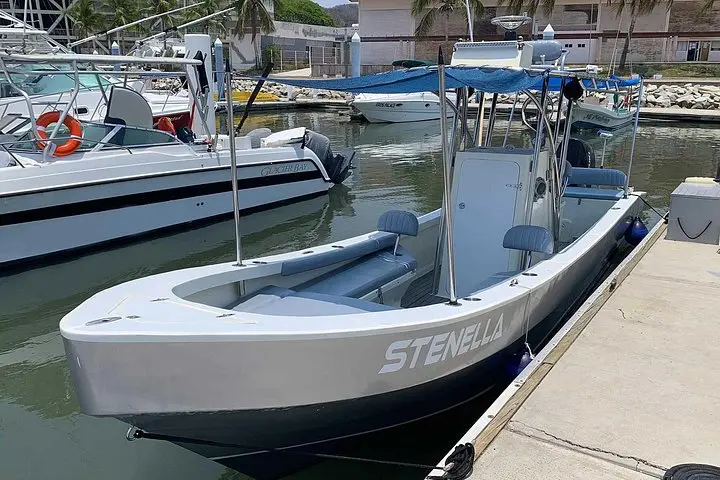
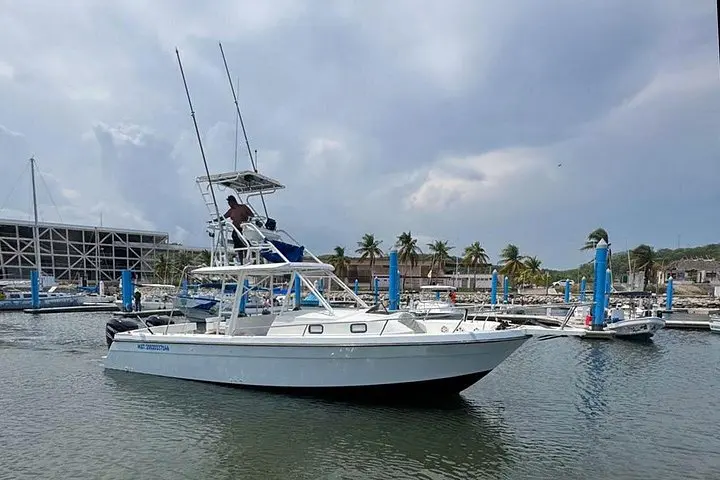
The outboard hum lowers and the skyline of Huatulco opens: low green ridges giving way to pearly bays, and a scattering of reef teeth visible where the water light breaks. Guests board Stenella—a 2022 deep‑V, purpose‑built ocean boat—its canvas roof throwing shade over cushioned benches. A marine biologist checks the underwater microphone while the captain eases the bow offshore; within minutes, the coastline recedes and the ocean starts to show its moods.
Verified experiences and guided adventures in the surrounding area.
Operated by Oceanico · Santa Cruz Huatulco, Oaxaca
The outboard hum lowers and the skyline of Huatulco opens: low green ridges giving way to pearly bays, and a scattering of reef teeth visible where the water light breaks. Guests board Stenella—a 2022 deep‑V, purpose‑built ocean boat—its canvas roof throwing shade over cushioned benches. A marine biologist checks the underwater microphone while the captain eases the bow offshore; within minutes, the coastline recedes and the ocean starts to show its moods.
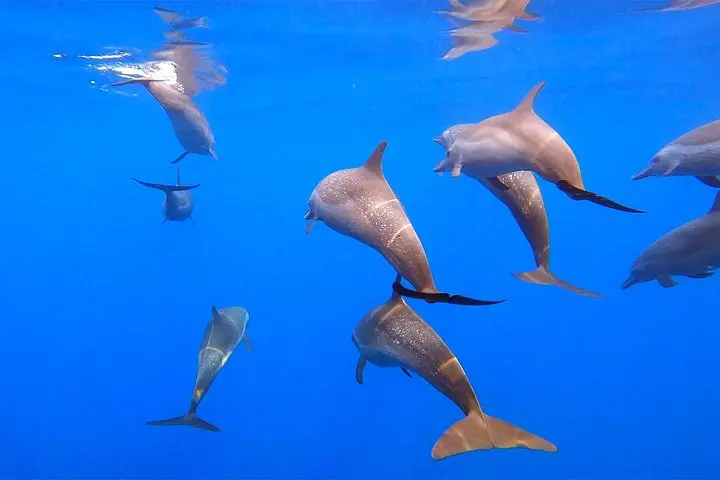
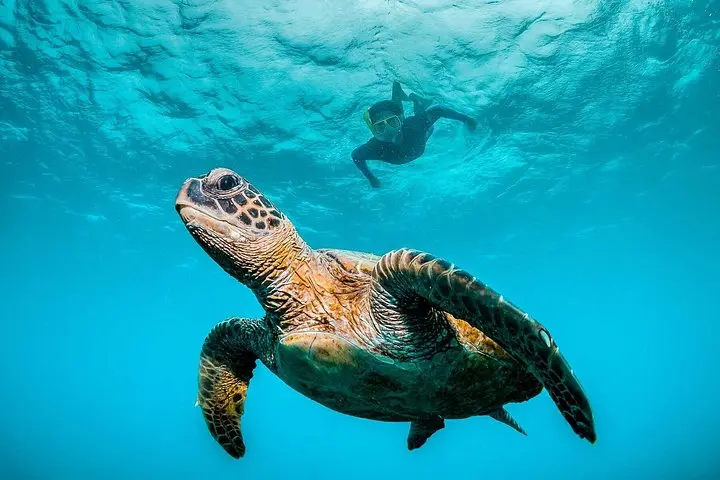
This is not a glass‑bottom tour. It’s a hands‑on exploration led by guides who log sightings and teach as they go. The company runs small groups of 8–12 so the team can travel farther into productive waters—where dolphins cut through the swell, turtles hang beneath sunlit ripples, and humpback whales pass through from December to March. The boat’s spotter tower and experienced eyes mean a high chance of encounters; guides also collect data to support cetacean research, and the underwater microphone gives the strange, inquisitive clicks and songs a human context.
Geologically, Huatulco’s nine bays are a product of coastal uplift and volcanic terrain pushed against the Pacific, producing sheltered inlets and offshore reefs that survive in clear, warm water. The Huatulco National Park protects these benthic communities and the bays—Chachacual, La India, Cacaluta and others—that the tour threads on the return leg. Culturally, this stretch of Oaxaca has always balanced fishing tradition with increasing conservation-minded tourism; guides often explain local fishing practices and community efforts to protect turtles.
Expect two guided snorkeling stops on healthy coral outcrops away from crowds. Guides brief you on reef etiquette—no touching, use only reef‑safe sunscreen, and move slowly so the reef doesn’t become a startled creature. If snorkeling isn’t your preference, the boat’s open decks offer a cinematic seat for watching dolphins arc through sunlit swells.
Practical details: the tour is about 4.5 hours, meeting at the palapa hut at Chahué Marina (arrive 15 minutes early). Physical requirements include swimming 100 meters and climbing the boat ladder; minimum age is 3, and there’s a guest weight limit for certain equipment at ~130 kg. Bring reef‑safe sunscreen, a hat, personal snorkel gear if you prefer, a light wind layer for spray, and motion‑sickness medication if you’re sensitive to swell. Morning departures often find calmer seas and better light for underwater visibility.
This trip balances curiosity and conservation—marine biologists who can translate a dorsal fin into behavior patterns, and a boat designed to get you close without crowding the ocean. For those who want more than a postcard photo—who want to hear the ocean sing and learn why these bays still matter—this half‑day delivers both spectacle and substance.
Expect regular dolphin and sea turtle sightings year‑round; humpback whales are commonly seen December through March.
Yes—guests should have recent snorkeling experience, be able to swim 100 meters and be comfortable entering/exiting via a ladder.
Minimum age is 3; certain life jackets and snorkel vests fit up to approximately 130 kg—please disclose special requirements when booking.
Morning departures are calmer; bring or take over‑the‑counter seasickness meds an hour before departure and avoid heavy meals before boarding.
Meet 15 minutes before departure at the palapa hut at Chahué Marina; bathrooms with showers are available before and after the tour.
Full refund if canceled at least 24 hours before departure; tours may be canceled for bad weather or insufficient travelers.
Oceanico operates guided outdoor trips and adventures with an emphasis on safety, stewardship, and memorable experiences.
The outboard hum lowers and the skyline of Huatulco opens: low green ridges giving way to pearly bays, and a scattering of reef teeth visible where the water light breaks. Guests board Stenella—a 2022 deep‑V, purpose‑built ocean boat—its canvas roof throwing shade over cushioned benches. A marine biologist checks the underwater microphone while the captain eases the bow offshore; within minutes, the coastline recedes and the ocean starts to show its moods.
The outboard hum lowers and the skyline of Huatulco opens: low green ridges giving way to pearly bays, and a scattering of reef teeth visible where the water light breaks. Guests board Stenella—a 2022 deep‑V, purpose‑built ocean boat—its canvas roof throwing shade over cushioned benches. A marine biologist checks the underwater microphone while the captain eases the bow offshore; within minutes, the coastline recedes and the ocean starts to show its moods.
This is not a glass‑bottom tour. It’s a hands‑on exploration led by guides who log sightings and teach as they go. The company runs small groups of 8–12 so the team can travel farther into productive waters—where dolphins cut through the swell, turtles hang beneath sunlit ripples, and humpback whales pass through from December to March. The boat’s spotter tower and experienced eyes mean a high chance of encounters; guides also collect data to support cetacean research, and the underwater microphone gives the strange, inquisitive clicks and songs a human context.
Geologically, Huatulco’s nine bays are a product of coastal uplift and volcanic terrain pushed against the Pacific, producing sheltered inlets and offshore reefs that survive in clear, warm water. The Huatulco National Park protects these benthic communities and the bays—Chachacual, La India, Cacaluta and others—that the tour threads on the return leg. Culturally, this stretch of Oaxaca has always balanced fishing tradition with increasing conservation-minded tourism; guides often explain local fishing practices and community efforts to protect turtles.
Expect two guided snorkeling stops on healthy coral outcrops away from crowds. Guides brief you on reef etiquette—no touching, use only reef‑safe sunscreen, and move slowly so the reef doesn’t become a startled creature. If snorkeling isn’t your preference, the boat’s open decks offer a cinematic seat for watching dolphins arc through sunlit swells.
Practical details: the tour is about 4.5 hours, meeting at the palapa hut at Chahué Marina (arrive 15 minutes early). Physical requirements include swimming 100 meters and climbing the boat ladder; minimum age is 3, and there’s a guest weight limit for certain equipment at ~130 kg. Bring reef‑safe sunscreen, a hat, personal snorkel gear if you prefer, a light wind layer for spray, and motion‑sickness medication if you’re sensitive to swell. Morning departures often find calmer seas and better light for underwater visibility.
This trip balances curiosity and conservation—marine biologists who can translate a dorsal fin into behavior patterns, and a boat designed to get you close without crowding the ocean. For those who want more than a postcard photo—who want to hear the ocean sing and learn why these bays still matter—this half‑day delivers both spectacle and substance.