THE ADVENTURE COLLECTIVE® · Independent discovery and booking for outdoor travel

A classic three‑day ascent from La Paz to the 6,088 m summit, Huayna Potosí is accessible to fit, acclimatized climbers. This guide lays out what to expect on route, gear to pack, and seasonal considerations for a safe summit bid.
A classic three‑day ascent from La Paz to the 6,088 m summit, Huayna Potosí is accessible to fit, acclimatized climbers. This guide lays out what to expect on route, gear to pack, and seasonal considerations for a safe summit bid.
You stand under a sky so thin the stars feel close enough to touch, then drive out of La Paz as the city lights pull away and the road climbs into the puna. By the time the Puma Condor refuge appears at 4,730 m the air has the clean, metallic bite of high altitude; glaciers glint above like folded silver.
Verified experiences and guided adventures in the surrounding area.
Operated by Bolivian Mountaineering · La Paz, La Paz
You stand under a sky so thin the stars feel close enough to touch, then drive out of La Paz as the city lights pull away and the road climbs into the puna. By the time the Puma Condor refuge appears at 4,730 m the air has the clean, metallic bite of high altitude; glaciers glint above like folded silver.
Huayna Potosí’s steep ridgelines and broad glacier fields are recent products of Andean uplift and repeated glaciation. The peak sits on the Cordillera Real, a range long‑used by Aymara communities and later by European mountaineers. The normal (south) route is non‑technical in summer conditions, but the mountain’s elevation demands respect—altitude, crevasses and variable weather shape every step.
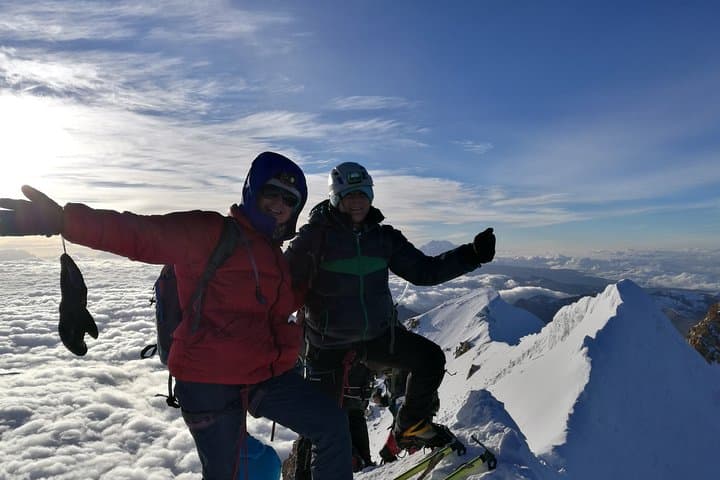
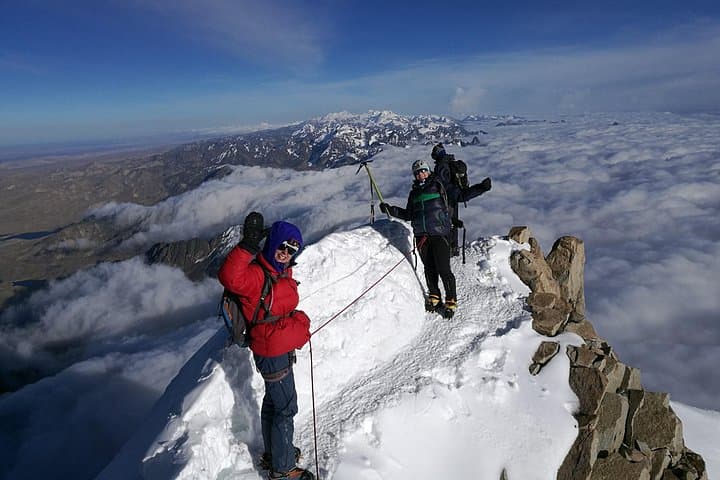
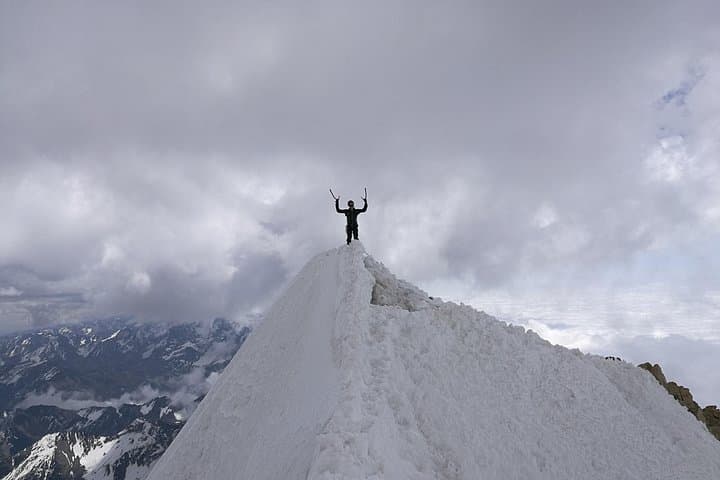
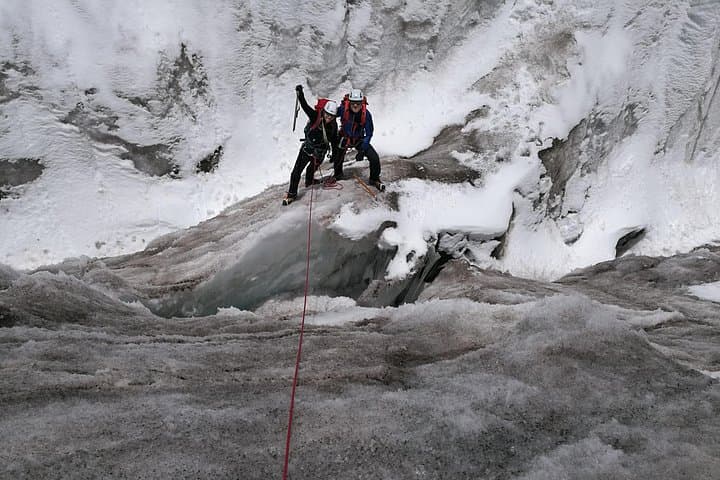
Expect a rhythm of careful acclimatization: a skills session on crampons and ice axe at base camp, a push to the Mountaineer’s House at 5,130 m, then a very early alpine start for a 5–6 hour summit push. From the top the Altiplano opens: Lake Titicaca, jagged peaks and the patchwork of highland settlements.
Practical guidance: prioritize 48–72 hours of acclimatization in La Paz, keep a slow uphill pace, and test boots/crampons before the summit night. Hydrate, eat small frequent meals, and be ready to turn back if symptoms of AMS appear. A guided small‑group ascent with properly fitted technical gear and a staged high camp gives the best balance of safety and success on this classic Bolivian climb.
You don't need extensive technical climbing experience for the normal route, but familiarity with crampons and ice‑axe use and prior high‑altitude trekking greatly improves safety and success.
The dry season (May–September) offers more stable weather and firmer snow; wet season storms (Nov–Mar) increase avalanche and crevasse risk.
Guides emphasize acclimatization, monitor symptoms closely, maintain slow ascent profiles, and turn back or descend immediately if moderate/severe AMS develops.
The standard route is not highly technical in typical dry‑season conditions but includes steep glacier travel; roped travel and crevasse awareness are required.
Bolivian Mountaineering operates guided outdoor trips and adventures with an emphasis on safety, stewardship, and memorable experiences.
You stand under a sky so thin the stars feel close enough to touch, then drive out of La Paz as the city lights pull away and the road climbs into the puna. By the time the Puma Condor refuge appears at 4,730 m the air has the clean, metallic bite of high altitude; glaciers glint above like folded silver.
You stand under a sky so thin the stars feel close enough to touch, then drive out of La Paz as the city lights pull away and the road climbs into the puna. By the time the Puma Condor refuge appears at 4,730 m the air has the clean, metallic bite of high altitude; glaciers glint above like folded silver.
Huayna Potosí’s steep ridgelines and broad glacier fields are recent products of Andean uplift and repeated glaciation. The peak sits on the Cordillera Real, a range long‑used by Aymara communities and later by European mountaineers. The normal (south) route is non‑technical in summer conditions, but the mountain’s elevation demands respect—altitude, crevasses and variable weather shape every step.
Expect a rhythm of careful acclimatization: a skills session on crampons and ice axe at base camp, a push to the Mountaineer’s House at 5,130 m, then a very early alpine start for a 5–6 hour summit push. From the top the Altiplano opens: Lake Titicaca, jagged peaks and the patchwork of highland settlements.
Practical guidance: prioritize 48–72 hours of acclimatization in La Paz, keep a slow uphill pace, and test boots/crampons before the summit night. Hydrate, eat small frequent meals, and be ready to turn back if symptoms of AMS appear. A guided small‑group ascent with properly fitted technical gear and a staged high camp gives the best balance of safety and success on this classic Bolivian climb.