THE ADVENTURE COLLECTIVE® · Independent discovery and booking for outdoor travel

A full-day trek to Huayna Potosí’s base camp and old glacier blends high-altitude acclimatization with hands-on glacier skills. Expect steep terrain, crampon practice, and wide Andean views — altitude is the true test.
A full-day trek to Huayna Potosí’s base camp and old glacier blends high-altitude acclimatization with hands-on glacier skills. Expect steep terrain, crampon practice, and wide Andean views — altitude is the true test.
You step out of La Paz’s thin air into a landscape that tightens the breath and widens the view. The road to Zongo Base Camp climbs past corrugated hills and the Milluni cemetery, where rusting mine machinery punctuates the skyline and glaciers sit like pale sentries above.
Verified experiences and guided adventures in the surrounding area.
Operated by Mapamundi Go · La Paz, La Paz
You step out of La Paz’s thin air into a landscape that tightens the breath and widens the view. The road to Zongo Base Camp climbs past corrugated hills and the Milluni cemetery, where rusting mine machinery punctuates the skyline and glaciers sit like pale sentries above.
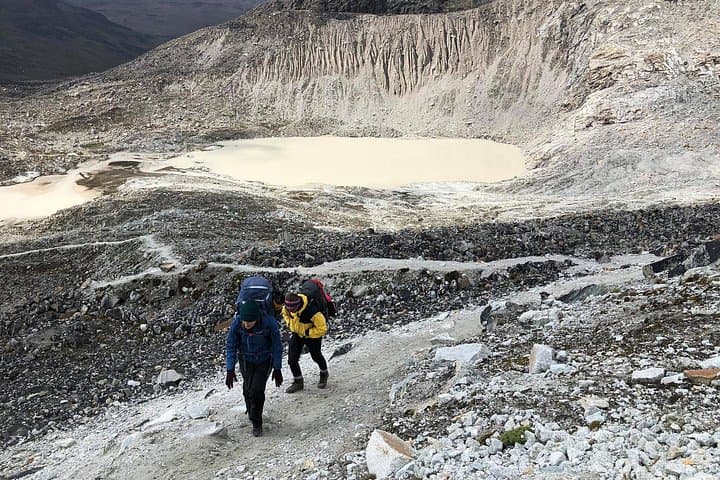
Huayna Potosí (approx. 4,780–4,970m at base and glacier practice sites) is a steep carbonate-and-schist massif carved by rare tropical glaciers. The mountain has long been a landmark for Aymara communities and later for miners who left the skeletal remains of early 20th-century industry in Milluni. Geologically, you move from high puna grasslands into moraine fields and compacted névé where ice tools bite.
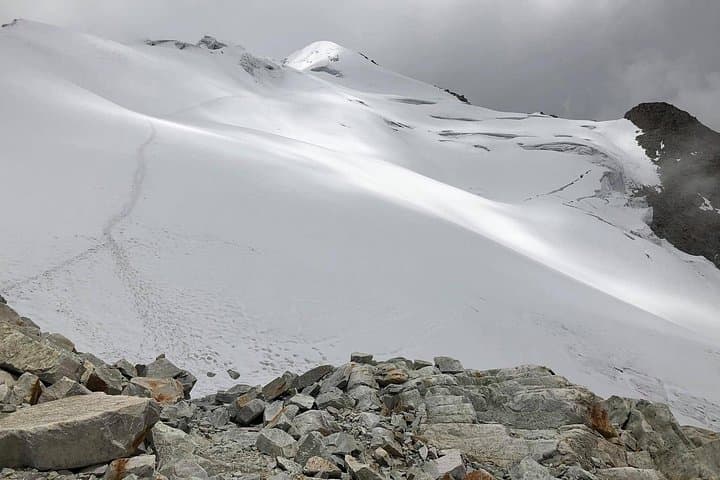
On the full-day trek you’ll have time to acclimatize at base camp, learn crampon and ice-axe techniques, and try short ice-wall climbs under guide supervision. The wind has an appetite here — it will test your layers and your patience — while the glacier offers a stark, tactile contrast: cold, glassy, and mobile.
Practical edge: start early, sip water steadily, and use layered insulation for rapidly shifting temperatures. Guides provide crampons, boots, ice axes, harnesses, and helmets; bring a daypack with snacks, sun protection, and emergency layers. Expect rocky approaches, steep talus, and compacted snow at higher practice sites. Altitude, not technical difficulty, is the main challenge — listen to your body and communicate early about symptoms. This route is ideal for hikers stepping into alpine terrain under guided instruction and for those wanting a hands-on introduction to glacier travel near La Paz.
No prior technical experience is required; the group typically practices crampon and ice-axe techniques at the glacier under guide supervision.
Base camp sits around 4,780m and practice sites near 4,970m; expect shortness of breath, increased heart rate, and colder temperatures — acclimatization helps.
Guides supply crampons, mountaineering boots, ice axes, helmets, and harnesses — bring personal base layers, socks, and sun protection.
Trips may be canceled for bad weather or insufficient travelers; confirm cancellation windows and refund rules at booking (typically full refund if canceled 24+ hours prior).
Mapamundi Go operates guided outdoor trips and adventures with an emphasis on safety, stewardship, and memorable experiences.
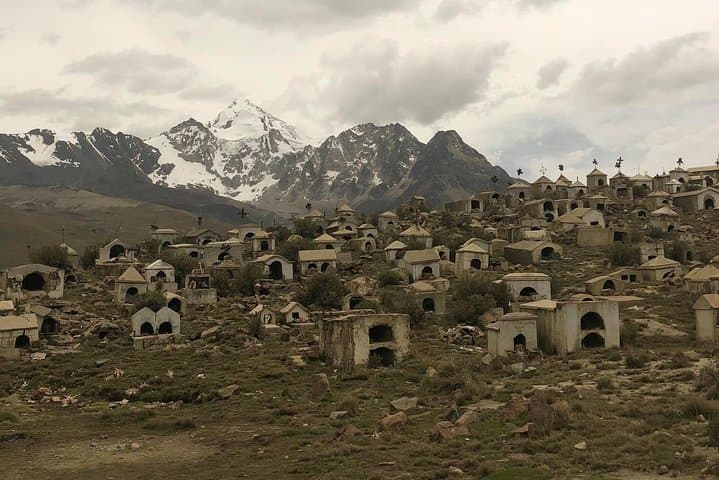
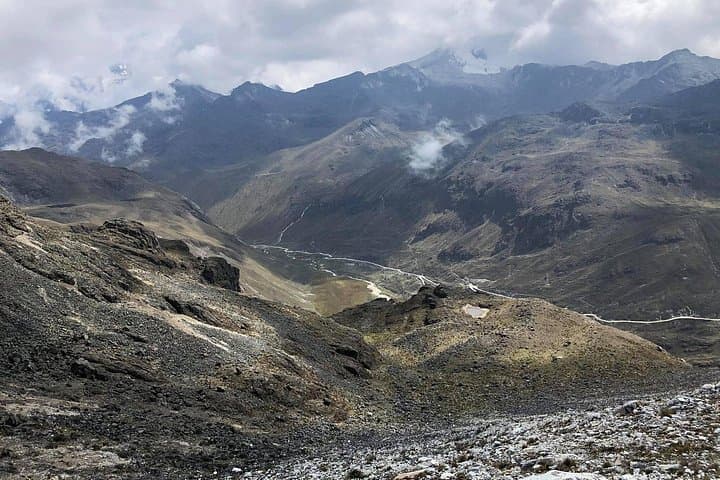
You step out of La Paz’s thin air into a landscape that tightens the breath and widens the view. The road to Zongo Base Camp climbs past corrugated hills and the Milluni cemetery, where rusting mine machinery punctuates the skyline and glaciers sit like pale sentries above.
You step out of La Paz’s thin air into a landscape that tightens the breath and widens the view. The road to Zongo Base Camp climbs past corrugated hills and the Milluni cemetery, where rusting mine machinery punctuates the skyline and glaciers sit like pale sentries above.
Huayna Potosí (approx. 4,780–4,970m at base and glacier practice sites) is a steep carbonate-and-schist massif carved by rare tropical glaciers. The mountain has long been a landmark for Aymara communities and later for miners who left the skeletal remains of early 20th-century industry in Milluni. Geologically, you move from high puna grasslands into moraine fields and compacted névé where ice tools bite.
On the full-day trek you’ll have time to acclimatize at base camp, learn crampon and ice-axe techniques, and try short ice-wall climbs under guide supervision. The wind has an appetite here — it will test your layers and your patience — while the glacier offers a stark, tactile contrast: cold, glassy, and mobile.
Practical edge: start early, sip water steadily, and use layered insulation for rapidly shifting temperatures. Guides provide crampons, boots, ice axes, harnesses, and helmets; bring a daypack with snacks, sun protection, and emergency layers. Expect rocky approaches, steep talus, and compacted snow at higher practice sites. Altitude, not technical difficulty, is the main challenge — listen to your body and communicate early about symptoms. This route is ideal for hikers stepping into alpine terrain under guided instruction and for those wanting a hands-on introduction to glacier travel near La Paz.