THE ADVENTURE COLLECTIVE® · Independent discovery and booking for outdoor travel

Spend a relaxed overnight exploring Hue’s imperial highlights from Hoi An: a night cyclo through the city, visits to Khai Dinh Tomb and Thien Mu Pagoda, and a day inside the Citadel. This two-day tour pairs accessible sightseeing with concise local context.
Spend a relaxed overnight exploring Hue’s imperial highlights from Hoi An: a night cyclo through the city, visits to Khai Dinh Tomb and Thien Mu Pagoda, and a day inside the Citadel. This two-day tour pairs accessible sightseeing with concise local context.
The sun slides toward the Perfume River as your van eases into Hue — lamps blink on the Truong Tien Bridge and the city takes on a velvet hush. On this two-day circuit from Hoi An you trade lantern-lit alleys for imperial gates; the night cyclo through central streets turns ordinary traffic into a slow, human-paced procession.
Verified experiences and guided adventures in the surrounding area.
Operated by World Heritage Road · Hue, Thua Thien-Hue
The sun slides toward the Perfume River as your van eases into Hue — lamps blink on the Truong Tien Bridge and the city takes on a velvet hush. On this two-day circuit from Hoi An you trade lantern-lit alleys for imperial gates; the night cyclo through central streets turns ordinary traffic into a slow, human-paced procession.
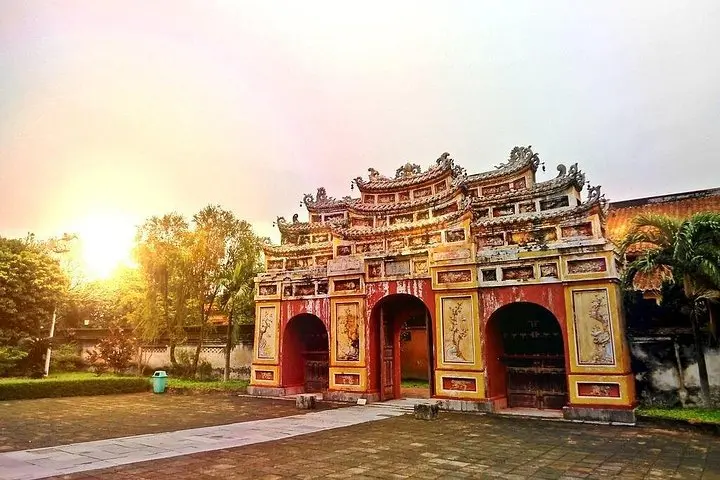
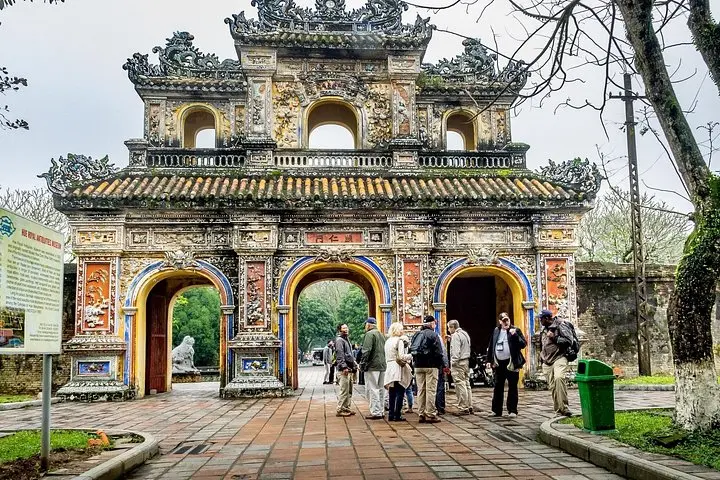
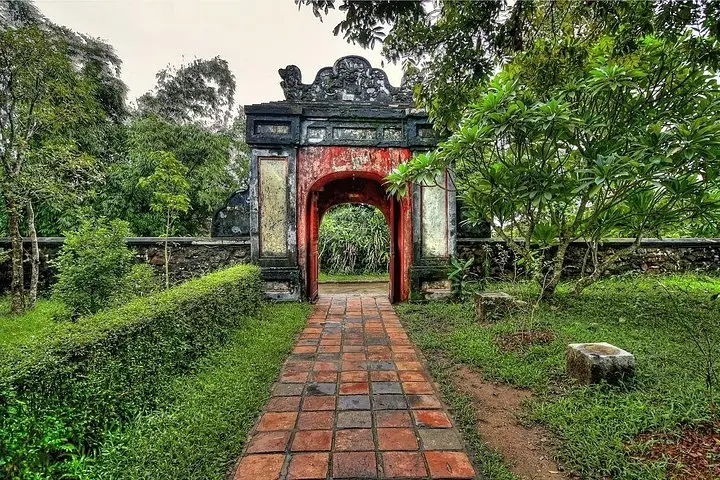
Hue was the seat of the Nguyen dynasty (1802–1945), and reminders of imperial rule are everywhere: the Citadel’s Noon Gate and Thai Hoa Palace, the lacquered relics in the Museum of Royal Antiquities, and the ornate, concrete-and-ceramic mosaic of Khai Dinh’s tomb. Thien Mu Pagoda, perched above the Perfume River, offers a quieter counterpoint — its layered roofs and bell tower are a visible through-line of the city’s Buddhist heritage.
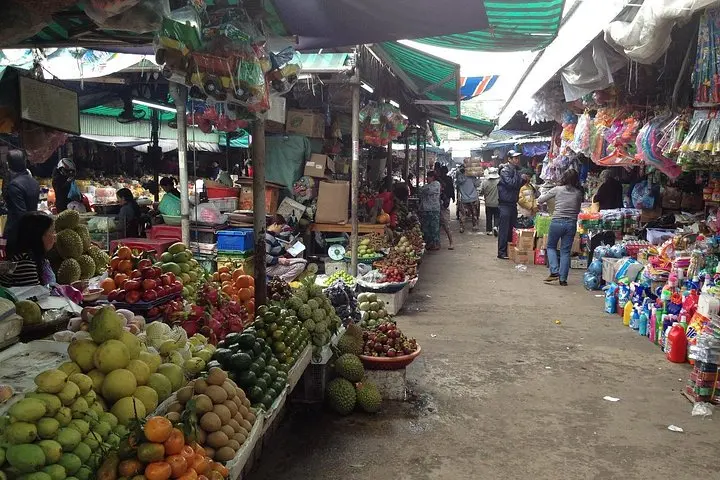
Geologically the region is lowland on the central coast, ringed by rice paddies and gentle hills rather than dramatic peaks; the river shapes daily life and markets like Dong Ba bustle at that intersection of water and trade. Expect walking on mixed surfaces, short cyclo rides after dark, and a roughly 3½-hour transfer from Hoi An on day one.
Practical guidance: bring modest clothing for temples, cash for market stalls and small museums, and a lightweight rain layer in the rainy season. Pace your timing — the night cyclo is relaxed but roads can be busy — and budget extra time for photography at the Citadel and Khai Dinh Tomb. If you value history with easy logistics, this overnight keeps exploration focused and accessible without demanding hiking fitness or advanced skills.
The itinerary allocates roughly 3–4 hours for the transfer; actual time varies with traffic and route.
Some admissions are included per the tour itinerary (e.g., selected tombs/museums may be covered) but check the operator’s specifics before booking.
Yes — the cyclo is a slow, short ride through flat streets, but it may be uncomfortable for travelers with severe back problems.
The operator’s standard policy allows a full refund if canceled at least 24 hours before departure; confirm terms at booking.
World Heritage Road operates guided outdoor trips and adventures with an emphasis on safety, stewardship, and memorable experiences.
The sun slides toward the Perfume River as your van eases into Hue — lamps blink on the Truong Tien Bridge and the city takes on a velvet hush. On this two-day circuit from Hoi An you trade lantern-lit alleys for imperial gates; the night cyclo through central streets turns ordinary traffic into a slow, human-paced procession.
The sun slides toward the Perfume River as your van eases into Hue — lamps blink on the Truong Tien Bridge and the city takes on a velvet hush. On this two-day circuit from Hoi An you trade lantern-lit alleys for imperial gates; the night cyclo through central streets turns ordinary traffic into a slow, human-paced procession.
Hue was the seat of the Nguyen dynasty (1802–1945), and reminders of imperial rule are everywhere: the Citadel’s Noon Gate and Thai Hoa Palace, the lacquered relics in the Museum of Royal Antiquities, and the ornate, concrete-and-ceramic mosaic of Khai Dinh’s tomb. Thien Mu Pagoda, perched above the Perfume River, offers a quieter counterpoint — its layered roofs and bell tower are a visible through-line of the city’s Buddhist heritage.
Geologically the region is lowland on the central coast, ringed by rice paddies and gentle hills rather than dramatic peaks; the river shapes daily life and markets like Dong Ba bustle at that intersection of water and trade. Expect walking on mixed surfaces, short cyclo rides after dark, and a roughly 3½-hour transfer from Hoi An on day one.
Practical guidance: bring modest clothing for temples, cash for market stalls and small museums, and a lightweight rain layer in the rainy season. Pace your timing — the night cyclo is relaxed but roads can be busy — and budget extra time for photography at the Citadel and Khai Dinh Tomb. If you value history with easy logistics, this overnight keeps exploration focused and accessible without demanding hiking fitness or advanced skills.