THE ADVENTURE COLLECTIVE® · Independent discovery and booking for outdoor travel

Ride a cyclo to Dong Ba Market, shop fresh ingredients, then cook traditional Hue dishes under Madam Thu’s guidance. This hands-on class blends market culture, royal-influenced recipes, and a restorative herbal foot soak.
Ride a cyclo to Dong Ba Market, shop fresh ingredients, then cook traditional Hue dishes under Madam Thu’s guidance. This hands-on class blends market culture, royal-influenced recipes, and a restorative herbal foot soak.
The morning opens with the clack of cyclo wheels and the scent of lemongrass and fish sauce as you roll toward Dong Ba Market. Stalls shout color and texture — bundles of rice paper, rows of fresh herbs, and braised pork simmering in clay pots — while the Perfume River glints nearby, inviting you to imagine how the city’s waterways shaped its food.
Verified experiences and guided adventures in the surrounding area.
Operated by Authentuc PU LUONG · Hue, Thua Thien-Hue
The morning opens with the clack of cyclo wheels and the scent of lemongrass and fish sauce as you roll toward Dong Ba Market. Stalls shout color and texture — bundles of rice paper, rows of fresh herbs, and braised pork simmering in clay pots — while the Perfume River glints nearby, inviting you to imagine how the city’s waterways shaped its food.
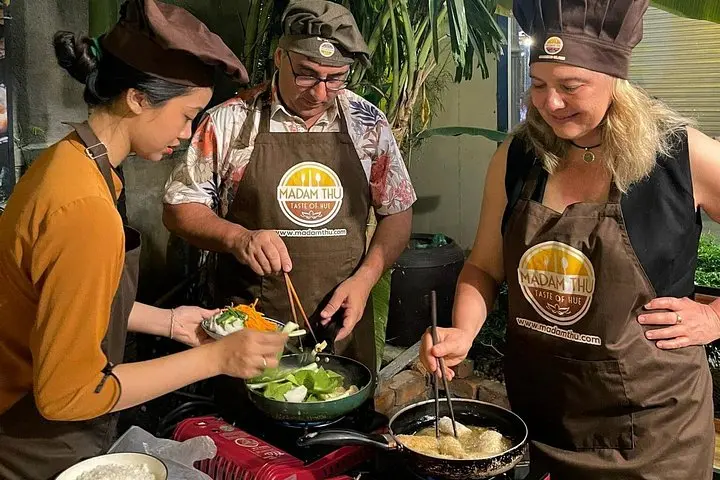
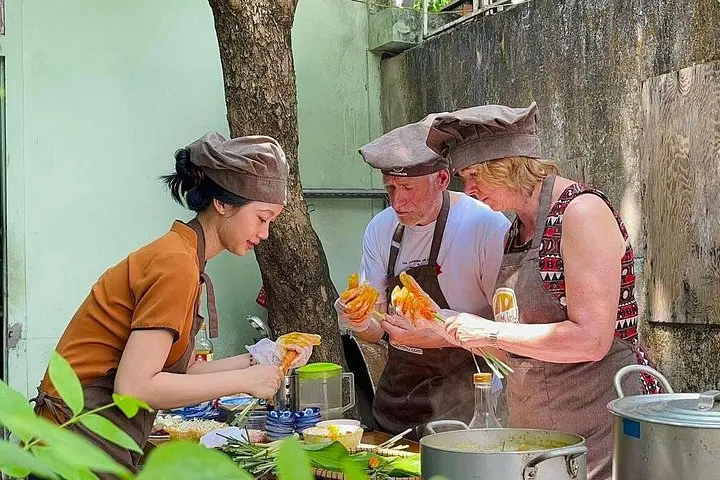
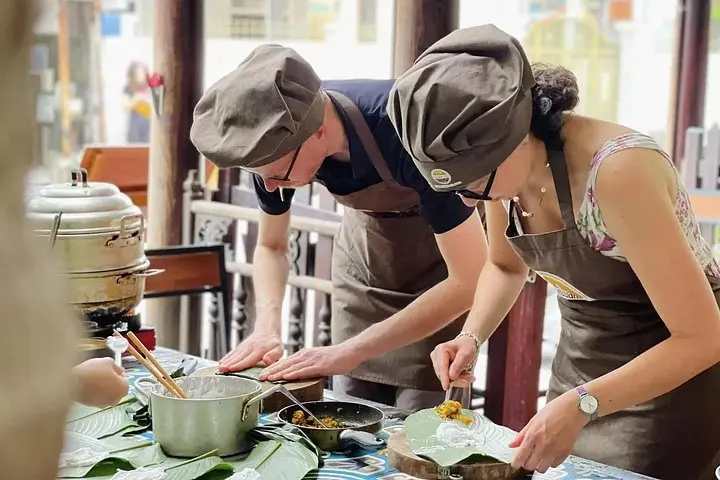
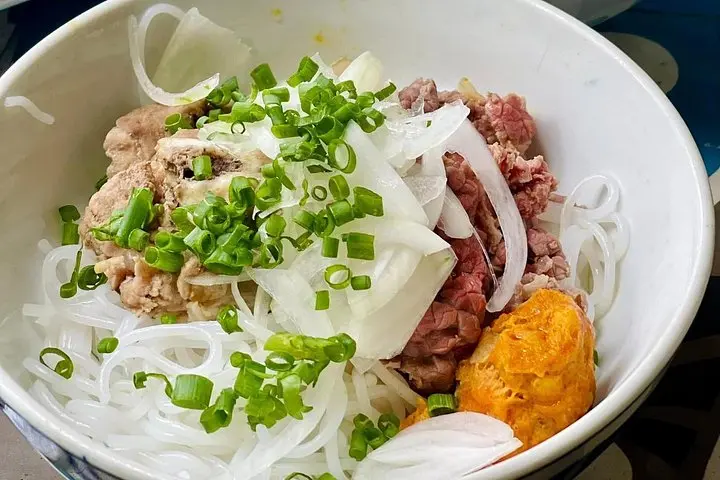
Hue was Vietnam’s imperial capital under the Nguyễn dynasty, and its cuisine retains a refined, ceremonial quality: balanced broths, delicate steamed cakes, and complex herbal notes. Geographically Hue sits on a coastal plain at the mouth of the Perfume River, where riverine ingredients and Cham trade routes historically influenced flavors now taught in Madam Thu’s kitchen. The class pairs a market walk with hands-on technique—making banh beo, wrapping goi cuon, skewering nem lui, and building the layered broth of bun bo Hue—then closing with a traditional medicinal foot soak.
Practical guidance: arrive hungry but hydrated; the market is best at first light when vendors unpack the day’s catch and produce. Wear closed-toe shoes and bring a reusable bag for purchases. Expect about 4–5 hours from cyclo pickup to final soak; the lesson is tactile rather than technical, suitable for cooks of all levels. Note dietary needs in advance so the chef can adapt recipes. After the class, linger along the riverbank or visit nearby garden houses to see how Hue’s culinary traditions live in local life.
Yes, pick up by cyclo from central Hue hotels is included as described in the itinerary.
Yes—vegetarian and vegan options can be prepared if requested in your booking’s special requirements.
Expect to prepare several items including banh khoai, nem lui, bun bo Hue, banh beo and goi cuon, then taste them together.
The activity is family-friendly but involves walking in a busy market and standing during the class; inform the operator about mobility concerns.
Authentuc PU LUONG operates guided outdoor trips and adventures with an emphasis on safety, stewardship, and memorable experiences.
The morning opens with the clack of cyclo wheels and the scent of lemongrass and fish sauce as you roll toward Dong Ba Market. Stalls shout color and texture — bundles of rice paper, rows of fresh herbs, and braised pork simmering in clay pots — while the Perfume River glints nearby, inviting you to imagine how the city’s waterways shaped its food.
The morning opens with the clack of cyclo wheels and the scent of lemongrass and fish sauce as you roll toward Dong Ba Market. Stalls shout color and texture — bundles of rice paper, rows of fresh herbs, and braised pork simmering in clay pots — while the Perfume River glints nearby, inviting you to imagine how the city’s waterways shaped its food.
Hue was Vietnam’s imperial capital under the Nguyễn dynasty, and its cuisine retains a refined, ceremonial quality: balanced broths, delicate steamed cakes, and complex herbal notes. Geographically Hue sits on a coastal plain at the mouth of the Perfume River, where riverine ingredients and Cham trade routes historically influenced flavors now taught in Madam Thu’s kitchen. The class pairs a market walk with hands-on technique—making banh beo, wrapping goi cuon, skewering nem lui, and building the layered broth of bun bo Hue—then closing with a traditional medicinal foot soak.
Practical guidance: arrive hungry but hydrated; the market is best at first light when vendors unpack the day’s catch and produce. Wear closed-toe shoes and bring a reusable bag for purchases. Expect about 4–5 hours from cyclo pickup to final soak; the lesson is tactile rather than technical, suitable for cooks of all levels. Note dietary needs in advance so the chef can adapt recipes. After the class, linger along the riverbank or visit nearby garden houses to see how Hue’s culinary traditions live in local life.