THE ADVENTURE COLLECTIVE® · Independent discovery and booking for outdoor travel

Glide the Perfume River on a six-hour private boat tour from Toa Kham wharf to Thien Mu Pagoda, Hon Chen Palace and Minh Mang Tomb. This calm water route combines riverside scenery with Nguyen Dynasty history and easy walking at each stop.
Glide the Perfume River on a six-hour private boat tour from Toa Kham wharf to Thien Mu Pagoda, Hon Chen Palace and Minh Mang Tomb. This calm water route combines riverside scenery with Nguyen Dynasty history and easy walking at each stop.
The boat slips away from Toa Kham wharf and the Perfume River opens like a slow-moving boulevard of palms and mango trees. Light bounces off low stone embankments while dragon-headed prows cut a steady wake; the river seems to decide the pace, now reflective, now nudging you forward.
Verified experiences and guided adventures in the surrounding area.
Operated by Northern Vietnam Tours · Hue, Thua Thien-Hue
The boat slips away from Toa Kham wharf and the Perfume River opens like a slow-moving boulevard of palms and mango trees. Light bounces off low stone embankments while dragon-headed prows cut a steady wake; the river seems to decide the pace, now reflective, now nudging you forward.
This six-hour pilgrimage follows the waterway that shaped Hue: the Song Huong (Perfume River), named for orchards and floral scents that drift downstream in certain seasons. The itinerary threads cultural layers — Thien Mu Pagoda (founded in the early 1600s) perches on a river bend with its iconic seven-story Phuoc Duyen tower; Hon Chen Palace preserves Cham-era anecdotes in the core of the old capital; Minh Mang Tomb, built in the 19th century, shows the Nguyen Dynasty’s architectural dialogue with feng shui and landscape.
Geology is quiet company here: the river carries silt from the Annamite foothills and slows through broad floodplains, encouraging low-lying temples and emerald rice terraces along its banks. Local life — sampans, temple keepers, orchard workers — punctuates the journey with human scale.
Practically: expect mostly gentle on- and off-boat transfers, short walks on uneven stone and turf, and modest entrance gates at each site. Bring sun protection, a light rain layer, and shoes that handle slick steps. Morning or late-afternoon departures cut the heat and improve light for photos. Guides handle tickets and a private car returns you to your Hue hotel, making this a low-effort, high-context way to read the city from its river.
The tour meets at Toa Kham boat wharf (49 Le Loi) in Hue and ends at Minh Mang Tomb where a private car returns you to your hotel.
Yes — entrance fees for listed sites are included in the tour price per the itinerary information.
Yes; the tour is rated easy with short walks, though some stairs and uneven surfaces may be present at pagodas and tombs.
The tour includes an English-speaking guide and private transport; notify the operator at booking about mobility needs so they can plan appropriate assistance.
Northern Vietnam Tours operates guided outdoor trips and adventures with an emphasis on safety, stewardship, and memorable experiences.
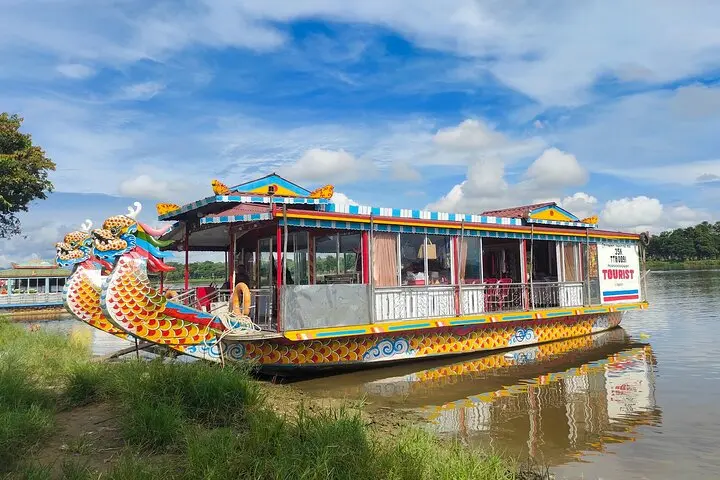
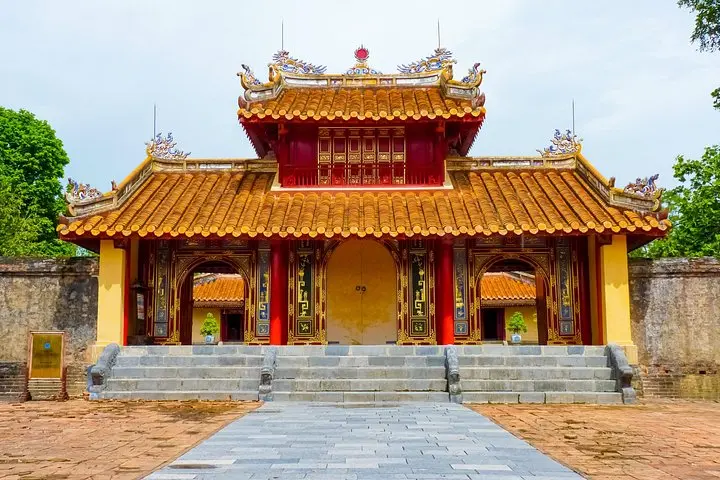
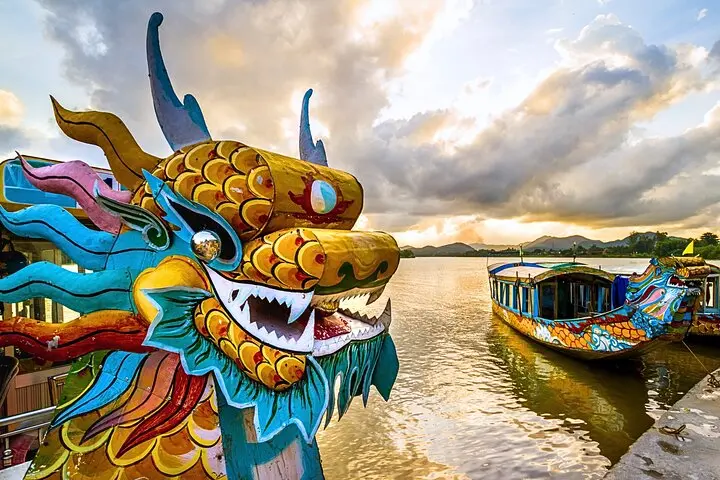
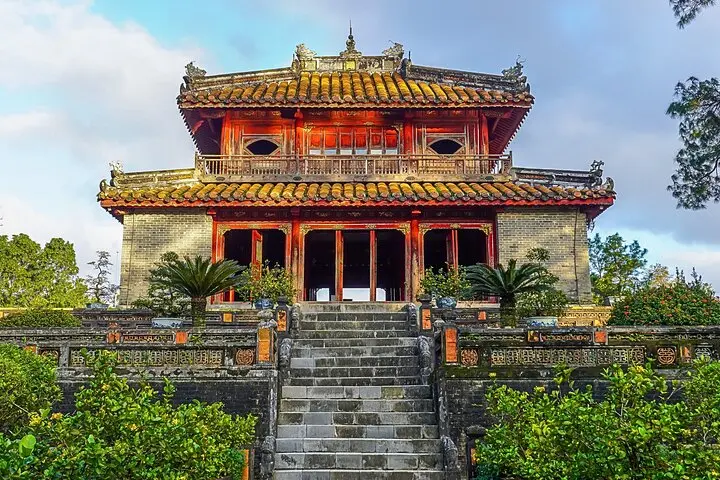
The boat slips away from Toa Kham wharf and the Perfume River opens like a slow-moving boulevard of palms and mango trees. Light bounces off low stone embankments while dragon-headed prows cut a steady wake; the river seems to decide the pace, now reflective, now nudging you forward.
The boat slips away from Toa Kham wharf and the Perfume River opens like a slow-moving boulevard of palms and mango trees. Light bounces off low stone embankments while dragon-headed prows cut a steady wake; the river seems to decide the pace, now reflective, now nudging you forward.
This six-hour pilgrimage follows the waterway that shaped Hue: the Song Huong (Perfume River), named for orchards and floral scents that drift downstream in certain seasons. The itinerary threads cultural layers — Thien Mu Pagoda (founded in the early 1600s) perches on a river bend with its iconic seven-story Phuoc Duyen tower; Hon Chen Palace preserves Cham-era anecdotes in the core of the old capital; Minh Mang Tomb, built in the 19th century, shows the Nguyen Dynasty’s architectural dialogue with feng shui and landscape.
Geology is quiet company here: the river carries silt from the Annamite foothills and slows through broad floodplains, encouraging low-lying temples and emerald rice terraces along its banks. Local life — sampans, temple keepers, orchard workers — punctuates the journey with human scale.
Practically: expect mostly gentle on- and off-boat transfers, short walks on uneven stone and turf, and modest entrance gates at each site. Bring sun protection, a light rain layer, and shoes that handle slick steps. Morning or late-afternoon departures cut the heat and improve light for photos. Guides handle tickets and a private car returns you to your Hue hotel, making this a low-effort, high-context way to read the city from its river.