THE ADVENTURE COLLECTIVE® · Independent discovery and booking for outdoor travel

Explore Hue’s Imperial City, glide the Perfume River by dragon boat, and visit the ornate royal tombs in one carefully timed day. This small-group tour packs cultural highlights, historian-led context, and hassle-free transport into five hours.
Explore Hue’s Imperial City, glide the Perfume River by dragon boat, and visit the ornate royal tombs in one carefully timed day. This small-group tour packs cultural highlights, historian-led context, and hassle-free transport into five hours.
You step off the minivan and the Perfume River greets you—slow, wide, and carrying sampans like bookmarks along its current. The morning light picks out terraced roofs and the tall spire of Thien Mu Pagoda as the guide folds a map and starts to sketch the day: a dragon-boat ride, the Imperial City’s moats, and the jeweled interiors of Khai Dinh’s tomb.
Verified experiences and guided adventures in the surrounding area.
Operated by Asia Group Tour · Hue, Thua Thien-Hue
You step off the minivan and the Perfume River greets you—slow, wide, and carrying sampans like bookmarks along its current. The morning light picks out terraced roofs and the tall spire of Thien Mu Pagoda as the guide folds a map and starts to sketch the day: a dragon-boat ride, the Imperial City’s moats, and the jeweled interiors of Khai Dinh’s tomb.
Hue is a city shaped by dynasties and water. The Nguyen emperors laid out the citadel and royal tombs with strict axial planning; the tombs at Khai Dinh and Minh Mang reveal divergent tastes—one ornate and European-influenced, the other rigidly symmetrical and landscaped. The Perfume River has long been the artery of local life, while markets nearby still trade rice paper, fish sauce, and incense the way they did decades ago.
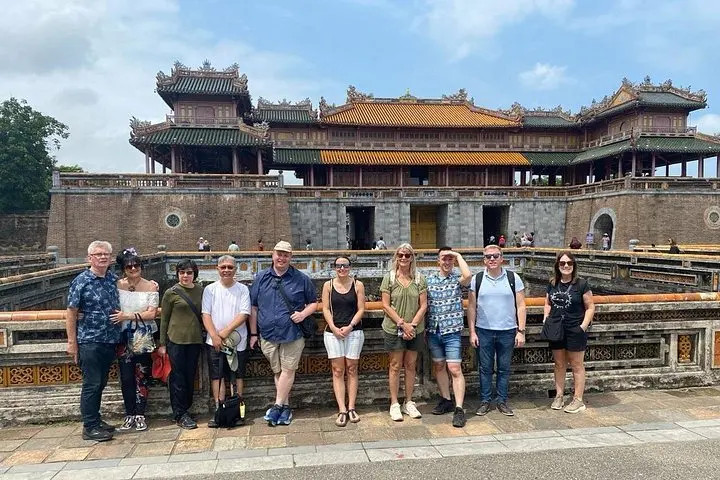
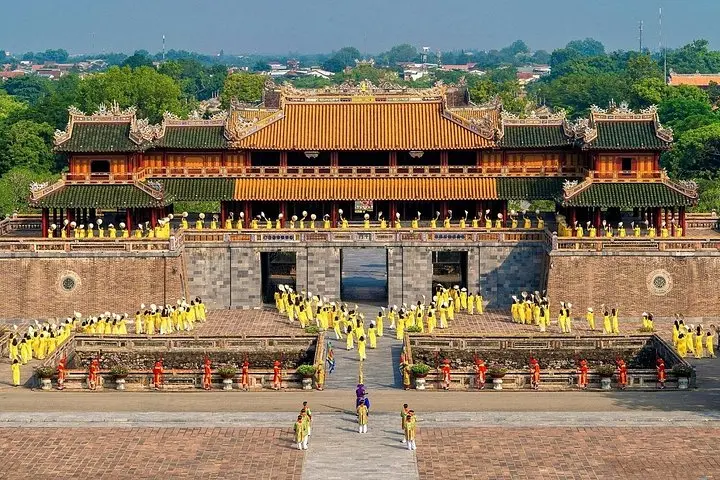
Expect paved paths, wide courtyards, and a few steep stone staircases at mausoleums. The Imperial City covers about 2 km²; a focused visit usually includes up to 1–2 km of walking inside the complex plus shorter strolls between sites. Wear supportive shoes for uneven flagstones and bring a hat—the central plain can heat up quickly.
Practically, the small-group format keeps transfers efficient: hotel pickup and drop-off, bottled water, historian guide, and a local lunch are included. Admissions and a dragon-boat ride on the Perfume River are covered, but carry cash for souvenirs and small temple donations. Modest dress is required at religious sites and a light rain layer is handy in the wet season. The route is well suited to first-time visitors who want a compact but thorough introduction to Hue’s imperial footprint.
Yes—this tour includes hotel pickup and drop-off within Hue; confirm your pickup point at booking.
Admissions for the Imperial City, Thien Mu Pagoda, Khai Dinh and Minh Mang tombs, and the dragon boat are included in the tour price.
Yes; the itinerary is rated easy but involves walking and some stairs—let the operator know mobility concerns for adjustments.
Bring Vietnamese dong for souvenirs and small purchases; tipping is discretionary but appreciated for guides and drivers.
Asia Group Tour operates guided outdoor trips and adventures with an emphasis on safety, stewardship, and memorable experiences.
You step off the minivan and the Perfume River greets you—slow, wide, and carrying sampans like bookmarks along its current. The morning light picks out terraced roofs and the tall spire of Thien Mu Pagoda as the guide folds a map and starts to sketch the day: a dragon-boat ride, the Imperial City’s moats, and the jeweled interiors of Khai Dinh’s tomb.
You step off the minivan and the Perfume River greets you—slow, wide, and carrying sampans like bookmarks along its current. The morning light picks out terraced roofs and the tall spire of Thien Mu Pagoda as the guide folds a map and starts to sketch the day: a dragon-boat ride, the Imperial City’s moats, and the jeweled interiors of Khai Dinh’s tomb.
Hue is a city shaped by dynasties and water. The Nguyen emperors laid out the citadel and royal tombs with strict axial planning; the tombs at Khai Dinh and Minh Mang reveal divergent tastes—one ornate and European-influenced, the other rigidly symmetrical and landscaped. The Perfume River has long been the artery of local life, while markets nearby still trade rice paper, fish sauce, and incense the way they did decades ago.
Expect paved paths, wide courtyards, and a few steep stone staircases at mausoleums. The Imperial City covers about 2 km²; a focused visit usually includes up to 1–2 km of walking inside the complex plus shorter strolls between sites. Wear supportive shoes for uneven flagstones and bring a hat—the central plain can heat up quickly.
Practically, the small-group format keeps transfers efficient: hotel pickup and drop-off, bottled water, historian guide, and a local lunch are included. Admissions and a dragon-boat ride on the Perfume River are covered, but carry cash for souvenirs and small temple donations. Modest dress is required at religious sites and a light rain layer is handy in the wet season. The route is well suited to first-time visitors who want a compact but thorough introduction to Hue’s imperial footprint.