THE ADVENTURE COLLECTIVE® · Independent discovery and booking for outdoor travel

Trace the 17th Parallel from Hue to the DMZ: explore Vinh Moc’s underground village, Khe Sanh’s combat base, and river crossings that divided a nation. This full-day tour mixes geology, wartime engineering, and local memory with practical logistics for travelers.
Trace the 17th Parallel from Hue to the DMZ: explore Vinh Moc’s underground village, Khe Sanh’s combat base, and river crossings that divided a nation. This full-day tour mixes geology, wartime engineering, and local memory with practical logistics for travelers.
You step into a light that has seen war and peace—the low coastal sun cutting across rice flats as the minivan pushes north from Hue. The Ben Hai River waits like a line on a map, daring you to imagine two Vietnams divided at the 17th Parallel. Cracked concrete bridges and scarred earth give way to the whisper of the sea near Vinh Moc, where a subterranean village once housed hundreds.
Verified experiences and guided adventures in the surrounding area.
Operated by Authentic Travel VIETNAM · Hue, Thua Thien-Hue
You step into a light that has seen war and peace—the low coastal sun cutting across rice flats as the minivan pushes north from Hue. The Ben Hai River waits like a line on a map, daring you to imagine two Vietnams divided at the 17th Parallel. Cracked concrete bridges and scarred earth give way to the whisper of the sea near Vinh Moc, where a subterranean village once housed hundreds.
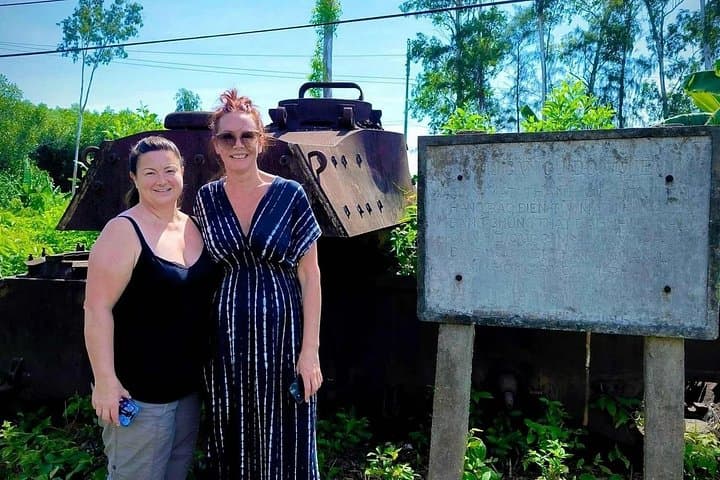
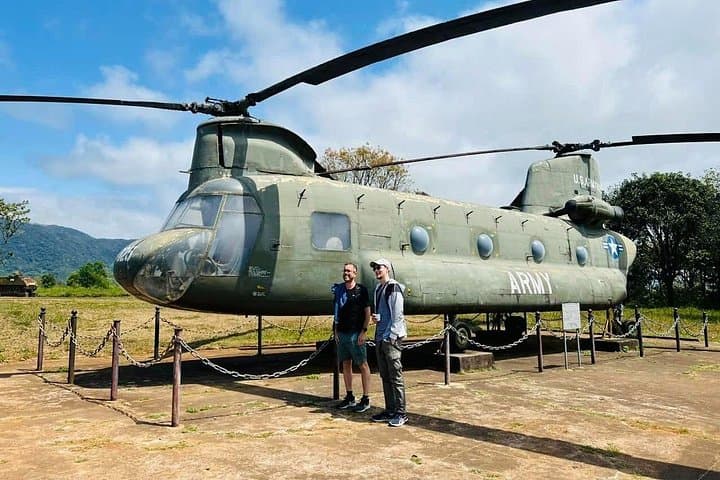
The route threads through Quang Tri Province, a landscape shaped by conflict and coastal geology: soft alluvial plains meet low limestone outcrops and the ridges that framed the Ho Chi Minh Trail. Sites visited—Long Hung Church, the Quang Tri Citadel, Khe Sanh Combat Base, Doc Mieu and Hien Luong Bridge—are less about romantic ruins and more about human engineering under pressure: tunnel networks, bunkers, and defensive earthworks that tell of strategy and survival.
Alongside military history are local stories—families who rebuilt fishing villages and communities where wartime scars remain visible in architecture and memory. Guides translate not only facts but the cultural contour of the region.
Practically, expect a long day (about 11 hours) with several short walks, some uneven steps (especially in tunnels), and periods aboard an air-conditioned minivan. Bring sun protection, a refillable water bottle, modest clothing for memorial sites, and patience for dusty paths and staircases. Photography is welcome, but show restraint at memorials. The trip is immersive history with a tangible landscape underfoot—sober, informative, and physically accessible for most travelers.
The tour runs about 11 hours with pickup and drop-off from hotels in central Hue; confirm your exact pickup time with the operator.
Yes—entrance fees and a picnic-style lunch in Quang Tri Province are included in the tour price.
The tour involves short walks and stairs, especially inside the Vinh Moc Tunnels; it may be difficult for those with limited mobility—contact the operator to discuss accommodations.
Photography is generally allowed, but please be respectful at memorials and follow any onsite signage or guide instructions.
Authentic Travel VIETNAM operates guided outdoor trips and adventures with an emphasis on safety, stewardship, and memorable experiences.
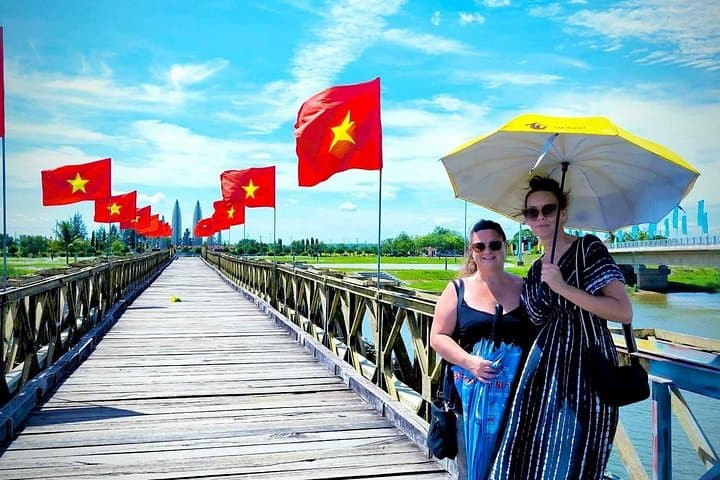
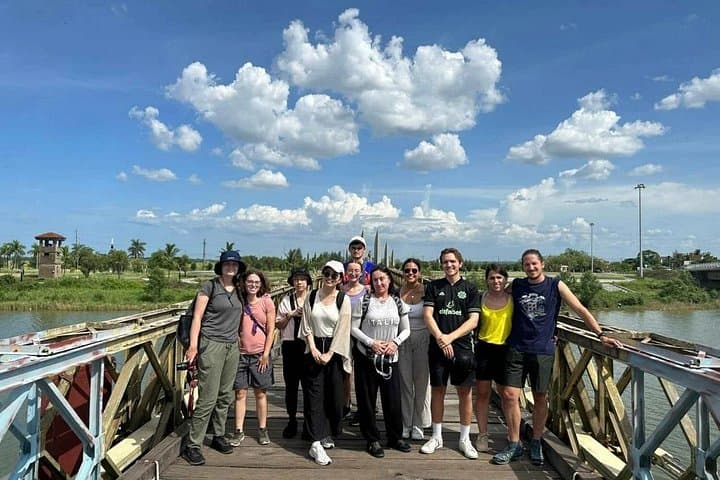
You step into a light that has seen war and peace—the low coastal sun cutting across rice flats as the minivan pushes north from Hue. The Ben Hai River waits like a line on a map, daring you to imagine two Vietnams divided at the 17th Parallel. Cracked concrete bridges and scarred earth give way to the whisper of the sea near Vinh Moc, where a subterranean village once housed hundreds.
You step into a light that has seen war and peace—the low coastal sun cutting across rice flats as the minivan pushes north from Hue. The Ben Hai River waits like a line on a map, daring you to imagine two Vietnams divided at the 17th Parallel. Cracked concrete bridges and scarred earth give way to the whisper of the sea near Vinh Moc, where a subterranean village once housed hundreds.
The route threads through Quang Tri Province, a landscape shaped by conflict and coastal geology: soft alluvial plains meet low limestone outcrops and the ridges that framed the Ho Chi Minh Trail. Sites visited—Long Hung Church, the Quang Tri Citadel, Khe Sanh Combat Base, Doc Mieu and Hien Luong Bridge—are less about romantic ruins and more about human engineering under pressure: tunnel networks, bunkers, and defensive earthworks that tell of strategy and survival.
Alongside military history are local stories—families who rebuilt fishing villages and communities where wartime scars remain visible in architecture and memory. Guides translate not only facts but the cultural contour of the region.
Practically, expect a long day (about 11 hours) with several short walks, some uneven steps (especially in tunnels), and periods aboard an air-conditioned minivan. Bring sun protection, a refillable water bottle, modest clothing for memorial sites, and patience for dusty paths and staircases. Photography is welcome, but show restraint at memorials. The trip is immersive history with a tangible landscape underfoot—sober, informative, and physically accessible for most travelers.