THE ADVENTURE COLLECTIVE® · Independent discovery and booking for outdoor travel

Take a full-day trip from Hue to Paradise Cave in Phong Nha-Kẻ Bàng and walk through vast limestone chambers shaped over millions of years. This guided tour mixes geology, wartime history, and local culture with a long scenic drive across central Vietnam.
Take a full-day trip from Hue to Paradise Cave in Phong Nha-Kẻ Bàng and walk through vast limestone chambers shaped over millions of years. This guided tour mixes geology, wartime history, and local culture with a long scenic drive across central Vietnam.
You step off the bus and the air shifts — humid, mineral-rich, carrying the low echo of distant drip. Paradise Cave (Hang Thiên Đường) opens like a carved cathedral: vaulted chambers, ribbed curtains of calcite, stalagmites rising from the floor as if the earth were breathing slowly.
Verified experiences and guided adventures in the surrounding area.
Operated by Local Tours SAPA · Phong Nha, Quang Binh
You step off the bus and the air shifts — humid, mineral-rich, carrying the low echo of distant drip. Paradise Cave (Hang Thiên Đường) opens like a carved cathedral: vaulted chambers, ribbed curtains of calcite, stalagmites rising from the floor as if the earth were breathing slowly.
The cave sits inside Phong Nha-Kẻ Bàng National Park, a UNESCO World Heritage site formed by millions of years of limestone dissolution. On the drive from Hue you pass the La Vang Holy Land and fragments of DMZ-era history — the 17th parallel and the Ben Hai River — reminders that this karst landscape sits amid a contested, storied coastline.
Locals guide visitors through well-built walkways and stair sets that traverse the cave’s main galleries. Geologically, Paradise Cave displays classic karst features: flowstones, columns, and rimstone pools created by slow sulfate-rich waters. Culturally, the route ties central Vietnam’s spiritual stops with rural communities near Dong Hoi and Phong Nha.
Practical guidance: expect a long day — plan for a 12–13 hour round trip including 3–4 hours driving each way from Hue. Wear grippy shoes for wet steps, bring a light layer for cooler cave air, and carry a refillable water bottle; restrooms and lunch are provided at roadside restaurants. The cave lighting highlights formations but keep flash photography for close-ups only to preserve low-light conditions for other visitors. If you have spinal, heart, or pregnancy concerns, select an alternative excursion. Return travel to Hue typically arrives in the evening, leaving you with photos, a quieter sense of scale, and a clearer idea of how Vietnam’s geology shaped both landscape and history.
The transfer typically takes about 3 to 4 hours each way depending on traffic and stops — plan for a full day.
Yes; this tour includes the cave admission fees as part of the package.
The cave has established walkways and stairs; it’s suitable for many children but may be difficult for travelers with significant mobility limitations. Pregnant travelers and those with heart or spinal issues are advised not to join.
Light layers are best — cave air is cooler than outside, and sensible closed-toe shoes are recommended for traction on wet steps.
Local Tours SAPA operates guided outdoor trips and adventures with an emphasis on safety, stewardship, and memorable experiences.
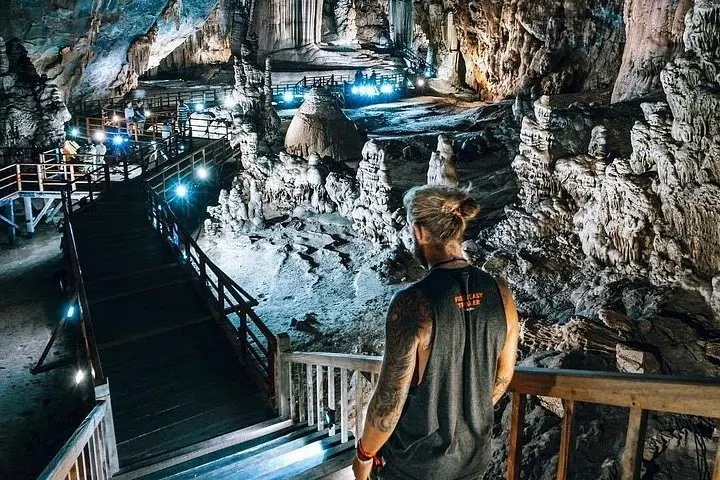
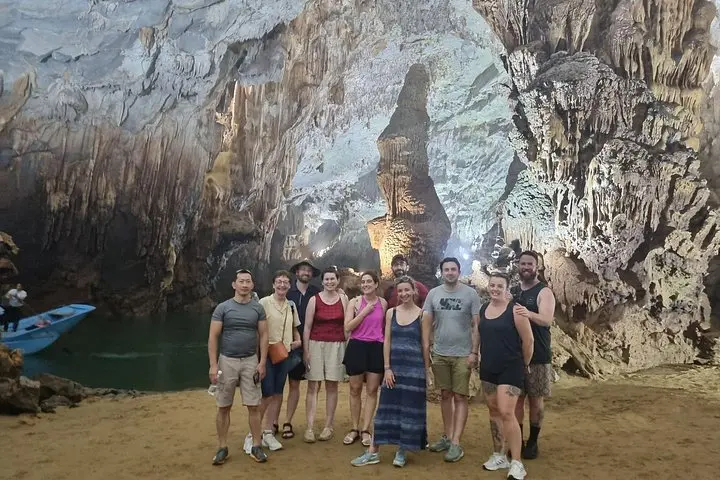
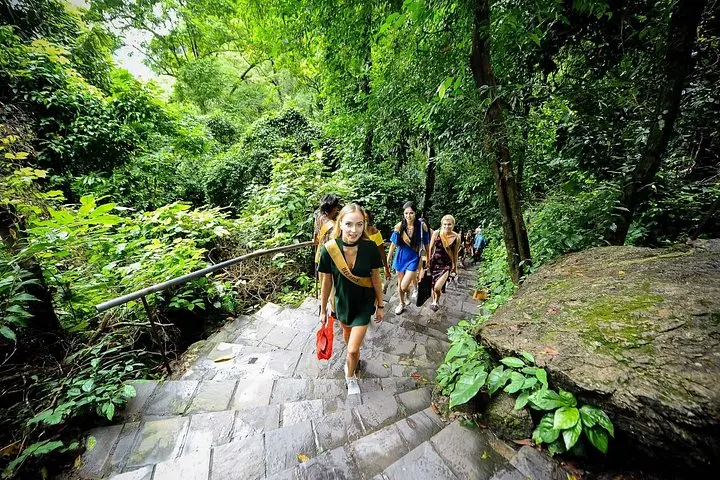
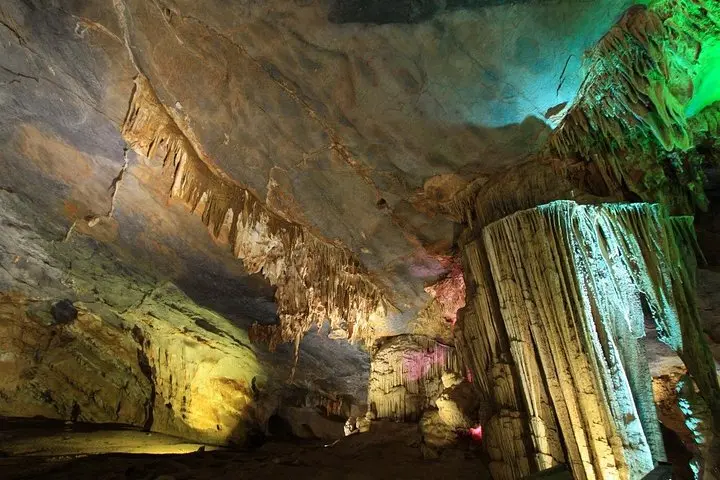
You step off the bus and the air shifts — humid, mineral-rich, carrying the low echo of distant drip. Paradise Cave (Hang Thiên Đường) opens like a carved cathedral: vaulted chambers, ribbed curtains of calcite, stalagmites rising from the floor as if the earth were breathing slowly.
You step off the bus and the air shifts — humid, mineral-rich, carrying the low echo of distant drip. Paradise Cave (Hang Thiên Đường) opens like a carved cathedral: vaulted chambers, ribbed curtains of calcite, stalagmites rising from the floor as if the earth were breathing slowly.
The cave sits inside Phong Nha-Kẻ Bàng National Park, a UNESCO World Heritage site formed by millions of years of limestone dissolution. On the drive from Hue you pass the La Vang Holy Land and fragments of DMZ-era history — the 17th parallel and the Ben Hai River — reminders that this karst landscape sits amid a contested, storied coastline.
Locals guide visitors through well-built walkways and stair sets that traverse the cave’s main galleries. Geologically, Paradise Cave displays classic karst features: flowstones, columns, and rimstone pools created by slow sulfate-rich waters. Culturally, the route ties central Vietnam’s spiritual stops with rural communities near Dong Hoi and Phong Nha.
Practical guidance: expect a long day — plan for a 12–13 hour round trip including 3–4 hours driving each way from Hue. Wear grippy shoes for wet steps, bring a light layer for cooler cave air, and carry a refillable water bottle; restrooms and lunch are provided at roadside restaurants. The cave lighting highlights formations but keep flash photography for close-ups only to preserve low-light conditions for other visitors. If you have spinal, heart, or pregnancy concerns, select an alternative excursion. Return travel to Hue typically arrives in the evening, leaving you with photos, a quieter sense of scale, and a clearer idea of how Vietnam’s geology shaped both landscape and history.