THE ADVENTURE COLLECTIVE® · Independent discovery and booking for outdoor travel

Leave Hue before sunrise for a day of karst cliffs, dragon-boat passages and cathedral-sized chambers. This private 1-day tour pairs an underground river cruise at Phong Nha with a stroll through Paradise Cave’s vast formations—perfect for travelers seeking a concentrated taste of Vietnam’s UNESCO karst.
Leave Hue before sunrise for a day of karst cliffs, dragon-boat passages and cathedral-sized chambers. This private 1-day tour pairs an underground river cruise at Phong Nha with a stroll through Paradise Cave’s vast formations—perfect for travelers seeking a concentrated taste of Vietnam’s UNESCO karst.
A predawn pickup in Hue unfolds against a soft coastal light as you head west into karst country. The road narrows, rice paddies thin, and limestone cliffs begin to rise—first as distant gray teeth, then as a folded ridge that pushes the sky. By midmorning you glide in a traditional dragon boat into Phong Nha Cave: an underground riverway, cool and low, with calcite curtains and rimstone pools that catch the guide’s beam like pale coins.
Verified experiences and guided adventures in the surrounding area.
Operated by Asia Group Tour · Phong Nha, Quang Binh
A predawn pickup in Hue unfolds against a soft coastal light as you head west into karst country. The road narrows, rice paddies thin, and limestone cliffs begin to rise—first as distant gray teeth, then as a folded ridge that pushes the sky. By midmorning you glide in a traditional dragon boat into Phong Nha Cave: an underground riverway, cool and low, with calcite curtains and rimstone pools that catch the guide’s beam like pale coins.
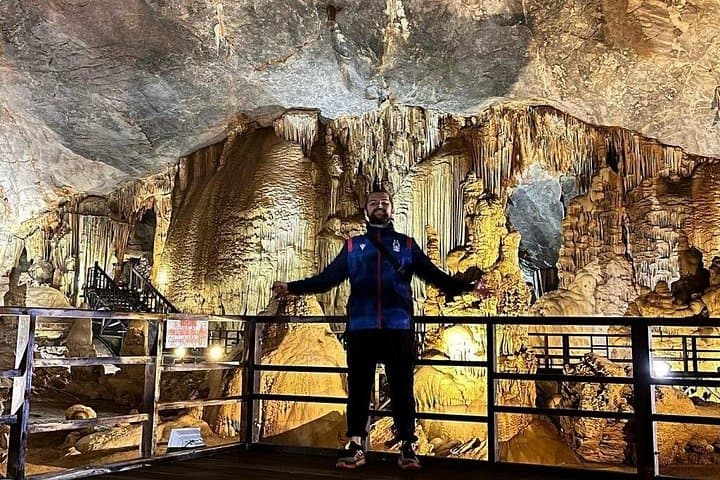
Phong Nha–Ke Bang is a UNESCO site carved over 400 million years of limestone uplift and subterranean drainage; the park’s caves record both geologic time and local livelihoods. Paradise Cave (Thiên Đường) is a different architecture—dry, cathedral-scale chambers with stalactites and flowstone drapes that required stairs and boardwalks to make them accessible while preserving fragile formations.
Expect straightforward cultural notes: small rural communities, simple eateries serving local pork and noodles, and drivers who know the route by memory. The trip balances slow river passages with 2–3 hours of walking in Paradise Cave’s well-lit corridors.
Practical guidance: start early (6:00 pickup), pack layers—the caves stay cool—and bring non-slip shoes for wet wooden docks and cave steps. Hydration and sun protection are essential during transfers; motion-sick remedies help on the winding mountain approach. Tours usually include entrance fees, lunch, and an English-speaking guide, but confirm access for mobility concerns—the caves have stairs and uneven surfaces. Timing is long (12–13 hours round trip), but the payoff is compact: two distinct cave experiences and a deep window into central Vietnam’s karst heart.
The transfer is about 3.5 hours each way (roughly 160–180 km depending on route), so expect a full day on the road.
Phong Nha boat access requires boarding from low docks, and Paradise Cave has stairs and boardwalks—mobility limitations may make the visit difficult; check in advance for assistance options.
Yes, most private day tours include lunch at a local restaurant in Phong Nha; confirm dietary needs when booking.
This tour typically includes tickets for the listed attractions (one admission), but verify this on your booking confirmation.
Asia Group Tour operates guided outdoor trips and adventures with an emphasis on safety, stewardship, and memorable experiences.
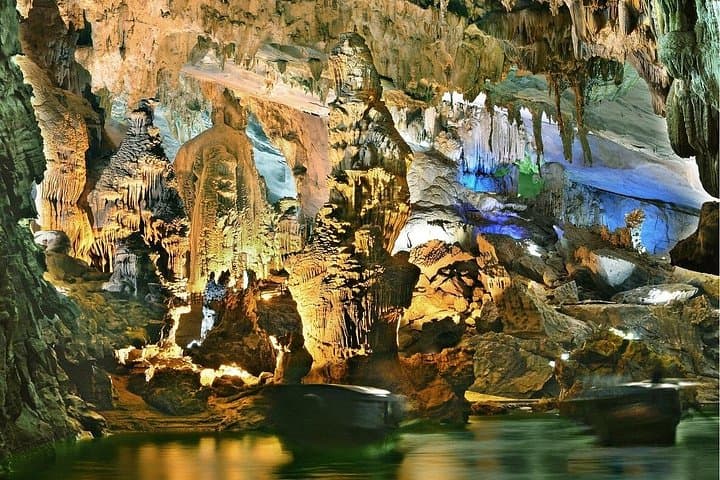

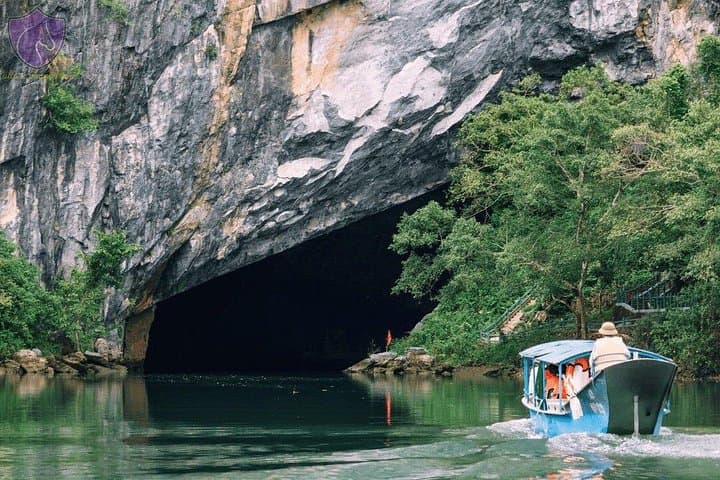
A predawn pickup in Hue unfolds against a soft coastal light as you head west into karst country. The road narrows, rice paddies thin, and limestone cliffs begin to rise—first as distant gray teeth, then as a folded ridge that pushes the sky. By midmorning you glide in a traditional dragon boat into Phong Nha Cave: an underground riverway, cool and low, with calcite curtains and rimstone pools that catch the guide’s beam like pale coins.
A predawn pickup in Hue unfolds against a soft coastal light as you head west into karst country. The road narrows, rice paddies thin, and limestone cliffs begin to rise—first as distant gray teeth, then as a folded ridge that pushes the sky. By midmorning you glide in a traditional dragon boat into Phong Nha Cave: an underground riverway, cool and low, with calcite curtains and rimstone pools that catch the guide’s beam like pale coins.
Phong Nha–Ke Bang is a UNESCO site carved over 400 million years of limestone uplift and subterranean drainage; the park’s caves record both geologic time and local livelihoods. Paradise Cave (Thiên Đường) is a different architecture—dry, cathedral-scale chambers with stalactites and flowstone drapes that required stairs and boardwalks to make them accessible while preserving fragile formations.
Expect straightforward cultural notes: small rural communities, simple eateries serving local pork and noodles, and drivers who know the route by memory. The trip balances slow river passages with 2–3 hours of walking in Paradise Cave’s well-lit corridors.
Practical guidance: start early (6:00 pickup), pack layers—the caves stay cool—and bring non-slip shoes for wet wooden docks and cave steps. Hydration and sun protection are essential during transfers; motion-sick remedies help on the winding mountain approach. Tours usually include entrance fees, lunch, and an English-speaking guide, but confirm access for mobility concerns—the caves have stairs and uneven surfaces. Timing is long (12–13 hours round trip), but the payoff is compact: two distinct cave experiences and a deep window into central Vietnam’s karst heart.