THE ADVENTURE COLLECTIVE® · Independent discovery and booking for outdoor travel

Spend a day walking between traditional Quechua life and Inca archaeology—learn weaving in Huilloc, explore the hilltop platforms of Pumamarca, and finish in the living Inca town of Ollantaytambo. This private full-day hike blends cultural immersion with high-altitude scenery.
Spend a day walking between traditional Quechua life and Inca archaeology—learn weaving in Huilloc, explore the hilltop platforms of Pumamarca, and finish in the living Inca town of Ollantaytambo. This private full-day hike blends cultural immersion with high-altitude scenery.
Before the valley wakes, you climb out of Cusco and into thin, cool air; the mountains keep their distance like watchful elders while the Patacancha and Yuracmayo rivers hiss below, daring you to move faster. The path threads through fields of native potato and quinoa, then opens to Huilloc, where spinning wheels click and dyed wool takes shape under the steady hands of Quechua weavers.
Verified experiences and guided adventures in the surrounding area.
Operated by LimaTours · Ollantaytambo, Cusco Region
Before the valley wakes, you climb out of Cusco and into thin, cool air; the mountains keep their distance like watchful elders while the Patacancha and Yuracmayo rivers hiss below, daring you to move faster. The path threads through fields of native potato and quinoa, then opens to Huilloc, where spinning wheels click and dyed wool takes shape under the steady hands of Quechua weavers.
Huilloc’s living craft practice is part workshop, part storytelling—iconography on garments carries meanings tied to family, land and the agricultural calendar. From there the trail rises toward Pumamarca, an archaeological complex of platforms, canals and ancient roads. The hilltop viewpoint frames the confluence of two rivers and offers a clear look at Inca engineering that channeled water across terraces. Afternoon brings Ollantaytambo, a village that has been lived in continuously since the Inca era: stepped streets, massive stone walls, and a fortress that was once a control point on the royal road.
Practicalities matter at 3,800 m and across roughly 14 km of walking: pace yourself, drink often, and layer against sun and wind. A bilingual guide handles logistics and context, and a box lunch keeps energy steady between stops. Bring small bills for textiles and tips; buying a woven garment supports local households and helps preserve ancestral techniques. The route is best attempted after at least a day or two in Cusco to acclimatize—then the valley’s history, geology and living culture are free to reveal themselves on your terms.
The full-day experience covers about 14 km of walking with varied terrain (dirt paths, stone steps) and includes stops in Huilloc, Pumamarca and Ollantaytambo; plan on 8–10 hours including transfers.
Yes—maximum altitude reaches ~3,800 m. Acclimatize in Cusco for 24–48 hours, stay hydrated, and notify your guide if you feel severe symptoms.
A boxed lunch and admission to Pumamarca are included; guide, pickup and first-aid kit are also provided per the listing.
Yes—artisans often sell woven garments on-site; bring Peruvian Sol cash and be prepared to negotiate politely.
LimaTours operates guided outdoor trips and adventures with an emphasis on safety, stewardship, and memorable experiences.


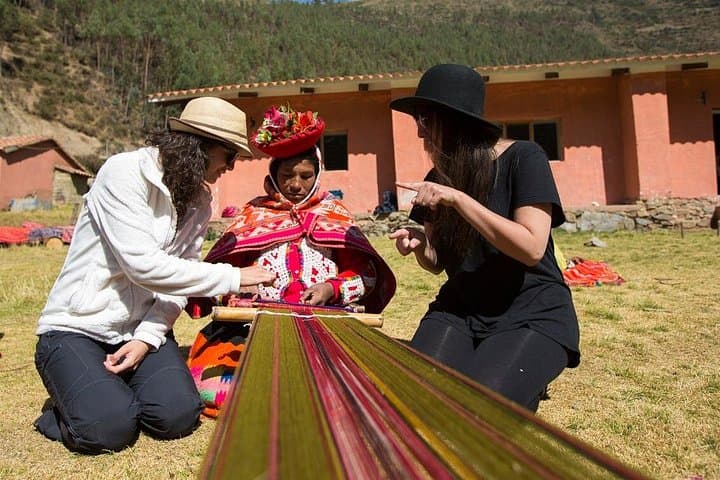

Before the valley wakes, you climb out of Cusco and into thin, cool air; the mountains keep their distance like watchful elders while the Patacancha and Yuracmayo rivers hiss below, daring you to move faster. The path threads through fields of native potato and quinoa, then opens to Huilloc, where spinning wheels click and dyed wool takes shape under the steady hands of Quechua weavers.
Before the valley wakes, you climb out of Cusco and into thin, cool air; the mountains keep their distance like watchful elders while the Patacancha and Yuracmayo rivers hiss below, daring you to move faster. The path threads through fields of native potato and quinoa, then opens to Huilloc, where spinning wheels click and dyed wool takes shape under the steady hands of Quechua weavers.
Huilloc’s living craft practice is part workshop, part storytelling—iconography on garments carries meanings tied to family, land and the agricultural calendar. From there the trail rises toward Pumamarca, an archaeological complex of platforms, canals and ancient roads. The hilltop viewpoint frames the confluence of two rivers and offers a clear look at Inca engineering that channeled water across terraces. Afternoon brings Ollantaytambo, a village that has been lived in continuously since the Inca era: stepped streets, massive stone walls, and a fortress that was once a control point on the royal road.
Practicalities matter at 3,800 m and across roughly 14 km of walking: pace yourself, drink often, and layer against sun and wind. A bilingual guide handles logistics and context, and a box lunch keeps energy steady between stops. Bring small bills for textiles and tips; buying a woven garment supports local households and helps preserve ancestral techniques. The route is best attempted after at least a day or two in Cusco to acclimatize—then the valley’s history, geology and living culture are free to reveal themselves on your terms.