THE ADVENTURE COLLECTIVE® · Independent discovery and booking for outdoor travel

A short, high-energy jet boat on the Waikato River that drops you at the base of Huka Falls. Expect spins, expert commentary, and close-up, eye-level views of one of New Zealand’s most powerful waterfalls.
A short, high-energy jet boat on the Waikato River that drops you at the base of Huka Falls. Expect spins, expert commentary, and close-up, eye-level views of one of New Zealand’s most powerful waterfalls.
The Waikato River pushes and hisses as the jet boat slips onto its surface, daring riders to hold on. In 30 minutes you move from calm river flats into a rush of spray and torque, spinning past basalt cliffs and ragged native bush until the boat slows at the base of Huka Falls — a curtain of thunder where the river narrows and the water funnels with relentless force.
Verified experiences and guided adventures in the surrounding area.
Operated by Hukafalls Jet · Taupo, Waikato
The Waikato River pushes and hisses as the jet boat slips onto its surface, daring riders to hold on. In 30 minutes you move from calm river flats into a rush of spray and torque, spinning past basalt cliffs and ragged native bush until the boat slows at the base of Huka Falls — a curtain of thunder where the river narrows and the water funnels with relentless force.
The falls have been a landmark for Māori and European visitors for generations; the name “Huka” refers to foam, a fitting word for the white torrent. Geologically, the falls sit where the Waikato cuts through younger volcanic deposits from the Taupō Rift, creating a dramatic drop that concentrates one of the country’s largest river flows into a narrow channel. Driver-guides add local history and geology to the ride, so the roar of the falls comes with context about iwi, early settlers, and the river’s cultural role.
Expect a high-energy, accessible ride: life jackets and a safety briefing are standard, and the operation caters to a wide range of visitors, though people with certain medical conditions are advised not to join. Cameras are welcome but held at your own risk; video cameras may be restricted for safety.
Practical tips: arrive early for check-in, bring windproof layers and secure footwear, and plan for quick timelines—this is a short, intense encounter with one of New Zealand’s most photographed waterfalls. For many, the lasting memory is not just the speed, but standing at eye level with water that refuses to slow down.
The jet boat experience is a fixed 30-minute ride, including access to the base of Huka Falls.
Yes—life jackets and a full safety briefing are provided and must be worn during the ride.
Cameras are permitted at your own risk, but video cameras may be restricted for safety—ask the crew before filming.
Children are allowed but must meet the operator’s minimum height requirement (around 1 meter); check with the operator when booking.
Hukafalls Jet operates guided outdoor trips and adventures with an emphasis on safety, stewardship, and memorable experiences.
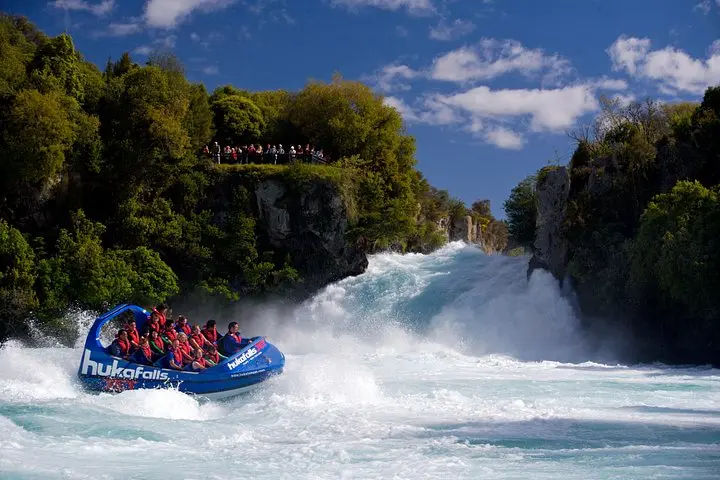
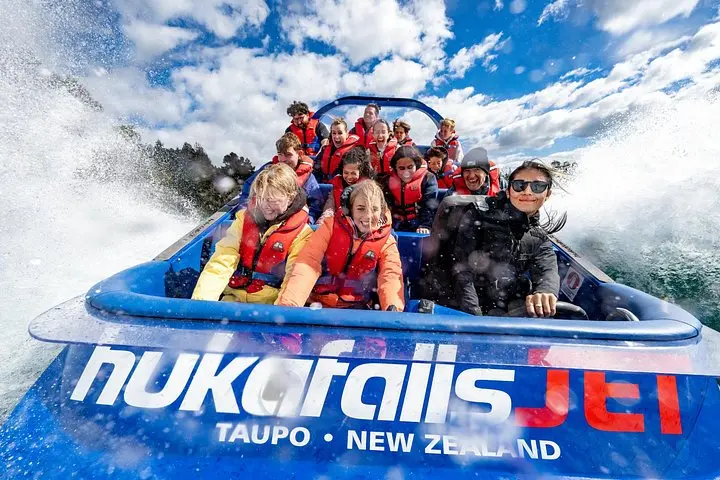
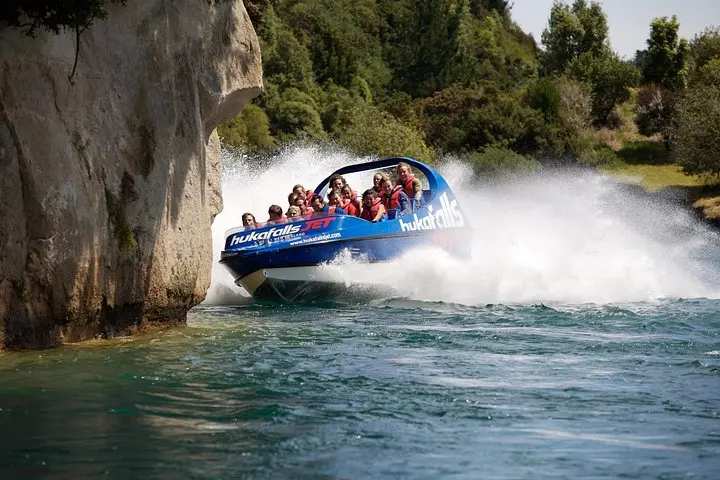
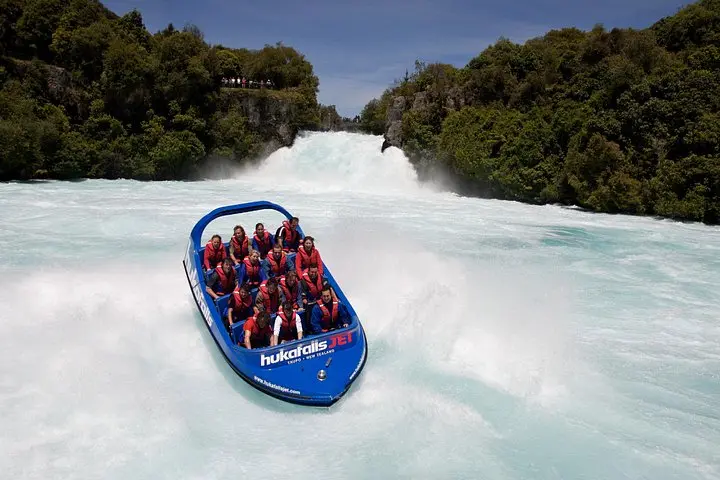
The Waikato River pushes and hisses as the jet boat slips onto its surface, daring riders to hold on. In 30 minutes you move from calm river flats into a rush of spray and torque, spinning past basalt cliffs and ragged native bush until the boat slows at the base of Huka Falls — a curtain of thunder where the river narrows and the water funnels with relentless force.
The Waikato River pushes and hisses as the jet boat slips onto its surface, daring riders to hold on. In 30 minutes you move from calm river flats into a rush of spray and torque, spinning past basalt cliffs and ragged native bush until the boat slows at the base of Huka Falls — a curtain of thunder where the river narrows and the water funnels with relentless force.
The falls have been a landmark for Māori and European visitors for generations; the name “Huka” refers to foam, a fitting word for the white torrent. Geologically, the falls sit where the Waikato cuts through younger volcanic deposits from the Taupō Rift, creating a dramatic drop that concentrates one of the country’s largest river flows into a narrow channel. Driver-guides add local history and geology to the ride, so the roar of the falls comes with context about iwi, early settlers, and the river’s cultural role.
Expect a high-energy, accessible ride: life jackets and a safety briefing are standard, and the operation caters to a wide range of visitors, though people with certain medical conditions are advised not to join. Cameras are welcome but held at your own risk; video cameras may be restricted for safety.
Practical tips: arrive early for check-in, bring windproof layers and secure footwear, and plan for quick timelines—this is a short, intense encounter with one of New Zealand’s most photographed waterfalls. For many, the lasting memory is not just the speed, but standing at eye level with water that refuses to slow down.