THE ADVENTURE COLLECTIVE® · Independent discovery and booking for outdoor travel

Drive north from Xi'an across the Loess Plateau to Hukou, where the Yellow River narrows and plunges into a pot-mouth gorge. This full-day private tour delivers dramatic viewing platforms, short walks, and interpretive guiding with minimal physical demand.
Drive north from Xi'an across the Loess Plateau to Hukou, where the Yellow River narrows and plunges into a pot-mouth gorge. This full-day private tour delivers dramatic viewing platforms, short walks, and interpretive guiding with minimal physical demand.
The morning opens in Xi'an as an air-conditioned vehicle eases northward across the Loess Plateau, the road unspooling toward a place where the Yellow River suddenly tightens and roars. After three to four hours of driving, the valley narrows and the river—mud-bright and impatient—funnels into a half-circle chute and drops roughly 20–30 meters into a rocky gorge. The sight is immediate: spray whipping against cliff faces, tourists clustering at concrete viewing terraces, and the river behaving like a living thing determined to move on.
Verified experiences and guided adventures in the surrounding area.
Operated by China Travel Service · Xi'an, Shaanxi
The morning opens in Xi'an as an air-conditioned vehicle eases northward across the Loess Plateau, the road unspooling toward a place where the Yellow River suddenly tightens and roars. After three to four hours of driving, the valley narrows and the river—mud-bright and impatient—funnels into a half-circle chute and drops roughly 20–30 meters into a rocky gorge. The sight is immediate: spray whipping against cliff faces, tourists clustering at concrete viewing terraces, and the river behaving like a living thing determined to move on.
Hukou Waterfall sits on the border of Shanxi and Shaanxi provinces and takes its name from the Chinese for “pot mouth,” a clear nod to the way the river is squeezed and poured over the lip. Geologically it’s a product of loess deposits and persistent erosion; culturally the Yellow River is central to China’s agricultural and civilizational history and Hukou carries that legacy in a loud, physical way.
The visit is primarily a series of short walks between viewpoints rather than a long hike—battery car transfers and entrance fees are typically included. There are few dining options at the scenic area, so plan accordingly. Expect wind, mist, and sudden changes in footing on wet platforms; sturdy shoes and a light waterproof are practical. Photography is best in the softer light of morning or late afternoon when spray catches the sun.
For travelers based in Xi'an, the trip is a long day but manageable as a private tour that returns in the evening. The experience pairs dramatic river dynamics with simple, direct logistics—see the falls, learn their place in regional history, and be back in the city by nightfall.
Typical driving time is about 3–4 hours each way depending on traffic and exact pickup location in Xi'an.
Most private day tours include entrance fees and private transfers; check the itinerary to confirm battery car or shuttle inclusions.
Yes—walking at Hukou is limited to paved viewing areas and short steps, and many tours offer wheelchair or infant seat support with advance notice.
Food choices are limited and often basic; bringing snacks or a packed meal is recommended.
China Travel Service operates guided outdoor trips and adventures with an emphasis on safety, stewardship, and memorable experiences.
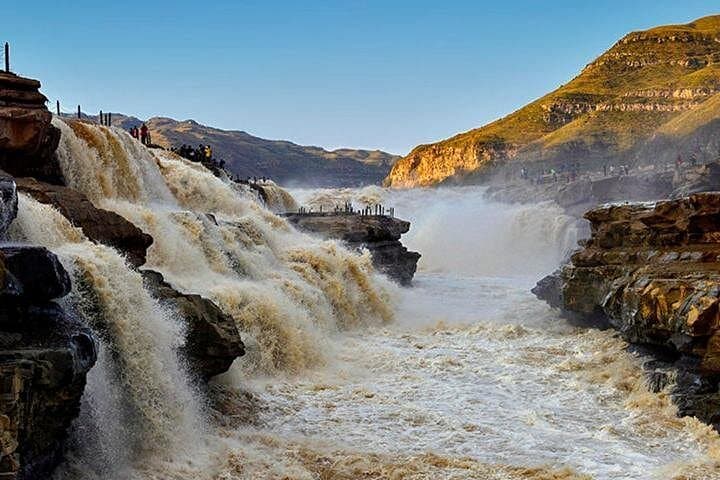
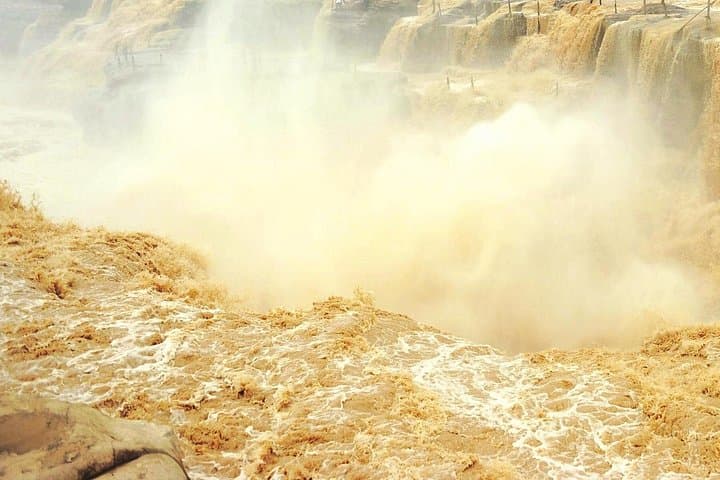
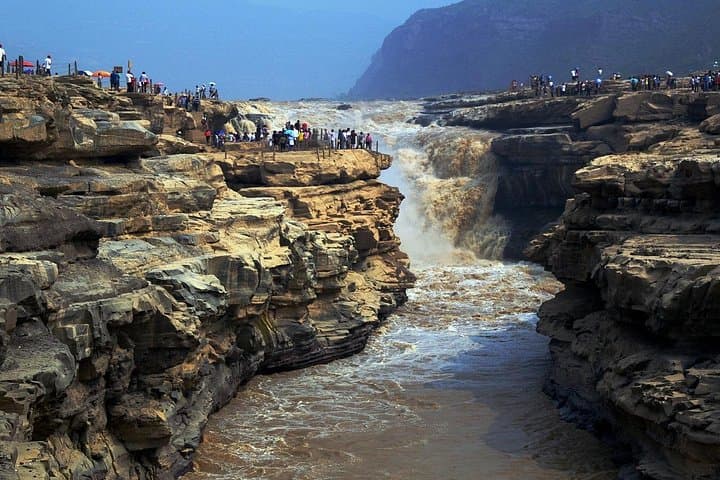

The morning opens in Xi'an as an air-conditioned vehicle eases northward across the Loess Plateau, the road unspooling toward a place where the Yellow River suddenly tightens and roars. After three to four hours of driving, the valley narrows and the river—mud-bright and impatient—funnels into a half-circle chute and drops roughly 20–30 meters into a rocky gorge. The sight is immediate: spray whipping against cliff faces, tourists clustering at concrete viewing terraces, and the river behaving like a living thing determined to move on.
The morning opens in Xi'an as an air-conditioned vehicle eases northward across the Loess Plateau, the road unspooling toward a place where the Yellow River suddenly tightens and roars. After three to four hours of driving, the valley narrows and the river—mud-bright and impatient—funnels into a half-circle chute and drops roughly 20–30 meters into a rocky gorge. The sight is immediate: spray whipping against cliff faces, tourists clustering at concrete viewing terraces, and the river behaving like a living thing determined to move on.
Hukou Waterfall sits on the border of Shanxi and Shaanxi provinces and takes its name from the Chinese for “pot mouth,” a clear nod to the way the river is squeezed and poured over the lip. Geologically it’s a product of loess deposits and persistent erosion; culturally the Yellow River is central to China’s agricultural and civilizational history and Hukou carries that legacy in a loud, physical way.
The visit is primarily a series of short walks between viewpoints rather than a long hike—battery car transfers and entrance fees are typically included. There are few dining options at the scenic area, so plan accordingly. Expect wind, mist, and sudden changes in footing on wet platforms; sturdy shoes and a light waterproof are practical. Photography is best in the softer light of morning or late afternoon when spray catches the sun.
For travelers based in Xi'an, the trip is a long day but manageable as a private tour that returns in the evening. The experience pairs dramatic river dynamics with simple, direct logistics—see the falls, learn their place in regional history, and be back in the city by nightfall.